Booking a rideshare feels like the obvious fix when you need to get to a doctor’s office and driving yourself isn’t an option. It’s fast, it’s on your phone, and it’s usually cheaper than an ambulance. So it’s a fair question to ask before you tap “confirm”: does Medicare pay for Uber rides to doctor appointments, or are you about to cover that fare yourself?
The short answer is that it depends entirely on which type of Medicare you have — and even then, “covered” doesn’t always mean what people assume it means. Below, we’ll walk through exactly when Uber and Lyft rides get paid for, when they don’t, and what to do when your plan leaves you stuck holding the bill.
Does Medicare Pay for Uber Rides to Doctor Appointments Under Original Medicare?
No. Original Medicare — Part A and Part B — does not pay for Uber, Lyft, or any rideshare service to a routine or scheduled medical visit. This surprises a lot of people because Medicare does pay for ambulance transportation in specific emergency situations, so it seems logical that non-emergency rides would be covered too. They aren’t.
Part B covers ambulance transportation only when it’s medically necessary — meaning any other form of transportation would risk someone’s health or safety. A routine follow-up, a lab draw, a specialist consult, or a dialysis session doesn’t meet that bar in the eyes of CMS (the Centers for Medicare & Medicaid Services), no matter how genuinely difficult it is for someone to arrange a ride on their own.
This is the piece of the “does Medicare pay for Uber rides to doctor appointments” question that trips people up most: Original Medicare has never included a general transportation benefit. It was never designed to. Rideshare apps didn’t exist when the program was written, and Congress hasn’t added a broad transportation benefit to Part A or Part B since.

So Where Does the Confusion Come From?
Two things create the mix-up:
- Medicare Advantage plans are different from Original Medicare. Some Medicare Advantage (Part C) plans do include rideshare benefits — more on that below.
- Medicaid is not Medicare. Medicaid, called Medi-Cal in California, has its own separate transportation benefit that’s actually required by federal law. People often use “Medicare” and “Medicaid” interchangeably in conversation, but they’re two completely different programs with completely different rules.
If someone told you “Medicare pays for rides to the doctor,” there’s a good chance they were on Medicaid, on a Medicare Advantage plan with a transportation perk, or simply mistaken.
Medicare Advantage and Rideshare Benefits: The Real Exception
This is where the answer to does Medicare pay for Uber rides to doctor appointments actually gets interesting. Since 2019, CMS has allowed Medicare Advantage plans to offer supplemental benefits that go beyond what Original Medicare covers — and transportation is one of the most common additions. A number of Medicare Advantage carriers now partner directly with Uber Health or Lyft Healthcare to offer a set number of one-way or round-trip rides per year, often at zero cost to the enrollee.
But — and this matters — this benefit is plan-specific, not universal. It depends on:
- Which Medicare Advantage plan you’re enrolled in
- Whether that plan includes a transportation supplemental benefit at all
- How many trips per year the benefit allows (commonly somewhere between 12 and 60+ one-way trips)
- Whether the ride has to be booked through the plan’s own portal or call center rather than the regular Uber app
- Whether the destination qualifies (a routine doctor visit usually does; some plans exclude non-medical errands)
Special Needs Plans (SNPs), which serve people with chronic conditions or those who are dual-eligible for Medicare and Medicaid, are especially likely to include a transportation benefit, since consistent access to care is central to managing ongoing treatment.
Original Medicare vs. Medicare Advantage vs. Medicaid: Transportation Coverage Compared
| Coverage Type | Covers Routine Uber/Lyft Rides? | Covers Ambulance? | How Rides Are Typically Booked | Cost to Enrollee |
| Original Medicare (Part A/B) | No | Emergencies only, medical necessity required | N/A | Full cost of rideshare out-of-pocket |
| Medicare Advantage (varies by plan) | Sometimes, if plan includes it | Same as Original Medicare, plus possible extras | Through plan portal, member services, or app partnership | Often $0 within trip limit |
| Medicaid / Medi-Cal | Yes, as Non-Emergency Medical Transportation (NEMT) | Yes, for genuine emergencies | Through a Medicaid transportation broker or approved provider | Usually $0 for eligible members |
| Private Pay / Direct Booking | Not applicable — you’re paying directly | Not applicable | Rideshare app or licensed NEMT provider | Full fare or NEMT rate |
Why “Covered” Doesn’t Always Mean “Convenient”
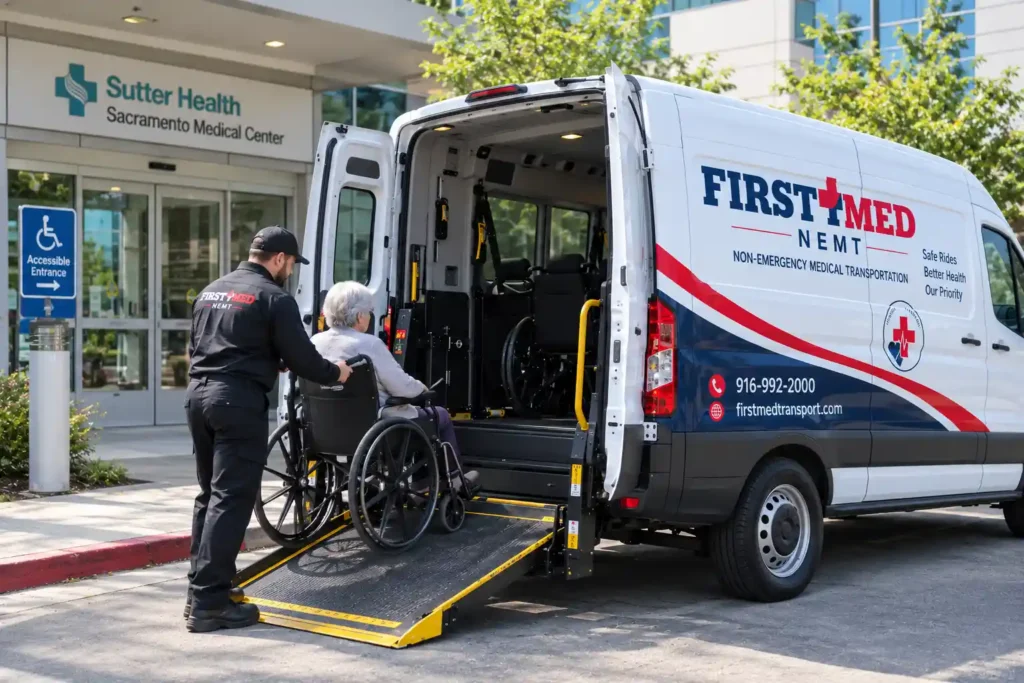
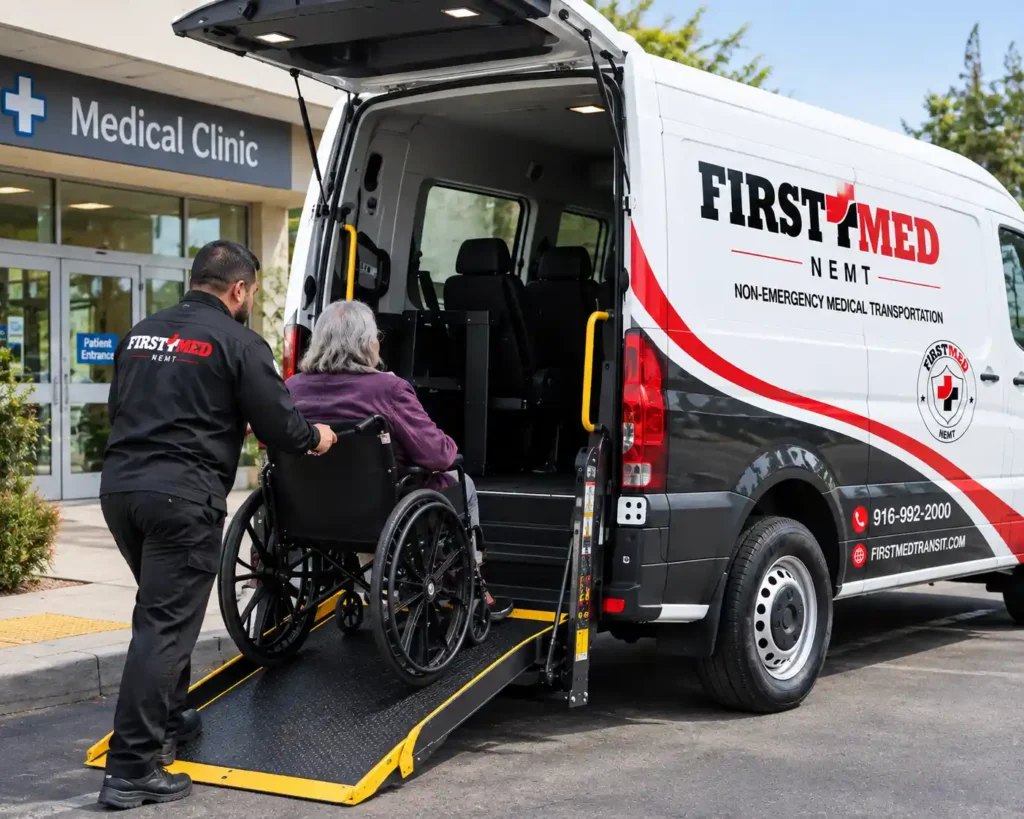
Even when a Medicare Advantage plan does pay for rideshare trips, there’s a gap worth knowing about before you rely on it. Standard Uber and Lyft drivers are not trained in mobility assistance, wheelchair securement, or oxygen equipment handling. If someone needs help getting from a front door to a car, or needs a vehicle with a ramp or lift, a routine rideshare simply isn’t built for that — no matter who’s paying for it.
That’s the gap non-emergency medical transportation (NEMT) exists to close. Our related guide, Does Medicare Cover Wheelchair Transportation? Full Guide, breaks down exactly when Medicare will and won’t help with accessible transport, and what to do when it won’t.
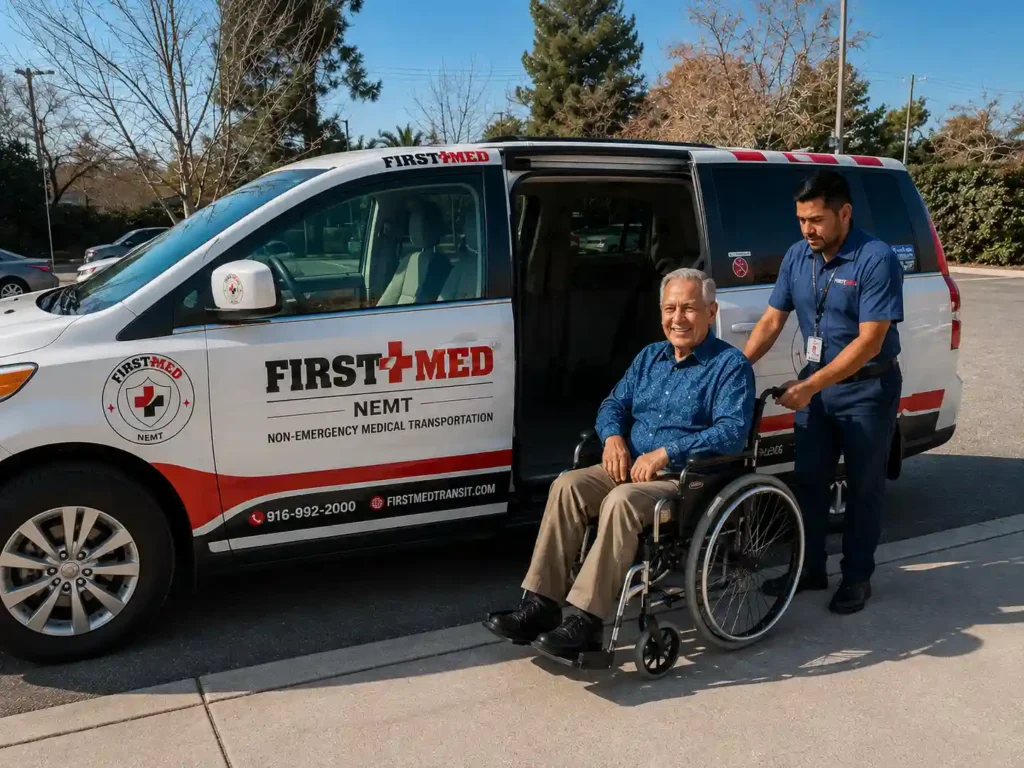
For anyone managing mobility limitations day to day, wheelchair-accessible transportation designed specifically for medical visits — with secured restraints and trained drivers — solves a problem rideshare apps were never built to solve.
What About Medi-Cal in California?
Medi-Cal is required under federal law to provide Non Emergency Medical Transportation to eligible enrollees who have no other way to reach a covered service. This benefit predates the rideshare era and was built around wheelchair vans, ambulettes, and gurney-equipped vehicles rather than standard sedans — though some Medi-Cal managed care plans have started layering rideshare options on top of traditional NEMT in recent years.
If someone is dual-eligible for both Medicare and Medi-Cal, Medi-Cal generally becomes the primary payer for transportation, since it has the broader statutory requirement to provide it. That’s a detail worth confirming directly with your specific plan, since eligibility rules and documentation requirements vary.
For older adults juggling recurring appointments — therapy, routine checkups, prescription pickups — a senior transportation service built around flexible, recurring scheduling tends to be far more dependable than trying to time a rideshare pickup around every single visit.
Learn About: Does Insurance Cover Non Emergency Medical Transportation?
Uber Rides vs. NEMT vs. Ambulance: Cost Breakdown
| Transport Type | Typical Cost Range | Trained Mobility Assistance? | Wheelchair/Stretcher Equipped? | Insurance Coverage Likelihood |
| Standard Uber/Lyft | 10–40 (local trip) | No | No | Only if plan-specific benefit applies |
| NEMT (wheelchair or ambulatory van) | 50–250 (local trip) | Yes | Yes | Often, via Medi-Cal or eligible Medicare Advantage plans |
| Ambulance | 500–3,000+ | Yes (paramedic-level) | Yes | Emergency-only under Original Medicare |
If cost is the deciding factor in choosing a ride, our non-emergency medical transport pricing guide lays out exactly what affects the final number for a wheelchair or ambulatory trip in the Sacramento area.
What to Do If Medicare Won’t Pay for Your Ride
If you’ve confirmed that Original Medicare doesn’t cover your situation and your Medicare Advantage plan doesn’t include a rideshare perk, you still have real options:
- Check for a Medicare Advantage transportation add-on during the next enrollment period. Not every plan advertises it clearly, so it’s worth asking a plan representative directly.
- Ask if you’re dual-eligible for Medicaid/Medi-Cal. If so, NEMT may already be a covered benefit you’re not using.
- Look into local Area Agency on Aging or PACE programs, which sometimes fund transportation for qualifying older adults independent of Medicare.
- Book directly with a licensed NEMT provider for recurring visits, so pricing and scheduling stay predictable instead of scrambling for a ride every time.
- Reserve rideshare for situations where you’re fully mobile and the trip is short, since it’s rarely the most cost-effective choice for regular medical travel.
For appointments that come up with little warning — an unexpected same-day slot, or a discharge that needs an immediate ride home — a same day NEMT service is often faster and more reliable than trying to coordinate a benefit approval on short notice.
Hospital releases are another common trigger point, since someone being discharged often needs an accessible ride home the same day. Our hospital discharge transportation service is built specifically around that unpredictable timing.
Bringing It Back to the Core Question
At its heart, does Medicare pay for Uber rides to doctor appointments comes down to one distinction: Original Medicare almost never will, Medicare Advantage sometimes will depending on the specific plan, and Medicaid/Medi-Cal is the program actually designed to guarantee non-emergency transportation for eligible enrollees. Knowing which category applies to you before you book a ride is the difference between a covered trip and an unexpected charge.
Frequently Asked Questions
Will Medicare cover my Uber ride to a routine doctor’s visit?
Original Medicare will not. Some Medicare Advantage plans include a limited number of rideshare trips as a supplemental benefit, but this varies significantly by plan and by year.
How many rideshare trips do Medicare Advantage transportation benefits usually include?
It varies widely by carrier and plan tier, but many plans offer somewhere between 12 and 60+ one-way trips annually. Always confirm the exact number and any destination restrictions directly with your plan.
Does Medicaid or Medi-Cal cover Uber rides to appointments?
Medi-Cal covers Non-Emergency Medical Transportation for eligible enrollees, and some managed care plans now include rideshare-style options alongside traditional wheelchair and ambulatory vans. Coverage details differ by county and plan.
What if I have both Medicare and Medi-Cal?
If you’re dual-eligible, Medi-Cal generally becomes the primary payer for non-emergency transportation, since it carries the federal requirement to provide it where Medicare does not.
Is a standard Uber ride safe for someone with mobility needs?
Not necessarily. Standard rideshare drivers aren’t trained in wheelchair securement, transfer assistance, or medical equipment handling. A dedicated NEMT service is generally the safer choice for anyone who needs hands-on help.
What should I do if my plan doesn’t cover any form of transportation?
Look into dual-eligibility for Medicaid, check for community or Area Agency on Aging transportation programs, and consider booking directly with a licensed NEMT provider for predictable, recurring pricing.