No, Original Medicare generally does not cover routine wheelchair transportation in a wheelchair van. Medicare may cover ambulance transportation when it is medically necessary and other specific coverage requirements are met. However, Medicare Advantage plans, Medicaid, and certain state or local programs may provide transportation benefits that can help eligible members get to medical appointments.
If you or a loved one uses a wheelchair for dialysis, doctor appointments, physical therapy, hospital discharge, or other medical visits, understanding your transportation coverage can help you avoid unexpected out-of-pocket costs. Coverage depends on the type of transportation, your Medicare plan, and whether the ride meets the program’s medical-necessity requirements.
In this guide, you’ll learn when Medicare covers wheelchair transportation, when it does not, how wheelchair van transportation differs from ambulance services, and what alternative programs may help pay for medical transportation.
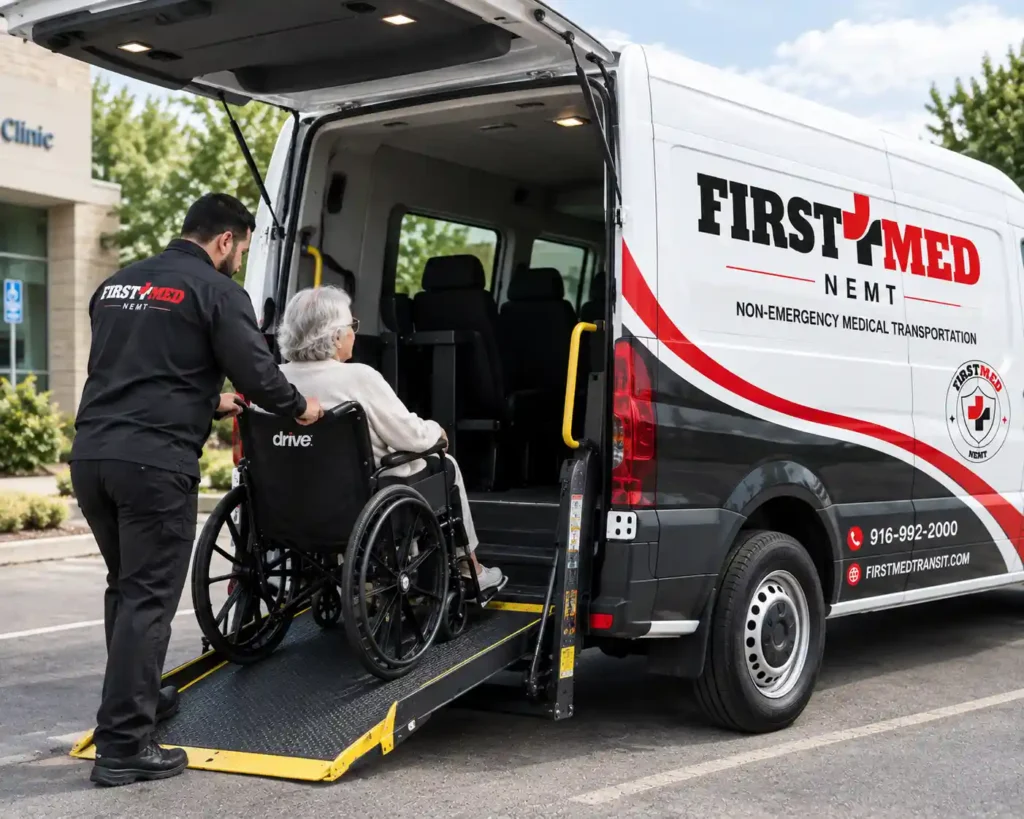
Does Medicare Cover Wheelchair Transportation? The Direct Answer
Here’s the answer people actually need, stated plainly: Original Medicare (Part A and Part B) does not cover wheelchair van transportation, ambulette rides, or any routine trip to a scheduled medical appointment. This applies whether you need a ride to a checkup, a lab draw, physical therapy, or a standing dialysis appointment. If you’re not being transported by ambulance for a documented medical reason, Medicare treats the ride as your responsibility to arrange and pay for.
This surprises a lot of families because phrases like “Medicare covers transportation” show up constantly online. In almost every case, that claim is describing a Medicare Advantage plan add-on benefit, not Original Medicare itself. The two are not interchangeable, and mixing them up leads to a lot of unpaid bills and confused calls to customer service.
Why Medicare Draws This Line
It helps to understand the logic behind the rule instead of just memorizing it. Medicare Part B was built around medically necessary services, meaning treatments and procedures tied directly to a diagnosed condition. A wheelchair van ride, by itself, is considered a convenience service rather than a medical service, even though everyone involved understands it’s often essential for someone to receive care at all.
Medicare only steps in on the transportation side when the vehicle itself is providing medical value, not just a seat. That’s why ambulances sometimes qualify and wheelchair vans almost never do; an ambulance can carry monitoring equipment and trained medical staff, while a wheelchair van is built purely for accessible seating and safe boarding.
The One Real Exception: Non-Emergency Ambulance Coverage
Medicare Part B can cover non-emergency ambulance transportation, but only under narrow conditions, and it is not the same thing as a wheelchair van. To qualify, a member generally must meet one of these standards:
- They are confined to bed, meaning unable to get up without help, unable to walk, and unable to sit safely in a wheelchair
- They require medical services during the trip that only an ambulance can provide, such as monitoring vital signs or administering medication en route
Even then, a doctor typically needs to submit a written order confirming medical necessity, and in some states prior authorization is required before the trip happens. When approved, Part B pays 80% of the Medicare-approved amount after the Part B deductible is met, leaving a 20% coinsurance responsibility.
What Medicare will not do, even with a valid doctor’s order, is pay for a wheelchair-accessible van, an ambulette, or a litter-van simply because someone uses a wheelchair or lacks another way to get to an appointment. That distinction trips up more families than almost anything else in this conversation.

Medicare Advantage: Where the “Yes” Often Comes From
Medicare Advantage (Part C) plans are run by private insurers and are allowed to offer benefits beyond what Original Medicare covers. Many Advantage plans now include a limited transportation benefit, covering a set number of one-way, non-emergency trips per year to appointments, the pharmacy, or wellness visits, sometimes within a defined mileage radius.
This benefit varies enormously by plan and insurer. Some cover 12 to 24 one-way trips a year at zero out-of-pocket cost; others offer none at all. Wheelchair-equipped vehicles are frequently included alongside standard sedans, vans, and even rideshare partnerships, but availability depends entirely on the specific plan documents. If you or a family member has Medicare Advantage rather than Original Medicare, the plan’s Evidence of Coverage booklet or member services line is the place to confirm what’s actually included before assuming a ride is covered.
Medicaid and Dual-Eligible Coverage
For members who qualify for both Medicare and Medicaid, often called dual-eligible members, Medicaid usually becomes the primary source of transportation coverage. Federal law requires state Medicaid programs to provide non-emergency medical transportation (NEMT) to eligible members who have no other way to reach a covered service, and this typically includes wheelchair-accessible vehicles when medically appropriate.
This is a major reason dual-eligible status matters so much for families managing recurring rides. If your household has both Medicare and Medi-Cal, our related post, Who Pays for Non-Emergency Medical Transportation in California?, breaks down exactly how the two programs interact and who ends up footing the bill for different trip types.
We also help eligible members navigate Medi-Cal transportation assistance directly, sorting out eligibility questions before a ride is even booked. Sacramento County Medi-Cal Insurance Assistance page.
Comparison Table: Who Actually Pays for Wheelchair Transportation
| Coverage Source | Covers Routine Wheelchair Van Rides? | Covers Non-Emergency Ambulance? | Typical Cost to Member |
| Original Medicare (Part A/B) | No | Yes, only if medically necessary with doctor’s order | 20% coinsurance after Part B deductible (ambulance only) |
| Medicare Advantage (Part C) | Sometimes, plan-dependent | Yes, same as Original Medicare plus possible extras | Often $0 within plan trip limits |
| Medicaid / Medi-Cal | Yes, for eligible members | Yes | Usually $0 for eligible members |
| Private Pay NEMT Provider | Yes | Not applicable | Paid directly, typically $50–$150+ per trip |
Cost Breakdown: What a Wheelchair Ride Actually Costs Without Coverage
When Medicare doesn’t apply and Medicaid isn’t an option, most families end up paying a private non-emergency medical transportation provider directly. Costs generally scale with distance, wait time, and whether a round trip is needed.
| Trip Type | Typical Price Range |
| Local one-way trip (under 10 miles) | $50–$90 |
| Round trip, same appointment | $90–$160 |
| Longer distance or specialist visit (10–30 miles) | $100–$180 |
| Recurring dialysis or therapy scheduling | Often discounted per-trip rate |
For a full pricing walkthrough with real-world examples, our related post How Much Does a Wheelchair Transport Cost? A Complete Pricing Guide goes deeper into what affects the final bill.
The Emotional Side of This Problem
Behind every version of this question is usually the same worry: a family member is trying to get a parent, spouse, or loved one to care safely, and the paperwork keeps getting in the way. Missing a dialysis session or a post-surgery follow-up isn’t just inconvenient, it can genuinely affect recovery and treatment outcomes. That pressure is exactly why so many caregivers assume Medicare “must” cover this, because it feels like something a basic health plan should include.
Knowing the real rules upfront saves families from a scramble on the day of an appointment. It also opens the door to solutions that actually work, rather than discovering the gap in coverage only after a ride has already happened and a bill shows up.
Practical Steps If Medicare Won’t Cover Your Ride
- Check whether you have Medicare Advantage instead of Original Medicare. Call the number on the back of the card and ask specifically about transportation benefits and trip limits.
- Ask your doctor’s office about medical necessity documentation if the situation might qualify for non-emergency ambulance coverage, such as being bed-confined.
- Confirm Medicaid or Medi-Cal eligibility if income and asset limits apply, since dual-eligible members often get full NEMT coverage.
- Look into Area Agency on Aging programs or PACE, which sometimes include transportation for qualifying seniors.
- Book directly with a licensed NEMT provider for recurring appointments so pricing and scheduling stay predictable instead of scrambling each time.
Our Wheelchair Transport service handles this exact gap for Sacramento-area members, with secured restraints, ramp or lift assistance, and trained drivers who understand mobility needs. For members managing ongoing treatment schedules, our Dialysis Transport service coordinates recurring rides so timing never conflicts with treatment.
What About Same-Day or Urgent Ride Needs?
Coverage questions get more complicated when a ride is needed quickly, such as an unexpected same-day appointment or a hospital release. If Medicare or Medicaid processes aren’t going to move fast enough, many families turn to same-day private booking instead of waiting on approvals. Our Same Day NEMT Service exists specifically for these situations, when an appointment can’t wait for paperwork to clear.
Hospital discharges are another common trigger point, since a member being released often needs a wheelchair-accessible ride home the same day, sometimes with very little notice. Our Hospital Discharge Transport service is built around exactly that kind of timing pressure.
Does Insurance Cover This Instead?
Medicare isn’t the only insurance question families run into. Private insurance plans, employer coverage, and supplemental policies all handle non-emergency transportation differently, and the rules rarely match what people assume. If you’re trying to figure out whether a private insurance plan might step in where Medicare doesn’t, our related post, Does Insurance Cover Non-Emergency Medical Transportation?, walks through how that process typically works.
Frequently Asked Questions
Does Medicare cover wheelchair transportation to a doctor’s appointment?
No. Original Medicare does not cover wheelchair van, ambulette, or similar routine transportation to scheduled medical appointments, regardless of mobility needs.
Does Medicare Advantage cover wheelchair van rides?
Some Medicare Advantage plans include a limited non-emergency transportation benefit that may cover wheelchair-accessible vehicles, but this varies by plan and must be confirmed directly with the insurer.
Will Medicare pay for a non-emergency ambulance if I use a wheelchair?
Only if specific medical necessity conditions are met, such as being bed-confined or requiring in-transit medical monitoring, and only with a doctor’s written order. Using a wheelchair alone does not qualify.
What is an ambulette, and does Medicare cover it?
An ambulette is a wheelchair-accessible van used for non-emergency transportation. Original Medicare explicitly does not cover ambulette services under any circumstances.
If I have both Medicare and Medicaid, who pays for my ride?
Medicaid typically becomes the primary payer for eligible non-emergency transportation, including wheelchair-accessible vehicles, for dual-eligible members.
How much does it cost if Medicare denies coverage?
Private wheelchair transportation typically runs $50 to $150 or more per one-way trip depending on distance, though recurring appointment scheduling can often be arranged at a more predictable rate.
Can I appeal if Medicare denies an ambulance claim?
Yes. Members can appeal a denied ambulance claim through Medicare’s standard appeals process, and documentation from a physician supporting medical necessity strengthens the appeal.
Getting Your Next Ride Sorted
Medicare’s rules around wheelchair transportation are stricter than most people expect, but they’re not the only door available. Between Medicare Advantage add-ons, Medicaid eligibility, and direct booking with a licensed provider, there’s almost always a workable path once the coverage gap is understood clearly instead of guessed at. For the official federal guidelines on what Medicare does and doesn’t pay for, you can review Medicare’s Ambulance Services Coverage page directly.
If you’re planning a ride today and don’t want to wait on a coverage decision, Contact Us to book a wheelchair-accessible trip with transparent, upfront pricing and a trained driver ready to help from the first step to the last.