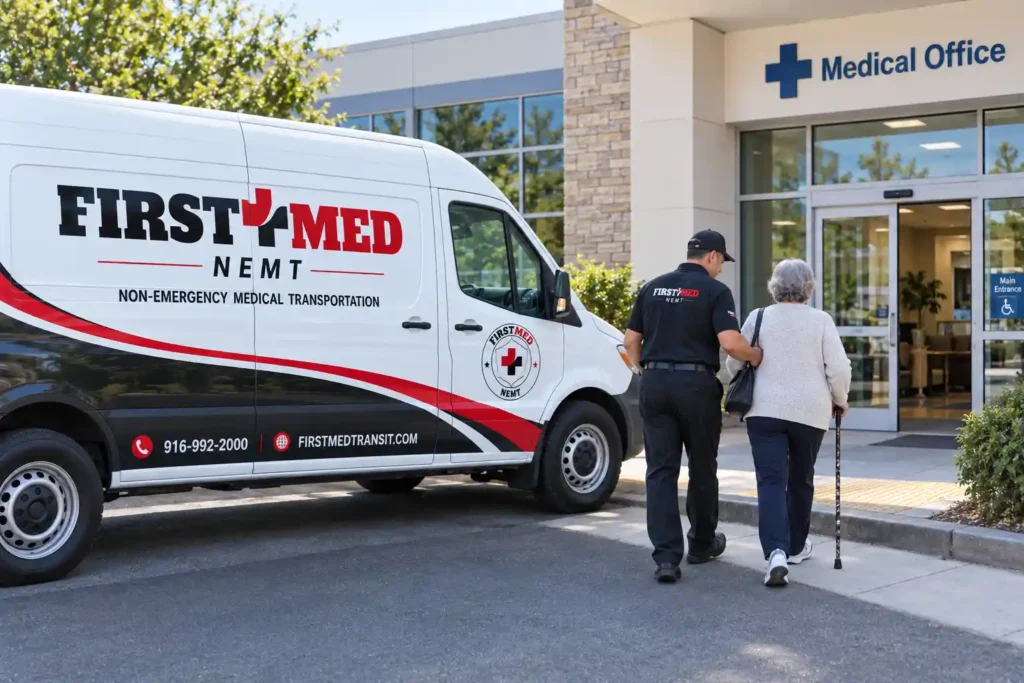
Getting home after a rider procedure can require more planning than simply calling a taxi or rideshare. Depending on the procedure, sedation, anesthesia, mobility requirements, or discharge instructions, the facility may require you to have a responsible adult or an approved transportation arrangement before you can leave.
The good news is that you have several options. You can arrange transportation with a family member or friend, ask the facility about available transportation resources, use eligible non-emergency medical transportation, or schedule a professional transportation service that can accommodate your mobility needs.
If you are wondering How to get a ride home from a medical procedure?, the most important step is to ask the medical facility about its discharge transportation policy before the appointment. That gives you time to arrange the right type of ride rather than trying to solve the problem after the procedure.
Why Do You Need a Ride Home After a Medical Procedure?
Some procedures involve sedation or anesthesia that can temporarily affect alertness, coordination, judgment, balance, or reaction time. Because of this, a healthcare facility may not allow you to drive yourself home afterward.
The exact requirements vary according to the procedure and facility. Some locations may require a responsible adult to accompany you, while others may have specific rules concerning who can pick you up and whether that person needs to remain available after discharge.
The safest approach is to ask these questions before your appointment:
- Do I need someone to take me home?
- Does the person need to stay at the facility during my procedure?
- Can a professional transportation provider meet the facility’s requirements?
- Will I need assistance from the vehicle to my front door?
- Does the facility require a specific type of transportation?
- What happens if my procedure takes longer than expected?
- Can the transportation provider wait until I am ready for discharge?
Mayo Clinic Press similarly recommends discussing transportation requirements with the facility in advance because some procedures require an escort home after sedation or anesthesia.

How to get a ride home from a medical procedure? Start Before Your Appointment
The best time to arrange your ride is before the procedure, not after it.
Discharge times can change. A procedure may take longer than expected, recovery may require additional observation, or the facility may have requirements that you did not know about when you scheduled the appointment.
Planning early gives you time to compare transportation options and confirm whether the provider can accommodate your specific needs.
1. Ask the facility about its transportation policy
Call the physician’s office, rider center, hospital, or surgical facility and explain that you need transportation home.
Ask specifically whether they require a responsible adult, whether that person must remain during the procedure, and whether a professional transportation service is acceptable.
2. Determine your mobility needs
Think about how you normally move around and whether that will change after the procedure.
You may need:
- Ambulatory assistance
- Wheelchair-accessible transportation
- Assistance with a walker or other mobility equipment
- A vehicle that can accommodate a wheelchair
- Stretcher transportation
- Door-to-door assistance
Providing accurate information during booking helps the transportation provider determine which vehicle and level of assistance are appropriate.
3. Book transportation ahead of time
Give the transportation company:
- Pickup facility name
- Facility address
- Appointment date
- Expected discharge window
- Home address
- Mobility requirements
- Mobility equipment
- Contact information
- Any special instructions from the facility
4. Confirm the return trip
Ask how the provider handles procedures that do not finish at an exact time.
Some transportation services may coordinate the return pickup once the facility confirms that you are ready to leave.
5. Keep the transportation provider’s contact information available
Save the company’s phone number before your appointment. This makes communication easier if the discharge time changes.
What Are Your Options for Getting Home After a Procedure?
There is no single transportation option that works for everyone. The right choice depends on the facility’s rules, your mobility, whether sedation was used, and the level of assistance you need.
| Transportation option | Best suited for | What to consider |
| Family member or friend | People with someone available to help | Confirm they can meet the facility’s requirements |
| Taxi | Basic transportation when permitted | May not provide mobility or door-to-door assistance |
| Rideshare | Some routine trips | May not satisfy facility escort requirements |
| NEMT provider | Scheduled healthcare-related transportation | Confirm the provider’s services and facility requirements |
| Wheelchair transportation | People traveling in a wheelchair | Requires an accessible vehicle and proper securement |
| Ambulatory transportation | People who can walk but need assistance | Useful when a standard ride is difficult |
| Stretcher transportation | People who need to remain lying down | Requires an appropriate vehicle and trained personnel |
| Medical companion service | Situations requiring an accompanying adult | Availability and scope vary by provider |
A standard rideshare should not automatically be considered an acceptable solution. Some facilities will not release someone after sedation to a rideshare driver because the facility’s discharge policy may require a responsible adult or another specific arrangement.
Always confirm the requirements directly with your facility.
Is a Rideshare or Taxi Enough After a Procedure?
This is one of the most important questions to ask before scheduling an appointment.
A taxi or rideshare may provide transportation from one location to another, but that does not necessarily mean it meets the discharge requirements of a medical facility.
For example, a facility may require someone to:
- Meet the individual at discharge
- Receive discharge instructions
- Help with belongings
- Assist with safe boarding
- Accompany the individual home
- Help them enter the residence
- Remain available afterward
A rideshare driver generally operates as a transportation provider rather than a designated responsible adult or medical escort.
That distinction matters particularly after sedation or anesthesia.
If you are considering a taxi or rideshare, ask your facility before the procedure whether it accepts that arrangement.
What If You Do Not Have Family or Friends Available?
Not everyone has someone available to provide transportation.
A family member may live in another city. Friends may have work obligations. A caregiver may already have other responsibilities. You may also prefer not to ask someone to rearrange their schedule.
In that situation, consider professional transportation.
Start by asking the facility whether it works with or can recommend transportation providers. You can also search for local non-emergency medical transportation providers and ask whether they serve your area and whether their service meets your facility’s discharge requirements.
For Sacramento-area healthcare transportation, FirstMed Transit provides scheduled NEMT services and transportation options for different mobility requirements.
What Is Non-Emergency Medical Transportation?
Non-emergency medical transportation, commonly called NEMT, is designed for scheduled healthcare-related transportation rather than emergency response.
It can be useful when someone needs transportation to or from:
- Medical appointments
- rider procedures
- Hospitals
- Rehabilitation facilities
- Dialysis appointments
- Therapy appointments
- Healthcare facilities
- Follow-up visits
- Other scheduled healthcare destinations
FirstMed Transit provides NEMT throughout Sacramento and surrounding communities, with ambulatory, wheelchair, and stretcher-capable transportation options.
If you need a broader overview of the available transportation options, you can connect this article to Non-Emergency Medical Transportation Services.
Choosing the Right Transportation Based on Mobility
Your transportation needs can change depending on how comfortably you can walk, stand, sit, or transfer after a procedure.
Ambulatory Transportation
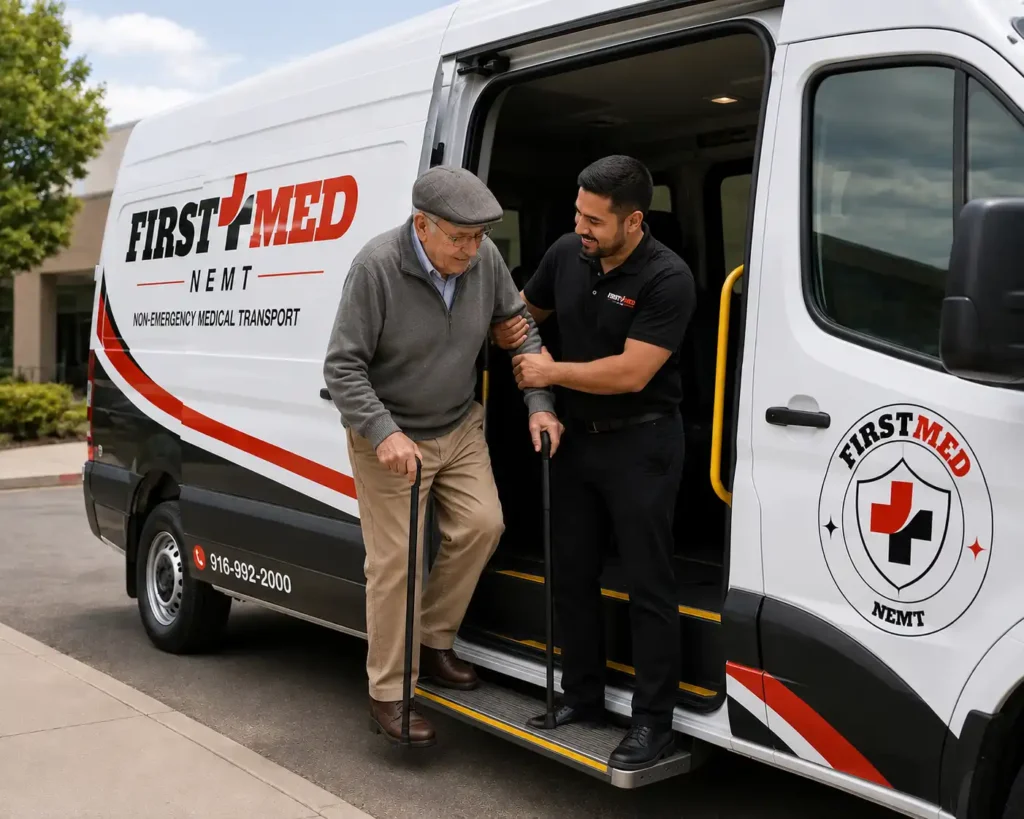
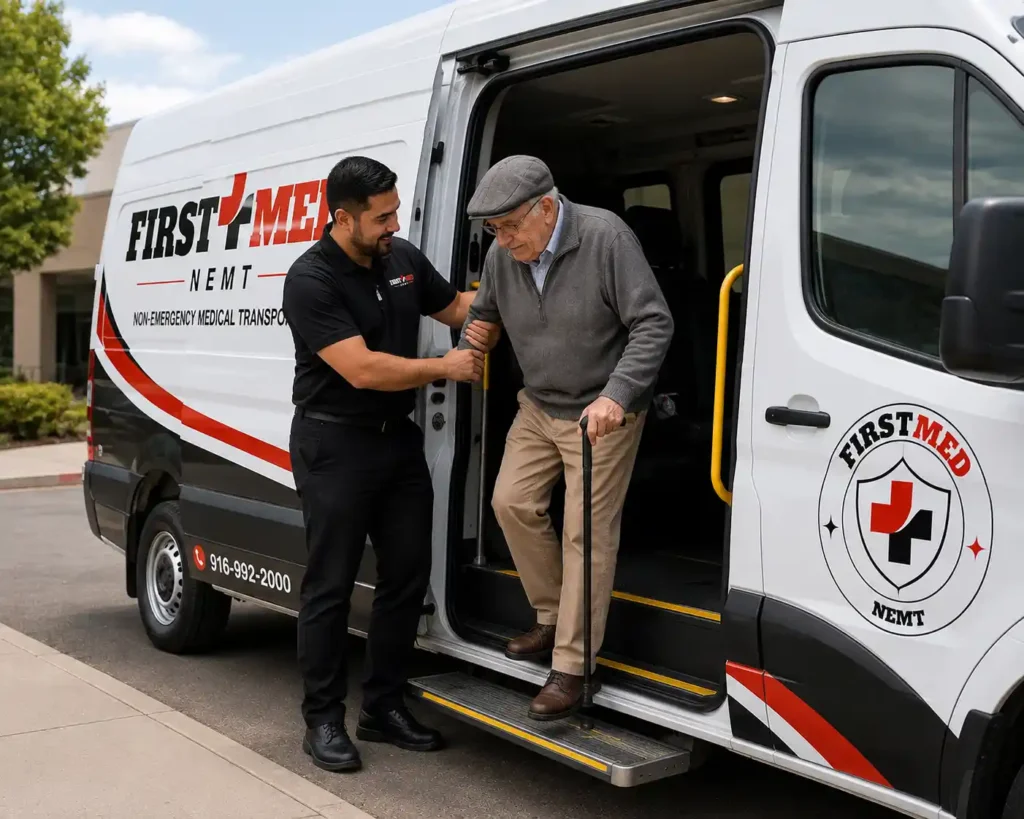
If you can walk independently or with limited assistance but cannot drive yourself, ambulatory transportation may be appropriate.
This can be useful after procedures when you are mobile but still need a reliable transportation option.
FirstMed Transit offers scheduled ambulatory transportation in Sacramento for healthcare-related trips and rider procedure visits.
You can naturally link readers looking for this type of service to Ambulatory Transportation
Wheelchair Transportation
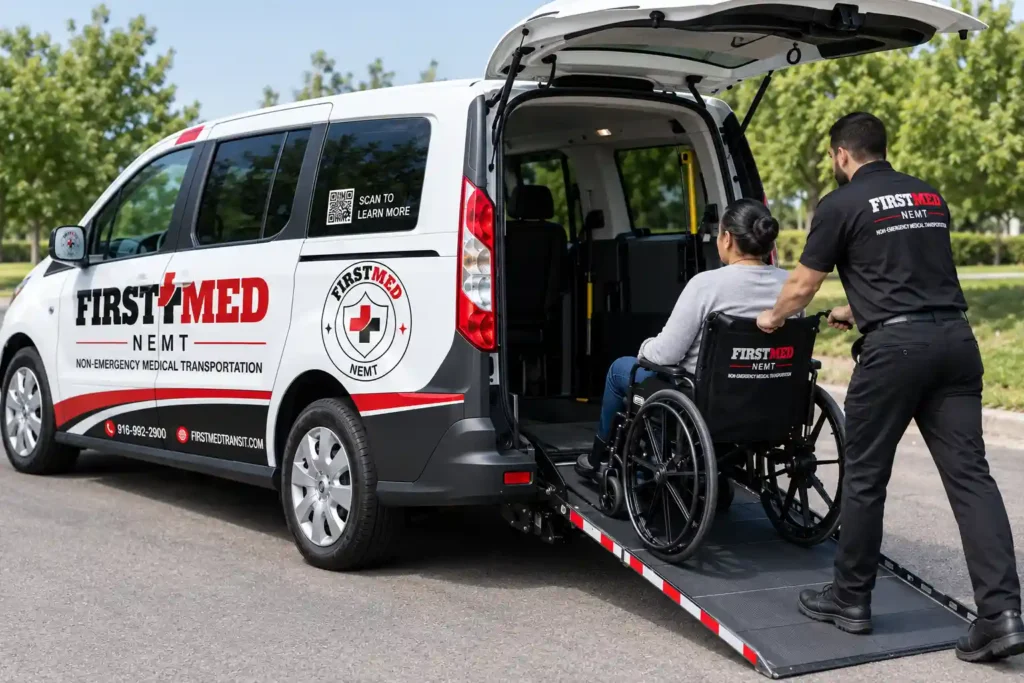
If you use a wheelchair, ask whether you can remain in your wheelchair during transportation or whether a transfer is required.
A wheelchair-accessible vehicle should have appropriate loading and securement equipment. FirstMed Transit provides wheelchair-accessible transportation with ramps or lifts and wheelchair securement systems.
Link this section to Wheelchair Transportation Sacramento.
Stretcher Transportation
Some people cannot comfortably remain seated after a procedure and may need transportation while lying down.
In that situation, a standard car, taxi, or wheelchair van may not be appropriate. A stretcher-capable transportation service may be necessary.
FirstMed Transit provides stretcher transportation for scheduled, non-emergency trips where the rider needs to remain in a lying position.
What Does Door-to-Door Transportation Mean?
The phrase “door-to-door” can mean different things depending on the provider, so ask exactly what is included.
For some services, door-to-door transportation means assistance from the pickup location to the vehicle and from the vehicle to the destination.
When returning home after a procedure, you may want to ask whether the service includes:
- Assistance leaving the facility
- Help with mobility equipment
- Safe boarding
- Vehicle-to-home assistance
- Help navigating the entrance
- Coordination with facility staff
FirstMed Transit describes its hospital-to-home transportation as supporting the trip from the hospital to the rider’s front door, with vehicle options based on mobility requirements.
How Much Does a Ride Home After a Procedure Cost?
The cost varies considerably depending on the transportation provider and the type of service required.
There is no universal price because factors can include:
- Distance
- Pickup and destination locations
- Vehicle type
- Wheelchair requirements
- Stretcher requirements
- Waiting time
- Companion or escort requirements
- One-way versus round-trip service
- Insurance or benefit eligibility
- Same-day scheduling
- After-hours transportation
A basic transportation service may cost less than a specialized wheelchair or stretcher trip because specialized vehicles and additional assistance may be required.
Questions to ask about price
Before booking, ask:
- What is the estimated total cost?
- Is the price one way or round trip?
- Is waiting time included?
- Is facility pickup included?
- Is door-to-door assistance included?
- Is wheelchair transportation priced differently?
- Are there additional fees for schedule changes?
- Does insurance or Medi-Cal cover the trip?
- When is payment due?
Getting these answers in advance can prevent surprises on the day of your procedure.
Can Insurance or Medi-Cal Pay for Transportation?
Coverage depends on eligibility, the type of trip, the healthcare benefit involved, and applicable program requirements.
If you have Medi-Cal, ask your plan or transportation coordinator whether your particular trip qualifies for non-emergency transportation.
Do not assume that every trip or every transportation provider is covered.
FirstMed Transit states that it accepts Medi-Cal and assists eligible riders with arranging covered non-emergency medical transportation.
For a coverage-related question, ask:
- Am I eligible for transportation benefits?
- Does my specific trip qualify?
- Does the transportation provider need prior authorization?
- Does the provider need to be part of a specific network?
- Do I need a referral?
- Is there a copay?
- What information does the transportation company need?
Related article you must know : Does Insurance Cover Non-Emergency Medical Transportation?
What Information Should You Give the Transportation Provider?
The more accurate the information you provide, the easier it is to arrange an appropriate ride.
Before booking, have these details ready:
Trip information
- Date
- Pickup time or expected discharge window
- Facility name
- Facility address
- Home address
- Contact phone number
Mobility information
- Walking ability
- Wheelchair use
- Walker or other mobility equipment
- Ability to transfer
- Need for stretcher transportation
- Number of people traveling
Procedure information
You do not need to share unnecessary private information. Instead, tell the transportation provider what matters for the trip, such as whether you will need wheelchair transportation, whether you cannot drive afterward, or whether the facility has specific transportation instructions.
What Should You Ask Before Booking a Ride Home?
Use this checklist when speaking with a transportation company:
Transportation checklist
- Does your service provide post-procedure transportation?
- Do you serve my facility?
- Can you pick me up from the discharge area?
- Can you coordinate with facility staff?
- Do you provide wheelchair transportation?
- Do you provide stretcher transportation?
- Can I bring my mobility equipment?
- Can a family member accompany me?
- Do you offer door-to-door assistance?
- How do you handle delayed discharge?
- Can I schedule a return trip in advance?
- Do you accept Medi-Cal?
- What is the estimated cost?
- What information do you need from my facility?
Getting clear answers before the appointment makes the transportation plan much easier to manage.
What If the Procedure Ends Later Than Expected?
This is another reason to plan transportation before the appointment.
rider procedures do not always finish at the originally estimated time. Recovery may take longer, or the facility may need additional time before discharge.
Ask the transportation provider how it handles variable discharge times.
Some providers coordinate return transportation around a discharge window rather than requiring an exact pickup minute. Other providers may use a wait-and-return arrangement depending on the service.
Never assume the driver will automatically know when you are ready. Establish the communication process in advance.
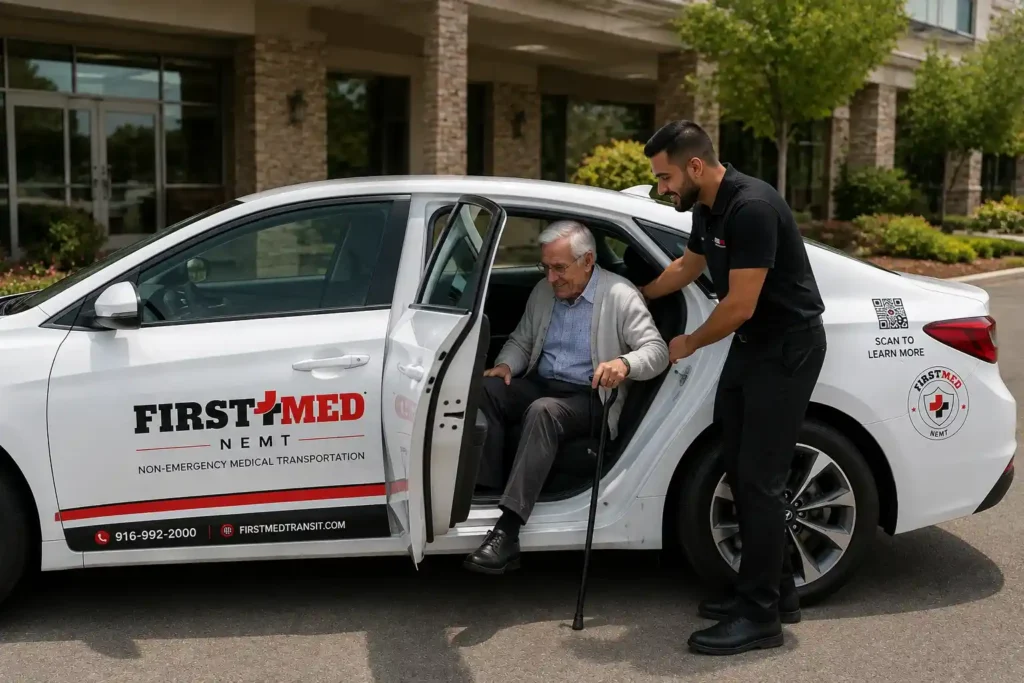
How Seniors Can Plan Transportation After a Procedure
Older adults may have additional transportation considerations, especially when they no longer drive or use mobility equipment.
Before the appointment, consider:
- How easily can you get into and out of the vehicle?
- Will you use a walker or wheelchair?
- Will someone be available at home?
- Is there a flight of stairs at the entrance?
- Will you need assistance getting inside?
- Does the facility require an escort?
- Should the return trip be booked at the same time?
For older adults in Sacramento, FirstMed Transit provides transportation to and from hospitals, healthcare facilities, rehabilitation locations, pharmacies, and other destinations.
This creates a natural opportunity to link to Senior Transportation
Hospital Discharge and rider Procedure Transportation Are Not Always the Same
A hospital discharge can involve different transportation requirements than a short rider appointment.
Someone leaving a hospital may be returning to:
- Their home
- A rehabilitation facility
- A skilled nursing facility
- An assisted living community
- Another healthcare facility
The transportation type depends on mobility, seating requirements, distance, and the discharge plan.
FirstMed Transit provides hospital discharge transportation across Sacramento County and surrounding communities, including transportation from hospitals, rider surgical centers, rehabilitation facilities, skilled nursing facilities, and other healthcare settings.
For readers specifically leaving a hospital, link to Hospital Discharge Transportation Service.
A Simple Step-by-Step Plan for Your Ride Home
If you want a straightforward process, use this seven-step checklist:
Step 1: Ask about transportation requirements
Contact the facility before your procedure.
Step 2: Decide who will provide the ride
Choose a family member, friend, professional transportation provider, or another option approved by the facility.
Step 3: Explain your mobility needs
Tell the transportation provider whether you walk independently, use a wheelchair, require assistance, or need stretcher transportation.
Step 4: Book early
Give yourself enough time to address scheduling or coverage questions.
Step 5: Confirm the pickup process
Find out where the driver will meet you and how the facility will notify the driver when you are ready.
Step 6: Keep contact information handy
Save the transportation provider’s number and the facility’s discharge contact.
Step 7: Confirm your home situation
Make sure you know how you will get from the vehicle into your residence and whether someone needs to be available when you arrive.
When Should You Arrange Your Ride?
Arrange your ride as soon as your procedure is scheduled, especially if sedation, anesthesia, mobility limitations, wheelchair use, or stretcher transportation may be involved.
Early planning gives you time to confirm facility requirements, check transportation availability, discuss costs, and select the right vehicle.
For recurring appointments, it may also be possible to establish a recurring transportation schedule instead of arranging every trip individually. FirstMed Transit offers recurring transportation for services such as dialysis, rehabilitation, and other scheduled healthcare visits.
Frequently Asked Questions
How do I get a ride home from a medical procedure if I do not have family nearby?
Ask the medical facility whether it accepts professional transportation providers and then contact a local NEMT company that serves the facility. Confirm the facility’s requirements before booking.
Can I take Uber or Lyft home after a procedure?
It depends on the facility and the procedure. Some facilities require a responsible adult or another approved arrangement after sedation or anesthesia. Ask your healthcare facility before relying on a rideshare.
Can a medical transportation company take me home after a rider procedure?
Some NEMT providers offer transportation after rider procedures. Confirm that the provider serves your facility and that its service meets the facility’s discharge requirements.
What if I use a wheelchair?
Ask for wheelchair-accessible transportation and tell the provider whether you intend to remain in your wheelchair during the ride. The provider can then determine whether an appropriate accessible vehicle is available.
What if I cannot sit upright after my procedure?
You may need stretcher-capable transportation. Discuss this requirement with the facility and transportation provider before your appointment.
How far in advance should I book transportation?
As early as possible. Early booking is particularly important when you need wheelchair or stretcher transportation, recurring service, or a trip involving a specific facility.
Can someone ride with me?
Policies vary by provider and vehicle capacity. Ask when booking and provide the number of accompanying riders in advance.
Does Medi-Cal cover a ride home after a procedure?
Some eligible healthcare transportation may be covered, but coverage depends on your benefits and the specific trip. Confirm eligibility and authorization requirements with your Medi-Cal plan or transportation coordinator.
What is the difference between NEMT and an ambulance?
NEMT is intended for scheduled, non-emergency transportation. An ambulance is designed for emergency or medically necessary transport requiring emergency medical care or monitoring. If an emergency occurs, call 911.