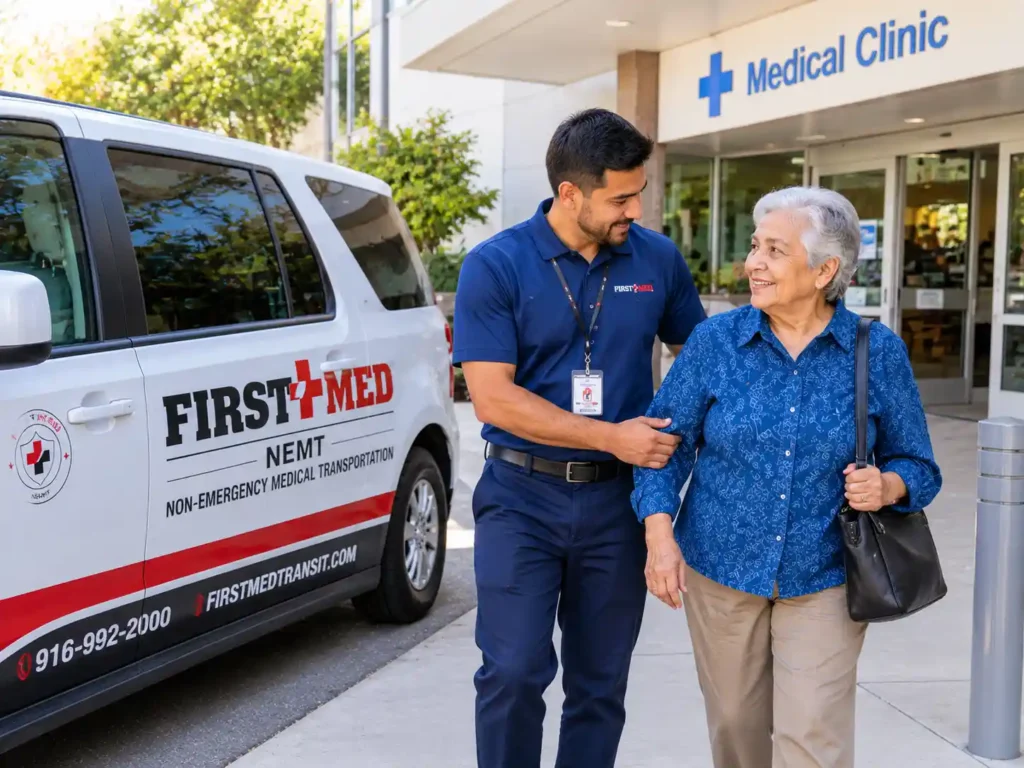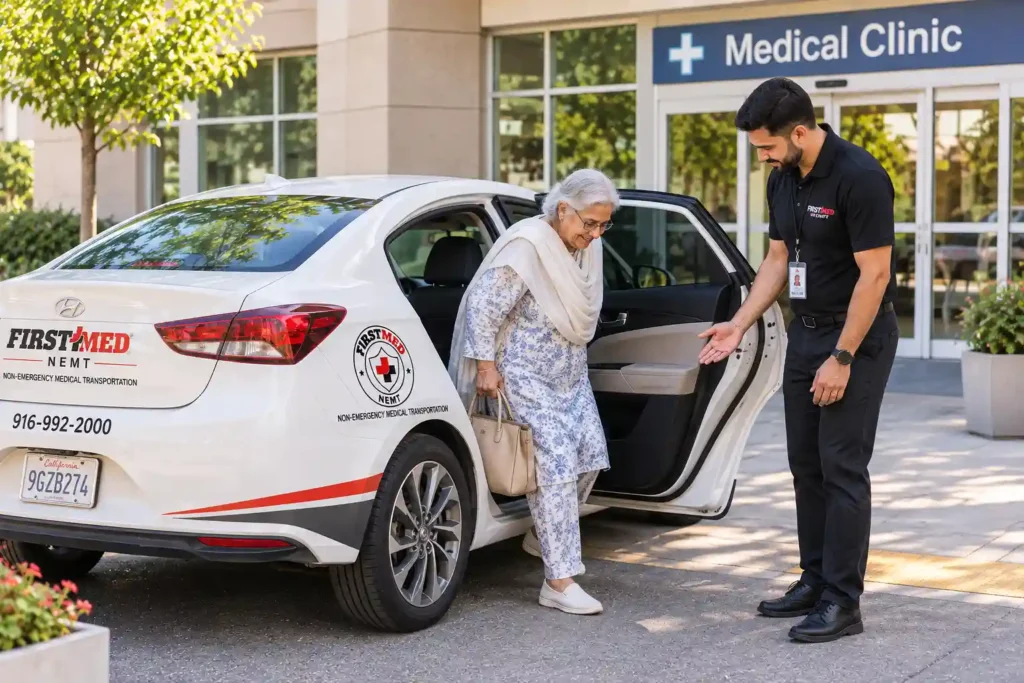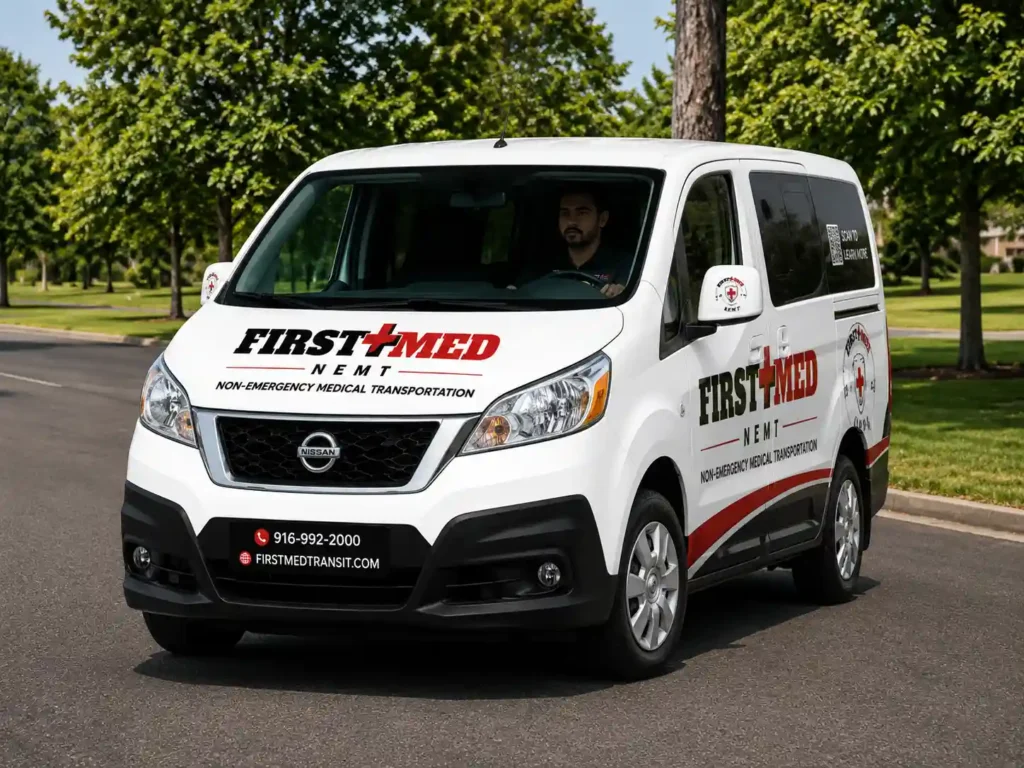
Often, yes. Whether you wear scrubs as a transporter depends on where you work and who signs your paycheck. Hospital transport teams usually issue scrubs or color-coded uniforms. Non-emergency medical transportation (NEMT) companies more often use a polo or uniform shirt with slacks. The details vary by employer, so this guide covers both settings, plus what to wear to an interview, which shoes hold up, and how to keep your uniform clean.
If you are applying for a transport job, comparing employers, or helping a family member choose a ride, you’ll find a straight answer below.

The Short Answer
Do transporters wear scrubs? In most hospitals, yes. The facility typically provides scrubs or a color-coded uniform, so the transporter is recognizable at a glance. In NEMT and ground medical transport companies, the dress code is more varied. Many drivers wear a branded polo, slacks or work pants, a visible badge, and closed-toe non-slip shoes. Some companies do use scrubs.
If you are asking before an interview, the safest approach is to dress business casual and ask the hiring manager what the daily uniform looks like. You will almost always be told on the spot.
Why Scrubs Became the Standard Uniform in Healthcare
Scrubs started in operating rooms as a way to keep clothing clean and limit contamination. They spread through the rest of the hospital because they solve several everyday problems at once:
- Easy laundering. The fabric tolerates hot washes and frequent cycles.
- Quick recognition. Many hospitals assign colors by department, so a transporter, a lab tech, and a surgical nurse are easy to tell apart.
- Freedom of movement. Lifting, pushing, bending, and walking miles a shift calls for loose, stretchy clothing.
- Clear separation from street clothes. Changing at work keeps outside dirt out of care areas and hospital exposure out of your home.
- Low cost of replacement. Spills, splashes, and wear are expected, and scrubs are cheap to replace.
Transporters spend a full shift moving through emergency departments, imaging suites, patient floors, and discharge areas. Clothing that survives all of that is a practical requirement, not just a style choice.
Do you wear scrubs as a patient transporter? What Hospitals Expect
Inside a hospital, a transporter is part of the support team that keeps care moving: bringing riders to imaging, surgery prep, therapy, and discharge, and returning wheelchairs, stretchers, and equipment. Because transporters share space with nurses, technicians, and visitors, hospitals tend to give them a distinct, easily identified uniform.
What you can usually expect:
- Scrubs provided or required. Some facilities hand you scrubs and handle laundering. Others expect you to buy your own in an approved color.
- Department color codes. A hospital might assign one color to transport, another to nursing, and another to environmental services. Wearing the wrong shade can cause confusion, so confirm the color before your first shift.
- Photo ID worn above the waist. Badges are non-negotiable for security and for identifying who is moving a vulnerable rider.
- Dress code covering shoes and accessories. Expect rules on closed toes, non-slip soles, limited jewelry, short nails, and tied-back hair.
Each hospital writes its own policy, so one facility’s rule may differ from another’s. Your onboarding paperwork is the final word.
What Do NEMT Drivers and Medical Transport Staff Wear?
Non-emergency medical transportation works differently from hospital transport. Instead of moving someone between floors, NEMT drivers pick up riders at home, assist them into a vehicle, and deliver them to appointments, dialysis, therapy, or a discharge. Because the work happens at homes, curbs, and clinic entrances, companies often choose a uniform that looks professional to families and holds up in a vehicle.
Common NEMT uniform choices:
- A branded polo or button-up shirt with the company name
- Dark slacks or work pants
- A photo ID badge or name tag
- Closed-toe, slip-resistant shoes
- A jacket or fleece in cooler months
Some operators prefer scrubs because they are comfortable and signal a healthcare background. Others avoid them so drivers are not mistaken for clinical staff. Neither approach is wrong. It comes down to the company’s brand and the kind of riders it serves.
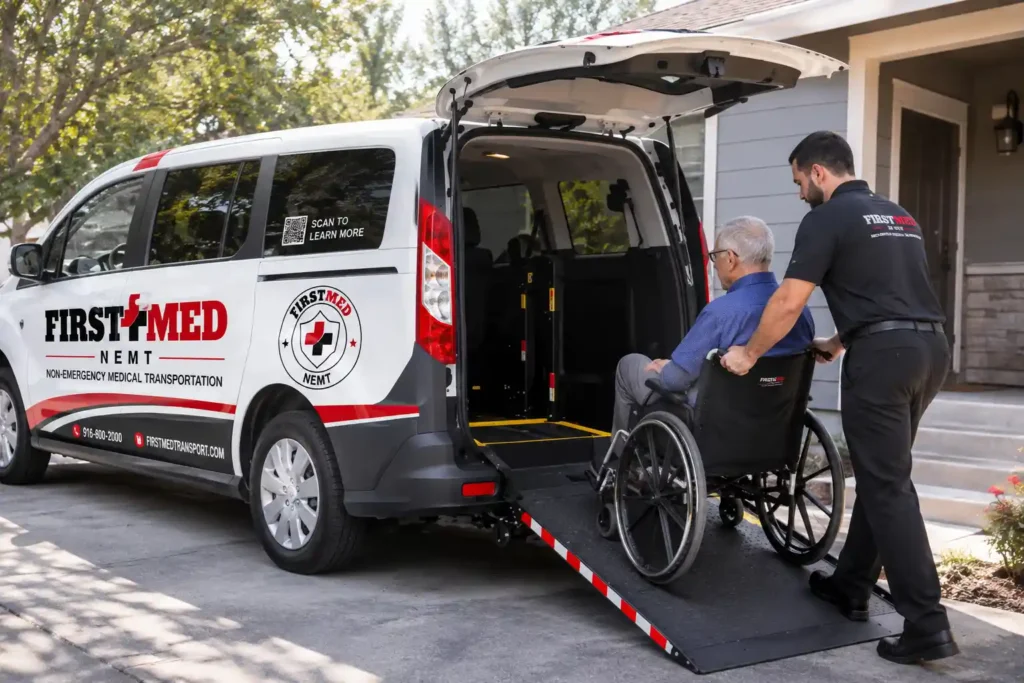
For example, a driver handling wheelchair transport needs pants that allow squatting to secure restraints and a shirt that won’t catch on a ramp or lift. A driver doing gurney transport needs freedom to lift and guide equipment safely. Comfort and safety usually drive the choice more than tradition.
Hospital Transporter vs. NEMT Driver: Uniform Comparison
| Factor | Hospital Transporter | NEMT / Ground Medical Transport Driver |
| Typical top | Scrub top, often color-coded | Branded polo or uniform shirt (scrubs at some companies) |
| Typical bottom | Scrub pants | Dark slacks or work pants |
| Who supplies it | Often the hospital | Often the company, or the driver buys it |
| ID badge | Required, visible | Required, visible |
| Footwear | Closed-toe, non-slip | Closed-toe, non-slip |
| Main work area | Corridors, elevators, care units | Homes, curbsides, vehicles, clinics |
| Biggest uniform concern | Department recognition and infection control | Professional appearance and vehicle-safe movement |
Do you wear scrubs as a patient transporter? What to Wear to the Interview
Do you wear scrubs as a patient transporter to the interview itself? Usually no. Hiring managers generally want to see business casual: a clean collared shirt or blouse, non-denim pants or a knee-length skirt, and shoes you could actually walk in. Showing up in scrubs before you are hired can look presumptuous unless you were told you would be shadowing someone that day.
A few practical tips:
- Choose walkable shoes. Interviews for transport roles sometimes include a walk-through of the building.
- Bring printed copies of your resume. Add your ID and any certifications, such as CPR or first aid.
- Ask about the uniform before you leave. A simple “What does the daily uniform look like?” shows you are already thinking about the job.
- Be ready to move quickly. Transport hiring can end with paperwork the same day.
If you are looking at driving roles in the Sacramento area, review the NEMT driver job openings to see what a local employer is looking for.
Infection Control and Safety: Why Clothing Matters
A uniform does more than make you look like part of the team. Transporters contact many surfaces and many people in a single shift, so what you wear and how you handle it affects everyone around you.
- Change before and after the shift when possible. Keeping work clothes at work lowers the chance of carrying anything home.
- Wash uniforms after every shift. Use the hottest cycle the fabric allows, following the care label.
- Follow hand hygiene steps. Sanitize before and after handling a rider or equipment.
- Use gloves, gowns, or masks when instructed. Isolation precautions are posted by the care team. Follow them every time, and remove protective gear before leaving the room.
- Clean equipment between uses. Wheelchairs, stretchers, and straps should be wiped down before the next rider.
Scrubs make this routine easier because they are built to be washed hot and often. A polo and slacks can work just as well when laundered consistently and replaced when worn.
Choosing Shoes and Gear That Last a Full Shift
Transporters often log several miles on hard floors. Footwear matters as much as the uniform itself.
Look for:
- Closed toes and closed heels
- Slip-resistant soles for wet floors and ramps
- Cushioned insoles and arch support
- Wipeable or easy-to-clean material
Useful extras:
- A lanyard or retractable badge reel
- A small watch with a second hand
- A pocket-size notepad and pen
- Compression socks if you stand long hours
Cost Breakdown: What a Transporter Uniform May Run You
Costs vary widely, and many employers cover some or all of them. Here is a realistic range if you are buying your own.
| Item | Typical Cost (USD) | Notes |
| Scrub sets (2–3 sets) | 30–120 | Price depends on brand and fabric quality |
| Branded polo shirts (2–3) | 25–75 | Often supplied by the company |
| Slip-resistant shoes | 40–120 | Replace roughly once a year with heavy use |
| Badge holder and lanyard | 5–15 | Frequently provided |
| Laundry and replacement | Ongoing | Budget for wear and tear |
Ask your employer what they cover before spending your own money.
Dignity, Trust, and First Impressions
For riders, the person at the door is the first face of the service. Many riders are seniors, people recovering from surgery, or those managing a long-term treatment schedule. A clean, consistent uniform and a visible badge tell them quickly that the person helping them is legitimate and trained.
This matters for families, too. Handing over the care of a parent or spouse takes trust, and professional presentation supports it. At First Med Transit, our drivers are CPR and First Aid-certified, trained in passenger assistance, and focused on safe, respectful door-to-door service. That level of preparation is what families should look for from any provider. You can learn more about our approach on the About Us page.
How Uniform Needs Change by Type of Transport
Different services place different demands on clothing:
- Wheelchair rides: Pants with room to crouch and shoes with grip for ramps and lifts.
- Stretcher (gurney) rides: Breathable fabric and a firm footing for team lifting and guiding. Learn how this works on our gurney transport page.
- Walking assistance: A shirt with enough give for offering an arm without restriction, which suits ambulatory transport.
- Recurring treatment trips: Consistent, clean presentation builds familiarity over weeks of repeat visits, especially for dialysis transport riders.
- Hospital exits: Quick coordination with nursing staff, where a recognizable look helps during hospital discharge transport.
Practical Tips If You’re Starting a Transport Job
- Confirm the uniform policy in writing before buying anything.
- Buy at least two sets so you always have a clean one ready.
- Label your gear if you share lockers or break rooms.
- Break in new shoes a week before your first shift.
- Pack a spare shirt. Spills and splashes happen in medical settings.
- Keep your badge visible every moment you are on duty.
- Iron or steam polos so the uniform stays sharp.
- Dress in layers under scrubs or a polo, since many buildings run cold.
If you are curious about the business side of the industry, our post on whether it’s worth starting a company in this field explains the realities: Is NEMT business worth it? A Practical NEMT Profitability Guide for 2026.
What Riders and Families Should Look For
If you are booking a ride rather than applying for a job, a uniform tells you something, but it is not the whole picture. Check for these signs of a trustworthy provider:
- A visible photo ID on the driver
- A clearly marked, clean vehicle
- Proper securement for wheelchairs and gurneys
- Driver training in assistance and safety
- Clear communication about pickup windows
- Transparent guidance on coverage
We help eligible riders sort out coverage on our Insurance & Medi-Cal page, and our fleet and vehicles page shows what you can expect when we arrive.
If you are comparing mobility options, our guide How does a wheelchair taxi work? is a useful companion read.
Frequently Asked Questions
Do transporters have to wear scrubs?
Not always. Many hospitals require or provide scrubs for transport staff, while NEMT companies often choose polos and slacks instead. Your employer’s policy decides.
What color scrubs do transporters wear?
Hospitals that use color coding assign a specific shade to transport staff, and the color differs from one facility to the next. Ask during onboarding before buying scrubs.
Who pays for the uniform?
Practices vary. Some employers supply and launder uniforms, some give an allowance, and others expect you to buy your own. Ask before you purchase.
Can I wear my own scrubs to work?
Only if your employer allows it and the color and style match their policy. Many facilities restrict unapproved colors, logos, or patterns.
What shoes are best for transport work?
Closed-toe, slip-resistant, cushioned shoes that are easy to wipe clean. Avoid canvas sneakers that soak up spills.
Should I wear scrubs to a transport job interview?
No, unless you were told otherwise. Business casual is the norm. Ask about the daily uniform at the end of the interview.
Is a hospital transporter the same as an NEMT driver?
No. A hospital transporter moves people inside a facility between departments. An NEMT driver picks up riders from homes or facilities and drives them to appointments in a vehicle. The roles and dress codes often differ.
Do drivers need certifications?
Many employers prefer or require CPR and first aid. Requirements vary, so check the job posting. First Med Transit’s team is CPR and First Aid-certified.
Can I get same-day transportation if I need it?
Yes. We offer same-day NEMT service in Sacramento as well as scheduled rides.