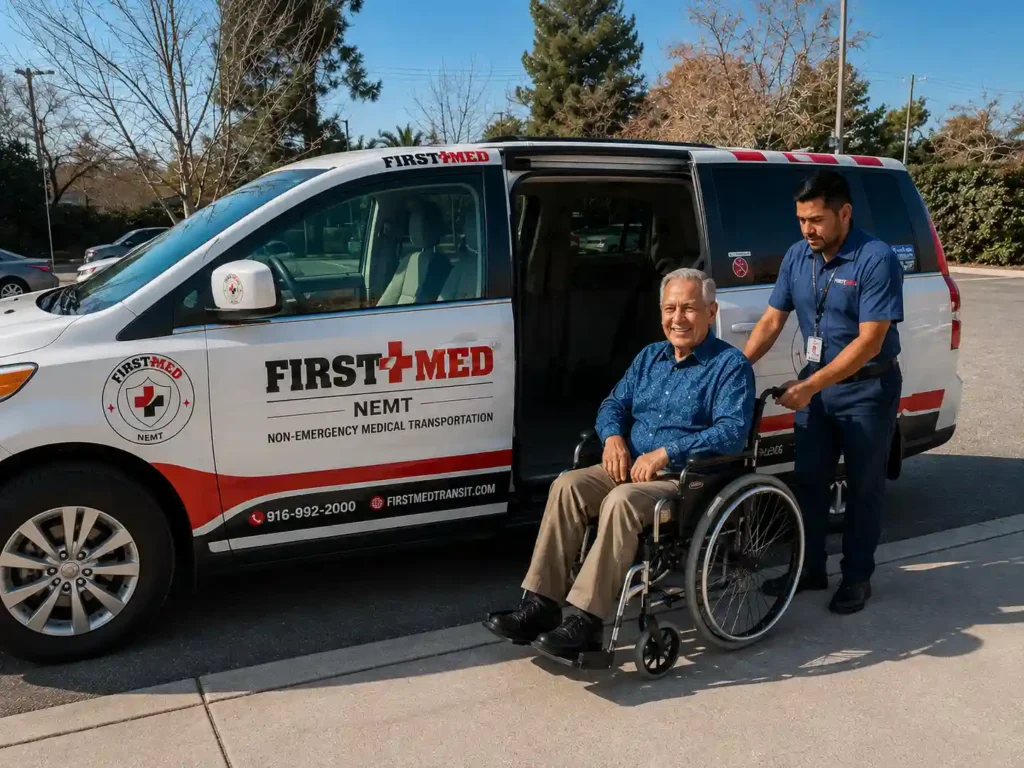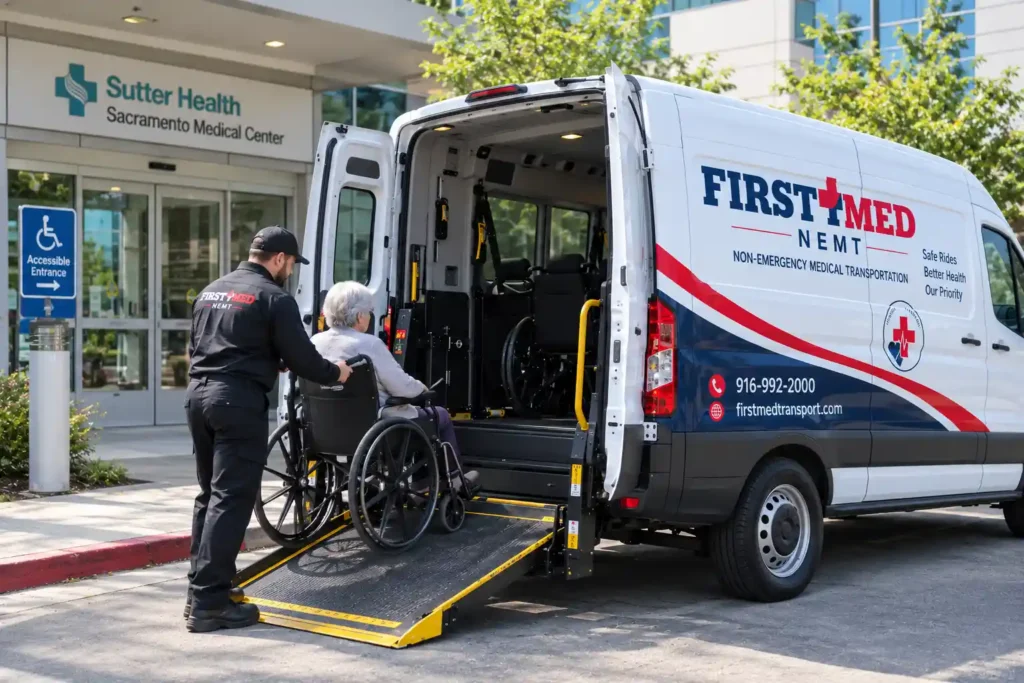
Starting a non-emergency medical transportation company can look attractive from the outside. Demand is recurring, many riders require dependable transportation several times each month, wheelchair-accessible services solve a genuine mobility problem, and Medicaid programs have longstanding transportation obligations.
But Is NEMT business worth it? The answer depends far more on your operating model than on the size of the transportation market.
A NEMT company can become a sustainable business when trip pricing exceeds the true cost of completing each ride, vehicles stay productively scheduled, routes are geographically efficient, reimbursement is collected reliably, and compliance is handled correctly. It can also become an expensive operation with full schedules and little actual profit when owners underestimate driver hours, commercial insurance, deadhead mileage, vehicle downtime, cancellations, administrative work, or slow payments.
This guide examines NEMT profitability from the business side: demand, startup costs, revenue models, contracts, margins, route density, fleet utilization, California requirements, scaling, common failure points, and the numbers an owner should calculate before purchasing the first vehicle.
Is Nemt business worth it? The short answer
Yes, potentially—but only when the economics work at the trip and vehicle level.
Demand for non-emergency transportation has a strong structural foundation. Federal Medicaid rules require state programs to assure necessary transportation to covered services, and CMS continues to maintain transportation requirements and minimum standards for providers and drivers.
California also operates extensive Medi-Cal transportation programs. The California Department of Health Care Services distinguishes NEMT from NMT and explains that qualifying transportation can include wheelchair vans, litter vans, and other approved modes depending on mobility requirements.
Demand, however, does not guarantee profitability.
A strong NEMT business needs four things working together:
- Enough completed trips.
- Adequate collected revenue per trip.
- Efficient use of drivers and vehicles.
- Tight control over operating costs.
A company missing any one of those can stay extremely busy without producing acceptable returns.
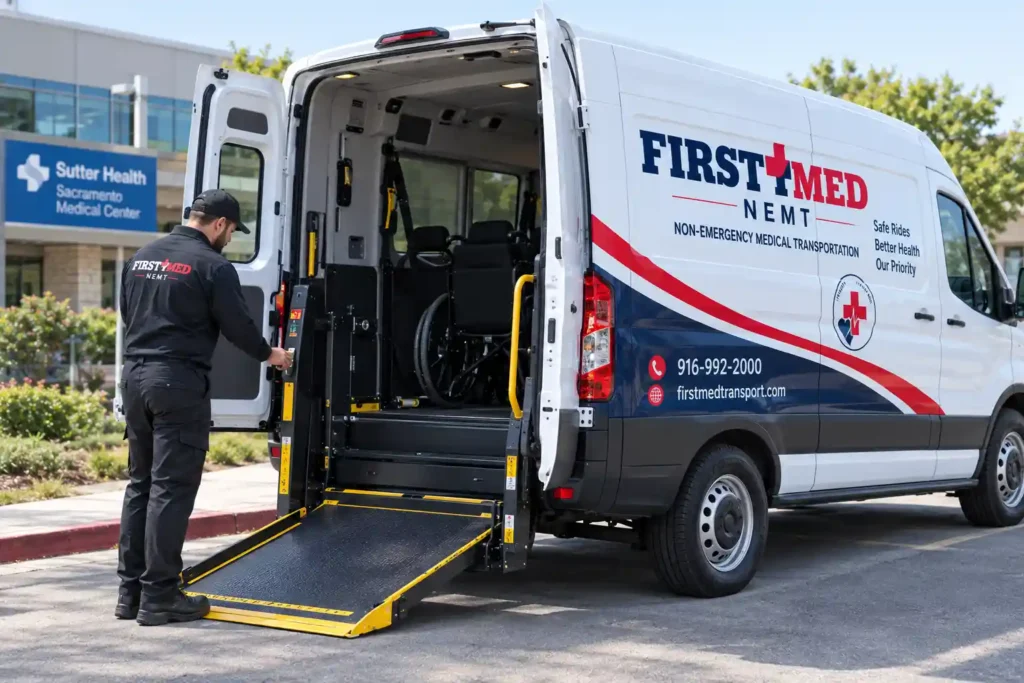
Why NEMT Has a Real Demand Base
NEMT is not simply another taxi model. It fills a transportation gap for people who need scheduled access to healthcare facilities but cannot reasonably use ordinary public or private transportation.
Common trip categories include:
- Dialysis transportation
- Wheelchair transportation
- Hospital discharge transportation
- Rehabilitation visits
- Therapy appointments
- Specialist appointments
- Senior transportation
- Ambulatory transportation
- Litter or gurney transportation
- Recurring healthcare transportation
- Long-distance scheduled transportation
This creates one of the most attractive characteristics of the business: repeat demand.
A one-time airport transfer ends when the trip is finished. A recurring healthcare schedule can generate multiple trips every week from the same rider, facility, or referral relationship.
First Med Transit demonstrates how a real provider can diversify across wheelchair, ambulatory, senior, discharge, and other transportation categories rather than relying on one trip type. Business owners researching service structure can review non-emergency medical transportation services to understand how those service lines fit within one NEMT operation.
For readers who need the broader service definition before evaluating the business model, the detailed guide explaining what NEMT transportation is provides useful context about trip types, mobility levels, scheduling, and transportation use cases.
The NEMT Profit Equation That Matters Most
Owners should stop asking only, “How much revenue can one van make?”
A better equation is:
Contribution per completed trip × number of completed trips − fixed operating costs = operating profit
Suppose a company receives $55 after adjustments for an average completed one-way trip.
If the true trip-specific cost—including fuel, driver time attributable to the trip, payment-processing costs, and other variable expenses—is $18, the trip contributes $37 toward fixed expenses and profit.
That sounds attractive.
But now add:
- Commercial auto insurance
- Vehicle financing
- General liability coverage
- Workers’ compensation where applicable
- Dispatch software
- GPS and communications
- Licensing and credentialing
- Office and administrative costs
- Accounting
- Marketing
- Repairs
- Vehicle replacement reserve
- Compliance management
Profit begins only after those costs are covered.
That is why revenue screenshots and gross sales figures provide very little insight into the underlying health of a transportation company.
NEMT Revenue vs. Profit: An Illustrative Example
The table below is not a forecast or industry-standard rate. It is a simple model showing why vehicle utilization matters.
Assume:
- Average collected amount: $50 per completed one-way trip
- 22 operating days per month
- Variable trip cost: $14
- Fixed monthly operating expenses: $4,600
| Completed Trips Per Day | Monthly Completed Trips | Gross Revenue | Variable Costs | Fixed Costs | Illustrative Operating Result |
| 4 | 88 | $4,400 | $1,232 | $4,600 | -$1,432 |
| 6 | 132 | $6,600 | $1,848 | $4,600 | $152 |
| 8 | 176 | $8,800 | $2,464 | $4,600 | $1,736 |
| 10 | 220 | $11,000 | $3,080 | $4,600 | $3,320 |
The lesson is more important than the example figures:
Vehicle ownership does not create profit. Productive vehicle utilization creates the opportunity for profit.
A van completing four economically weak trips per day can be a liability. The same van operating eight carefully routed trips at sustainable rates may become a useful asset.
How Much Does It Cost to Start a NEMT Business?
Startup requirements vary dramatically by location, vehicle type, financing structure, insurance market, service level, and payer strategy.
Recent 2026 NEMT planning resources illustrate how wide the range can be. One estimates roughly 23,000–51,000 in available capital for a one-vehicle operation using a used wheelchair van and including a reserve, while another industry planning source presents startup ranges extending from roughly $30,000 to more than $90,000 depending on equipment and structure. These are planning estimates rather than universal requirements.
Typical startup-cost categories
| Expense Category | Why It Matters |
| Vehicle purchase or down payment | Usually the largest asset requirement |
| Wheelchair accessibility equipment | Required for accessible trip types |
| Commercial auto insurance | Frequently far higher than personal vehicle insurance |
| General liability coverage | Protects the operating company |
| Registration and permits | Requirements differ by jurisdiction and service type |
| Vehicle inspections | May be necessary for program enrollment |
| Driver screening and credentials | Required by contracts or regulations |
| CPR and first-aid credentials | Common operational requirement |
| Dispatch and scheduling software | Important for route density and trip tracking |
| GPS/communications | Supports dispatch and accountability |
| Website and local marketing | Helps build direct demand |
| Billing infrastructure | Critical for reimbursement-based revenue |
| Working capital | Covers expenses while collections are pending |
| Maintenance reserve | Protects the company from unexpected repairs |
The biggest mistake is budgeting enough money to open but not enough money to operate while building volume and waiting for collections.
Is Nemt business worth it? Run these numbers before you invest
Before buying a wheelchair-accessible van, create a simple unit-economics model.
Start with these numbers:
1. Average collected revenue per trip
Use what you realistically expect to collect, not the amount shown on an invoice.
Separate:
- Broker rates
- Medi-Cal-related rates
- Facility contract rates
- Private-pay rates
- Wheelchair rates
- Ambulatory rates
- Long-distance rates
Each payer category can produce different economics.
2. Cost per completed trip
Include more than gasoline.
Calculate:
Driver time + fuel + mileage-related maintenance + dispatch effort + tolls + payment costs + trip-specific supplies
3. Deadhead mileage
Deadhead is mileage driven without a paying rider.
For example:
Garage → pickup = unpaid miles
Pickup → destination = productive miles
Destination → next pickup = potentially unpaid miles
A business can report excellent booked mileage yet lose margin through inefficient positioning.
4. Completed-trip rate
Ten scheduled trips are not necessarily ten paid trips.
Track:
Completed trips ÷ scheduled trips × 100
Late cancellations, no-shows, authorization problems, scheduling errors, or failed pickups can reduce effective revenue.
5. Vehicle utilization
Measure how many available vehicle hours actually produce economic value.
A $60,000 accessible van parked for half the business day is an underused asset.
6. Days sales outstanding
Know how long it takes to receive money after a trip.
Profit on paper does not pay tomorrow’s insurance premium if reimbursement arrives weeks later.
NEMT Startup Economics: The Importance of Payer Mix
A strong NEMT company does not necessarily want the highest possible number of trips. It wants the strongest combination of rate quality, reliability, route density, and repeatability.
Broker and program-based trips
Advantages can include regular volume and access to a broad transportation network.
Potential drawbacks can include:
- Contracted pricing
- Administrative requirements
- Documentation rules
- Payment timing
- Limited pricing control
- Credentialing requirements
Facility contracts
Hospitals, rehabilitation centers, senior communities, dialysis centers, outpatient facilities, and similar organizations can generate valuable recurring relationships.
The strongest facility relationships may offer:
- Repeated trips
- Predictable locations
- Easier route clustering
- Lower marketing cost per booking
- Greater schedule visibility
Private-pay transportation
Direct-pay bookings may offer greater pricing flexibility but usually require stronger local marketing, reputation management, customer service, and conversion processes.
First Med Transit’s consumer-facing non-emergency medical transportation cost guide shows how trip distance, mobility level, vehicle type, wait time, same-day requirements, and equipment can influence the price charged for transportation.
A diversified payer strategy may reduce dependence on one source of trip volume.
Why Recurring Transportation Can Be More Valuable Than Random Trips
Recurring routes can materially improve NEMT economics.
Consider two schedules.
Schedule A: Eight unrelated pickups scattered across a large metropolitan area.
Schedule B: Eight recurring trips concentrated around a small number of facilities and nearby ZIP codes.
Both have eight trips.
Schedule B may generate better economics because it can reduce:
- Empty mileage
- Driver idle time
- Dispatch complexity
- Fuel consumption
- Schedule uncertainty
- Acquisition cost per trip
This is why recurring transportation categories can be strategically valuable.
A high-quality dialysis transportation relationship, for example, can create predictable weekly demand. Likewise, scheduled rehabilitation, therapy, senior transportation, and recurring specialist visits can build route density over time.
Route Density May Matter More Than Revenue Per Trip
Imagine two trips:
Trip A: pays $70 and requires 20 miles of unpaid repositioning.
Trip B: pays $55 but begins two miles from the vehicle’s previous drop-off.
The higher-paying trip is not automatically more profitable.
NEMT owners should evaluate revenue per vehicle hour and contribution per total mile, not merely revenue per booking.
Useful operating KPIs include:
| KPI | What It Reveals |
| Revenue per completed trip | Pricing quality |
| Revenue per vehicle hour | Vehicle productivity |
| Revenue per total mile | Geographic efficiency |
| Deadhead percentage | Routing waste |
| Trips per vehicle per day | Utilization |
| On-time pickup rate | Operational reliability |
| Cancellation rate | Revenue leakage |
| Collection rate | Billing performance |
| Driver overtime | Scheduling inefficiency |
| Maintenance cost per mile | Fleet health |
These metrics can tell an owner far more than monthly gross revenue alone.
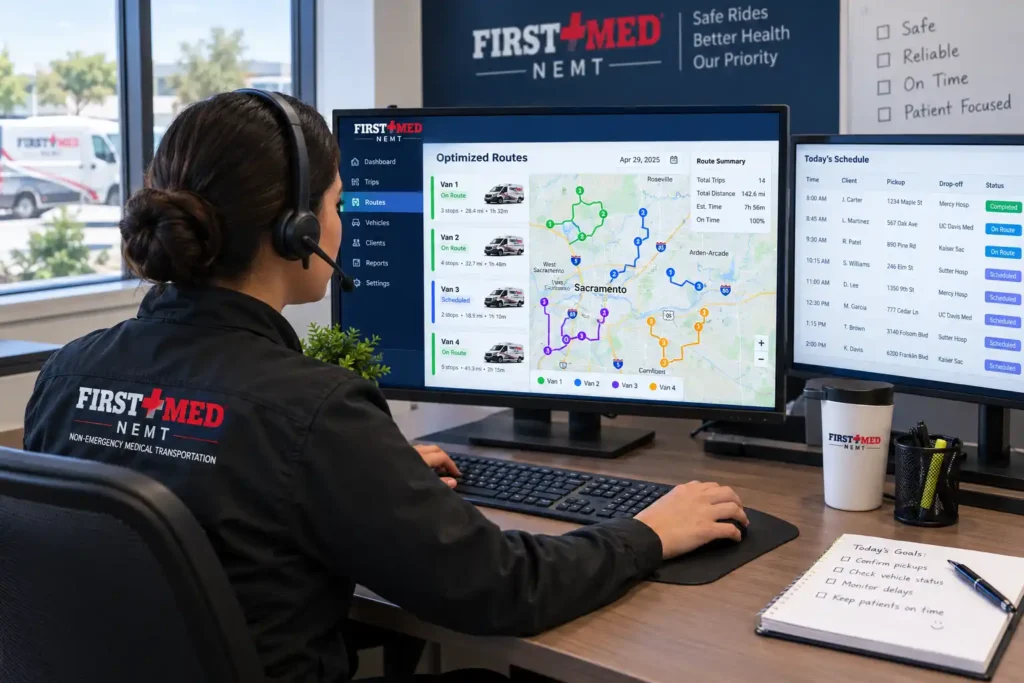
California NEMT Compliance Can Affect Profitability
Anyone evaluating a California NEMT company should treat compliance as a business cost, not an afterthought.
The California Department of Health Care Services requires transportation providers seeking applicable Medi-Cal enrollment to use the PAVE enrollment system. Requirements may include business documentation, commercial registration and insurance, local licenses, vehicle information, driver records, training documentation, and other materials depending on provider type.
DHCS also updated applicable vehicle-inspection requirements. For relevant NEMT enrollment applications, a valid Vehicle Safety Systems Inspection certificate became part of the updated process after March 27, 2025.
Federal Medicaid rules likewise establish minimum transportation-provider and driver safeguards involving valid licenses, federal exclusion checks, driving histories, and processes concerning certain legal violations.
These requirements create barriers to entry—but that is not necessarily negative for a serious operator.
Compliance requirements can discourage weak competitors who expect to purchase a van and begin billing immediately.
Why Working Capital Is So Important
Many transportation startups focus almost entirely on the vehicle purchase.
Cash flow can be a bigger threat.
Consider expenses that continue regardless of whether a payer has issued reimbursement:
- Payroll
- Fuel
- Vehicle payments
- Insurance
- Repairs
- Software
- Mobile service
- Office expenses
- Compliance costs
If revenue is earned this month but collected next month, the company must finance the gap.
That is why a startup reserve should not be treated as optional leftover money.
A company can be profitable on an accrual basis and still run into serious cash-flow pressure.
NEMT Services That Can Strengthen Revenue Diversification
A provider capable of safely delivering multiple transportation levels can serve a wider market.
Potential service categories include ambulatory rides, wheelchair-accessible transport, senior transportation, scheduled discharge transportation, long-distance trips, same-day transportation, recurring transportation, and other approved non-emergency mobility services.
First Med Transit’s same-day NEMT Sacramento service illustrates another potential service segment: short-notice transportation that is urgent from a scheduling perspective but does not require emergency response.
Service expansion should still follow economics. Adding a new transportation category only makes sense when expected volume and pricing justify equipment, staffing, insurance, training, and operational complexity.
Seven Reasons NEMT Businesses Struggle
1. Buying vehicles before securing demand
An accessible van is not a customer-acquisition strategy.
Validate local demand, referral sources, payer opportunities, and competitor coverage before expanding the fleet.
2. Pricing from competitors instead of costs
A competitor’s rate may be unsustainable—or may reflect an entirely different payer arrangement.
Know your break-even rate first.
3. Ignoring empty mileage
Deadhead can quietly destroy otherwise reasonable trip margins.
4. Depending on a single payer
Losing one broker, facility agreement, or referral relationship can destabilize revenue.
5. Scaling before the first vehicle works
If the first vehicle has weak unit economics, five vehicles usually multiply the problem.
6. Underestimating administration
Transportation companies also manage scheduling, authorizations, records, billing, renewals, insurance, driver files, complaints, reporting, and collections.
7. Treating reliability as a soft metric
Late pickups can damage contracts and referrals.
In NEMT, reliability is a revenue asset.
When a NEMT Business Is Most Likely to Be Worth Building
The opportunity becomes considerably stronger when several conditions are present simultaneously.
You have a clear service area with consistent demand. You understand the local payer ecosystem. You have identified healthcare facilities and referral channels before acquiring multiple vehicles. You can calculate contribution margin by trip type. You have enough working capital to survive payment delays and early underutilization. You have a compliance process rather than scattered paperwork. You can cluster trips geographically. You have a plan for recurring transportation. And you know exactly how many completed trips each vehicle needs to reach break-even.
The business becomes much weaker when the strategy is simply:
“Buy a van, register a company, and wait for calls.”
When NEMT May Not Be a Good Investment
NEMT may be a poor fit when:
- Startup capital is extremely limited.
- There is no reserve for repairs or delayed collections.
- Commercial insurance makes local economics unworkable.
- Local rates do not cover the true cost per trip.
- The owner has no strategy for obtaining contracts or direct bookings.
- Trips are geographically scattered.
- Driver availability is unreliable.
- Compliance requirements are poorly understood.
- Growth depends entirely on one broker.
- The business requires debt payments that assume immediate full utilization.
Walking away from weak economics is better than forcing the business model to work because the overall market appears attractive.
Can a One-Van NEMT Business Be Profitable?
Yes, but the key question is whether that single vehicle can reach sufficient productive utilization.
A one-vehicle owner-operated model may reduce payroll expense, but it also creates constraints. The owner becomes driver, dispatcher, marketer, scheduler, billing coordinator, and operations manager.
That can work during validation.
It becomes harder as demand grows.
Before adding vehicle number two, vehicle number one should demonstrate:
- Repeatable trip demand
- Positive contribution margin
- Reliable collections
- Strong on-time performance
- Sustainable route density
- Documented operating procedures
Expansion should follow proof, not optimism.
Should You Focus on Medi-Cal, Private Pay, or Contracts?
The strongest answer is often a controlled mix, provided the business is properly approved for every service and payer it accepts.
Medi-Cal transportation can provide meaningful demand in California because DHCS maintains transportation benefits and provider pathways.
Private-pay trips can offer greater control over pricing and scheduling.
Facility relationships can create recurring local volume.
The exact mix should be based on contribution margin, route quality, payment reliability, administrative workload, and customer-acquisition cost.
For a deeper look at the funding side of California transportation, the related blog post who pays for non-emergency medical transportation in California explains the major payment channels and how they differ.
Another related blog post, insurance coverage for non-emergency medical transportation, explains differences among Medi-Cal, Medicare-related benefits, private coverage, and direct payment.