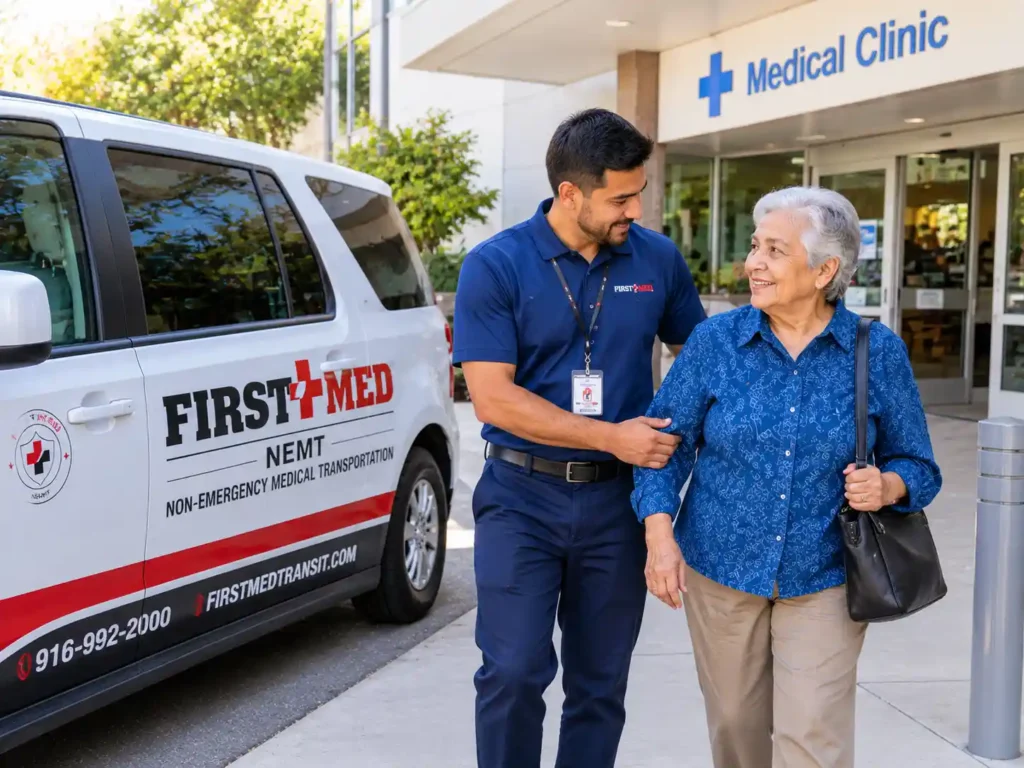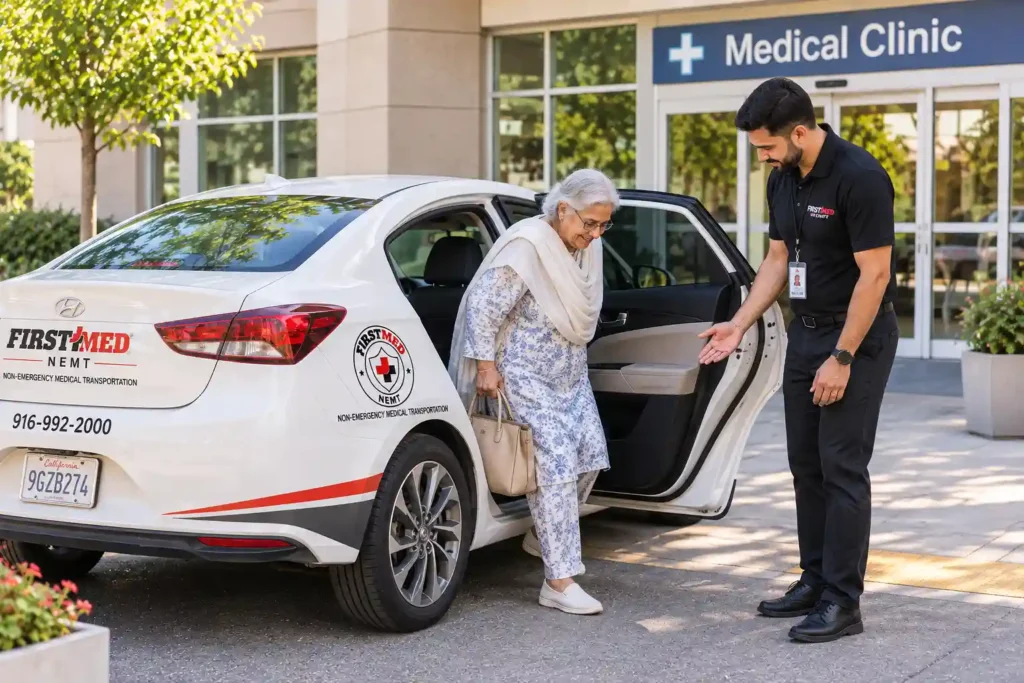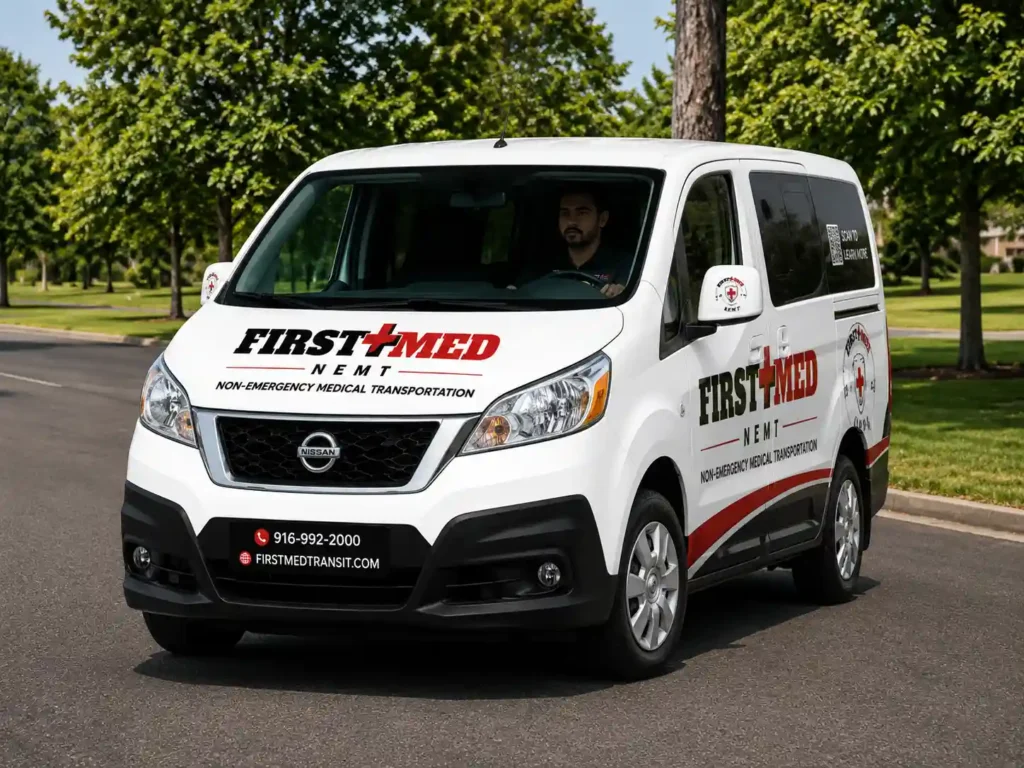
You are not the first person to schedule a procedure and then realize the ride home is a problem. The good news is that it is solvable, and the best time to solve it is before surgery day, not at the front desk with a gown on. Most surgery centers and hospitals will not release you after anesthesia or sedation unless a responsible adult is lined up to take you home, and some will cancel the procedure if no one is. This guide covers why that rule exists, what to say to your care team, and the safe, practical ride options available, including professional medical transportation.
The Short Answer
If you have no one to drive you home after surgery, tell your surgeon’s office as early as possible and arrange a safe alternative before the procedure. Your realistic options are:
- Ask a friend, neighbor, coworker, or faith community member to be your escort.
- Book a professional non-emergency medical transportation (NEMT) service for door-to-door help.
- Ask your facility whether it has a discharge or social work team that can arrange a ride.
- Check whether your Medi-Cal or insurance plan covers transportation.
- Reschedule the procedure if no safe option exists.
Do not plan to drive yourself, and do not assume a regular rideshare will be accepted. Facility rules vary, so confirm each choice with the staff who will discharge you.
Why Surgery Centers Require a Ride Home
The rule is not red tape. Anesthesia and sedation can linger in your system long after you feel awake. During that window, judgment, reaction time, balance, and memory can all be affected, even if you feel fine. Pain medication prescribed afterward can add to drowsiness.
That is why facilities typically ask for all of the following:
- A responsible adult at pickup. They sign you out and hear the discharge instructions.
- Someone to get you safely into the vehicle. Stairs, curbs, and car seats are harder than they look when you are groggy.
- A plan for the first stretch at home. Many facilities want an adult with you for roughly the first day, depending on the procedure and anesthesia.
Your surgeon’s instructions always come first. Rules differ based on the type of anesthesia, the procedure, and the facility’s policy, so ask exactly what yours requires.
What to Do If You Have No One to Drive You Home After Surgery: A Step-by-Step Plan
When you are asking yourself what to do if you have no one to drive you home after surgery, work through this order. It takes the guesswork out of the planning.
Step 1: Call the surgical office right away
Say plainly that you have no escort. Ask what they accept: a family member only, a friend, a caregiver, or a professional transport driver. Ask whether the person must wait at the facility, and whether someone needs to stay with you at home afterward.
Step 2: Ask who counts as a “responsible adult”
Policies differ. Some facilities accept a friend, neighbor, or paid caregiver. Others have strict rules about rideshare or taxi trips. Get the answer from the surgical team, not from a website or a guess.
Step 3: List your possible helpers
Think beyond family. People who often say yes include:
- A close friend or coworker
- A neighbor who lives nearby
- A member of your place of worship or community group
- A volunteer from a local senior or community organization
- A home care aide you already hire
Step 4: Price out professional medical transportation
If no one is available, a trained medical transport provider can fill the gap, which we cover in detail below.
Step 5: Plan for your first 24 hours at home
Getting home is only half the picture. Decide who will check on you, how you will get meals, and who you can call if something feels wrong.
Step 6: Reschedule if you must
If no safe plan exists, moving the date is far better than arriving unprepared and having the procedure cancelled on the spot.
Your Ride Options Compared
| Option | Cost | Door-to-Door Help | Works for Mobility Needs | Best For |
| Friend or family member | Free | Yes | Depends on their vehicle | Anyone with a willing helper |
| Neighbor or community volunteer | Free or low | Sometimes | Rarely | Short, simple trips |
| Regular taxi or rideshare | Per trip fare | Rarely | Usually not | Only if the facility accepts it |
| Professional NEMT service | Varies; may be covered | Yes | Yes (wheelchair, gurney, walking assist) | Safe, assisted rides with scheduling |
| Ambulance | High | Yes | Yes | True emergencies only |
Professional Non-Emergency Medical Transportation: How It Works
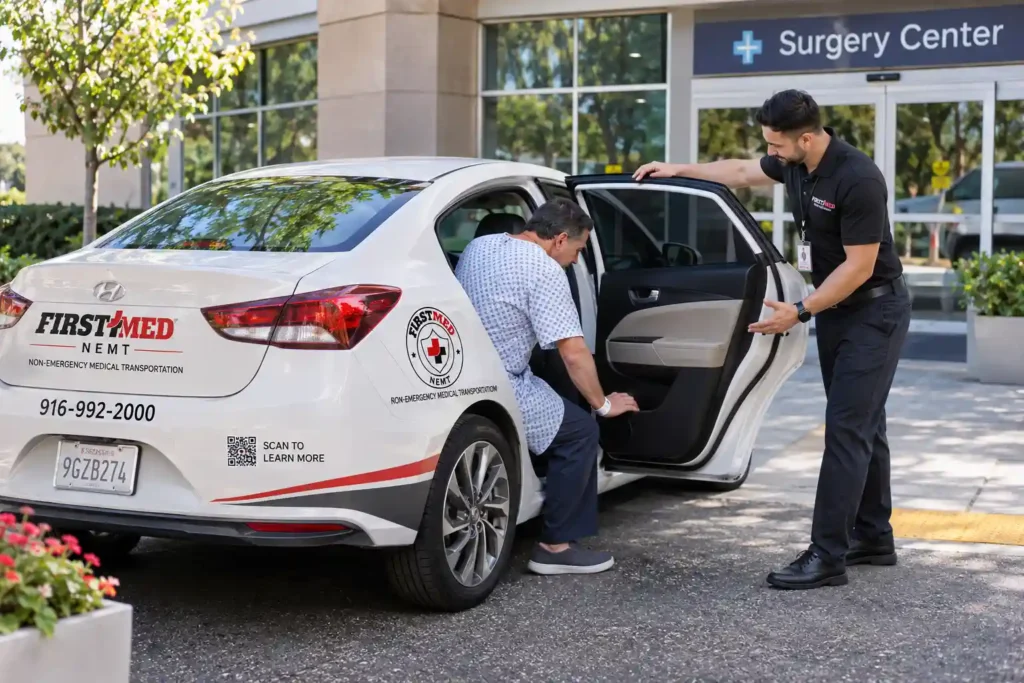
Non-emergency medical transportation is scheduled, assisted travel for people who need to reach appointments or return home safely but do not need an ambulance. Drivers are trained in passenger assistance, so you get help at the door, at the vehicle, and at your destination.
First Med Transit offers hospital discharge transport across the Sacramento area, designed for the moment you leave a facility and need a safe way home.
If your concern is the trip itself, our hospital to home transportation service covers the full route from the facility door to your front door, with a driver who helps you in and out of the vehicle.
What a trained driver can help with:
- Meeting you at the discharge area
- Assisting you into and out of the vehicle
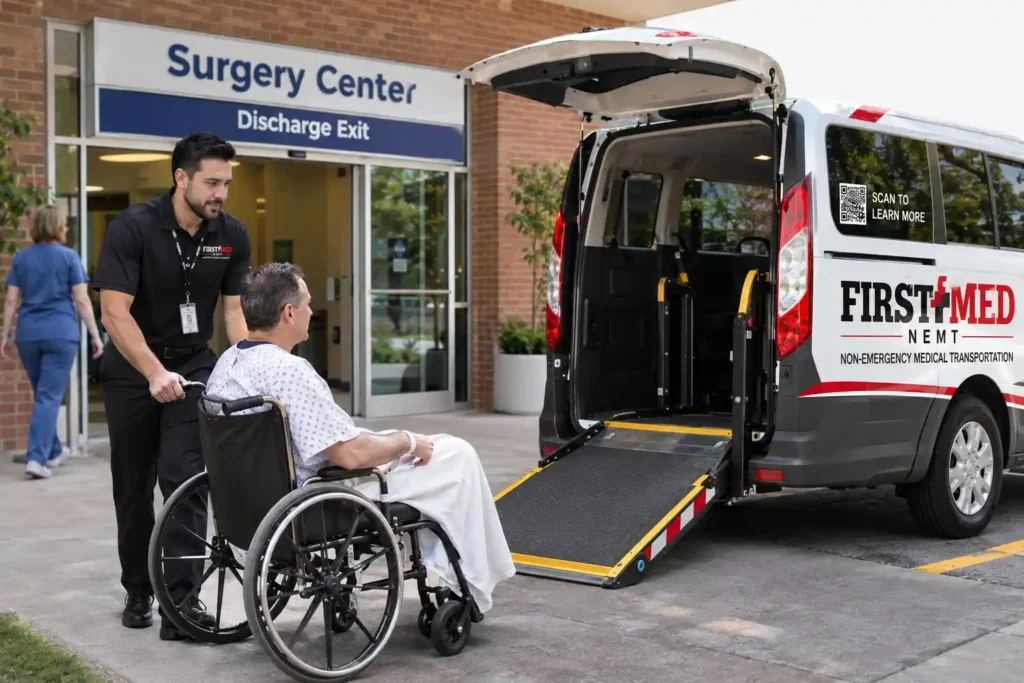
- Securing a wheelchair or stretcher when needed
- Helping you to your door
- Arriving at the time you booked
What a driver cannot do: a ride service is not a substitute for medical care or a caregiver who stays with you overnight. If your surgical team requires an adult at home with you after the ride, you will still need to arrange that separately.
Matching the Vehicle to Your Recovery Needs
Different procedures leave you with different mobility. Choosing the right service type keeps you comfortable and safe.
- Walking with support: If you can walk but feel unsteady, our ambulatory transport service provides a seated ride with a driver who offers an arm and extra time.
- Using a wheelchair: After leg, foot, hip, or spine procedures, many people leave in a chair. Our wheelchair transport vehicles use ramps or lifts with proper restraints so you can ride safely without a difficult transfer.
- Needing to lie flat: If your care team says you must travel lying down, gurney transport offers stretcher-equipped vehicles and trained handling.
- Older adults: Our senior transportation service is built around comfort, time, and respectful help.
You can see the vehicles in more detail on our fleet and vehicles page.
Can You Use a Taxi or Rideshare After Surgery?
Sometimes, but it is risky to assume. Many facilities will not accept a solo ride in a rideshare or taxi after sedation, because there is no adult with you who can respond if you feel dizzy, sick, or confused. Even when a facility allows it, a standard driver is not trained to help you out of a wheelchair or up a flight of steps, and a regular car can be hard to climb into with stitches or a sore body.
If you are weighing the cost of those options, our post Which is cheaper, Uber or airport taxi? explains how pricing works for these services.
For anyone who uses a wheelchair or walker, also read Does Uber do disabled taxis? to understand why standard ride apps often fall short on accessible vehicles.
What Not to Do
- Do not drive yourself. Even if you feel alert, sedation affects reaction time.
- Do not rely on a last-minute promise. If a friend might be available, get a firm yes before surgery day.
- Do not hide the problem from your surgical team. They can only help if they know.
- Do not call an ambulance for a routine ride. It is costly and meant for emergencies. If you are unsure how ambulance billing works, our post Do you get charged for just calling an ambulance? breaks it down.
Will Insurance or Medi-Cal Pay for the Ride?
It depends on your plan, your eligibility, and the reason for the trip. Medi-Cal may cover non-emergency medical transportation for eligible members, and some private plans offer limited transportation benefits. Coverage questions are easier when you ask early, because approval or paperwork may take time.
Here is how to approach it:
- Call the member services number on your insurance card.
- Ask whether non-emergency medical transportation is a covered benefit.
- Ask what documentation or authorization is needed.
- Ask whether the ride must be booked ahead.
First Med Transit accepts Medi-Cal and helps eligible riders understand their options. Our Insurance & Medi-Cal page explains how that works.
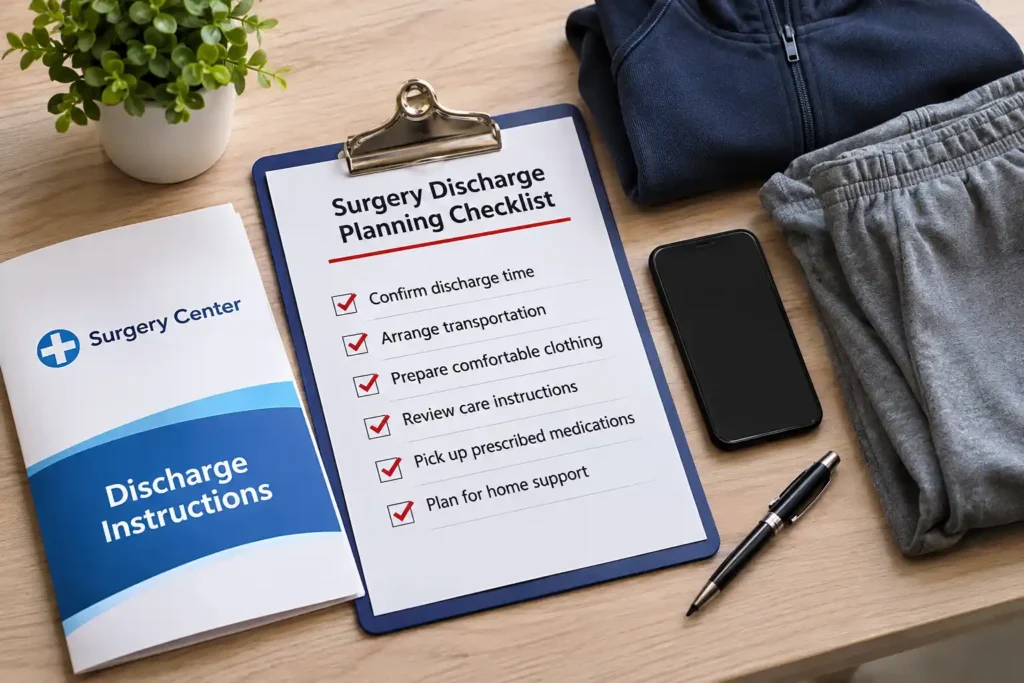
Your Pre-Surgery Ride Checklist
| When | What to Do |
| 2–4 weeks before | Ask the surgical office about escort rules and discharge timing |
| 1–2 weeks before | Line up a friend or book professional transportation |
| 1 week before | Confirm coverage questions with your insurance or Medi-Cal |
| 2–3 days before | Re-confirm the pickup time and location |
| Day before | Charge your phone, set out loose comfortable clothes, share the plan with your helper |
| Surgery day | Give the facility your ride contact details and the expected pickup window |
| After arrival home | Check your discharge sheet and follow your care team’s instructions |
Same-Day and Last-Minute Situations
Sometimes plans fall through. A friend gets sick, a schedule changes, or the surgery date moves up. Ask a transport provider about short-notice availability. First Med Transit offers same-day NEMT service in Sacramento for situations like these. Availability depends on schedule and location, so call as early as you can.
If your procedure is a recurring one, such as ongoing treatment visits, recurring bookings let you set up rides once instead of re-arranging every time. We also provide rides to doctor and dental appointments, which helps for pre-op visits and follow-ups.
Planning for the Hours After You Get Home
A safe ride is the first step. The next few hours matter too. Before surgery, prepare your home so recovery runs smoothly:
- Clear walkways. Remove loose rugs and clutter.
- Set up a recovery spot. Keep water, medications, phone charger, and the TV remote within reach.
- Prepare easy food. Stock simple meals that need minimal cooking.
- Fill prescriptions in advance if your surgeon allows it.
- Arrange a check-in. Ask a friend or relative to call or visit at set times.
- Keep emergency numbers visible. Place your surgeon’s after-hours line and 911 by your phone.
If something feels wrong after you get home, such as trouble breathing, heavy bleeding, chest pain, or confusion, call 911 or your surgeon’s emergency line instead of waiting.
Special Situations
If You Live Alone
Tell the surgical office. Some facilities want an adult with you at home for a set period. Options include a friend staying a night, a home care aide, or short-term recovery help arranged through your care team.
If You Have Limited Mobility
Mention it when you book your ride so the right vehicle shows up. Our transportation for disabled adults service is built for riders with mobility needs.
If You Are Traveling a Long Way
For surgeries far from home, ask about long distance medical transportation.
Frequently Asked Questions
Can I take an Uber or Lyft home after surgery?
Some facilities allow it and many do not. Ask your surgical team before relying on it, since a lone passenger who is groggy can face safety issues.
What happens if I show up with no ride?
The facility may delay or cancel the procedure until a ride is confirmed. Policies differ, so settle this ahead of time.
Does a medical transport driver count as a responsible adult?
That depends on the facility. Ask your surgical team whether a professional transport driver is acceptable and whether you need an additional adult at home.
Can a friend drive me if they stay in the waiting room?
In many cases, yes, but some facilities want them present for discharge instructions. Confirm the details with your surgeon’s office.
Will Medi-Cal cover my ride home?
Medi-Cal may cover non-emergency medical transportation for eligible members. Eligibility and rules vary, so check your plan or call us for help understanding the process.
How early should I book a ride?
As early as you know your surgery date. Early booking gives you the best chance of getting the right vehicle at the right time.
How long do I need someone with me after surgery?
It depends on your procedure and anesthesia. Many facilities recommend an adult stay with you for about the first day. Your surgeon’s instructions are the final word.
What if I use a wheelchair or need to lie down?
Tell the transport provider when booking. Wheelchair-accessible and gurney-equipped vehicles are available for those needs.
Is professional medical transport the same as an ambulance?
No. Non-emergency transport is scheduled, assisted travel for people who do not need emergency medical care. An ambulance is for emergencies.