Maybe you like helping people and you are tired of a desk. Maybe a friend told you hospitals and medical transport companies are always hiring. Or maybe you already drive for a living and wonder whether medical rides would suit you better. Whatever brought you here, you have probably typed the same question into Google: what do I need to be a patient transporter?
The short version is that the bar to get started is lower than most people expect, but the details depend on where you want to work. Hospitals and medical transport companies hire for different versions of the job and ask for different paperwork.
Quick answer: Most employers want a high school diploma or GED, a CPR or BLS card, a clean background check, and strong people skills. Hospital roles add on-the-job training for moving people inside the building. Medical transport driver roles add a valid driver’s license, a clean DMV record, drug screening and first aid training. Some employers cover the rest with paid training.
This guide walks through both career paths, every requirement you are likely to meet, the skills that get people hired, and a checklist built for the Sacramento area.
What do I need to be a patient transporter? The Short Answer
“Transporter” can mean two different jobs, and employers do not always make the difference obvious in a listing.
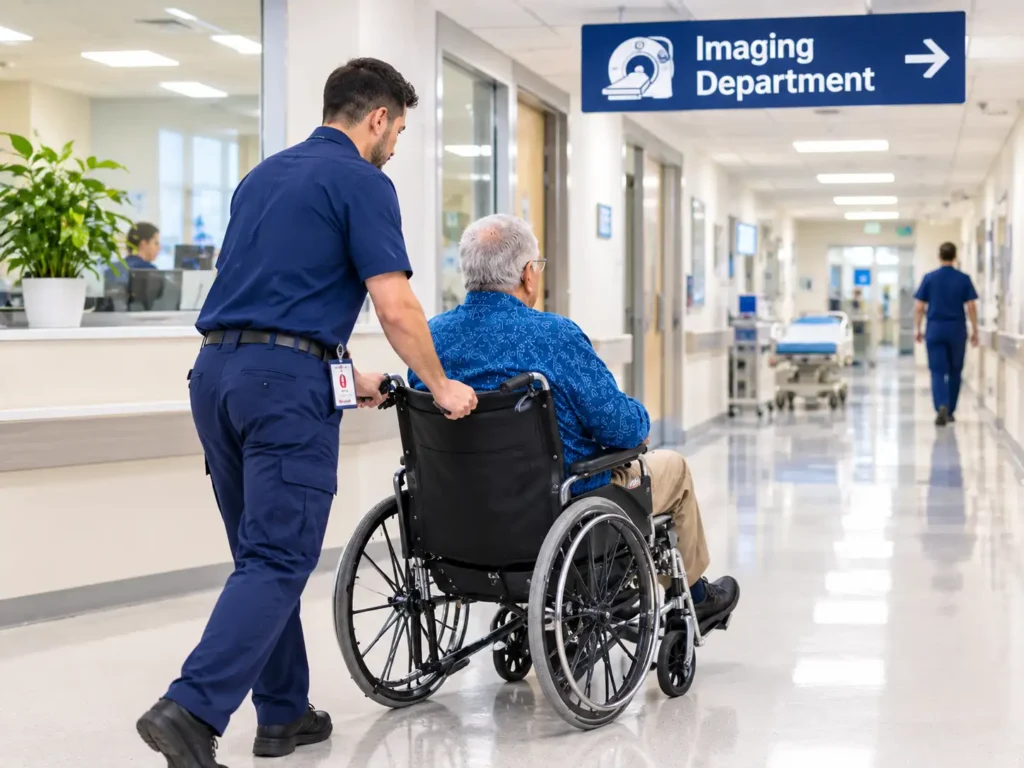
A hospital transporter works inside a facility. They move people between rooms, imaging, surgery and the discharge door, usually with wheelchairs and gurneys, and they often carry equipment and specimens too. A medical transport driver, often called an NEMT driver, works outside the building. They pick riders up at home, drive them to appointments, and bring them back. NEMT stands for non-emergency medical transportation.
Both roles are entry-level friendly, and neither requires a college degree. The table below shows how the two compare.
| Factor | Hospital Transporter | NEMT / Medical Transport Driver |
| Where you work | Inside a hospital or care facility | On the road between homes, clinics and hospitals |
| Education | High school diploma or GED | High school diploma or GED (sometimes preferred rather than required) |
| Core certification | BLS or CPR, often through the American Heart Association | CPR and first aid |
| Driving needed | No | Yes, with a clean driving record |
| Typical screening | Background check, health clearances | Background check, drug and alcohol screening, DMV record, physical |
| Main equipment | Wheelchairs, gurneys, hospital beds | Wheelchair vans, gurney vans, accessible vehicles with ramps or lifts |
| Training | On the job, often over several weeks or months | Often provided by the company, with ride-alongs |
The Two Main Career Paths in Detail
Hospital Transporter
Hospital job listings are remarkably consistent. Most ask for a high school diploma or equivalent plus a current Basic Life Support card, along with strong customer service and communication skills. Some hospitals do not require the card on day one. New hires are often given 30 to 90 days to earn an American Heart Association BLS certification.
Listings also tend to mention body mechanics, medical terminology, confirming identity with a wristband before moving anyone, and keeping equipment clean. If you want to stand out, a certification from the National Association of Healthcare Transport Management can help, though it is not required, and hospitals usually train new transporters over a period of several months.
NEMT and Medical Transport Driver
The NEMT path adds a steering wheel and more paperwork. California’s Medi-Cal enrollment checklist for medical transportation shows what a driver file typically holds: a state-issued driver’s license, a DMV driving history printout, a first aid and CPR certificate, and alcohol test results. Providers who run wheelchair or litter vans also keep a medical examination report form for each driver. Individual companies layer their own rules on top.
Our own medical transportation services in Sacramento are built around exactly these driver standards: trained, screened and CPR and First Aid certified.
Federal guidance points the same direction. Most states expect NEMT drivers to hold a valid license, keep a clean driving history, pass a criminal background check and pass drug testing, and CPR and first aid certification is becoming the standard minimum across the country, even where the state does not require it.
Core Requirements, One by One
A High School Diploma or GED
Almost every posting asks for it, and some NEMT employers list it as preferred instead of required. You do not need college coursework, a nursing license or a medical degree.
A Valid License and a Clean Driving Record
This applies to NEMT roles, not hospital transporter jobs. Employers pull your DMV history, and the length they care about varies. One Sacramento-area employer asks for a minimum three-year DMV history, while another posting asks for a license held for at least two years. A regular California Class C license is the typical baseline, and some employers accept a Class C or higher. Passenger endorsements can come into play depending on the vehicle, so ask before you assume.
Background Check and Drug Screening
Expect both. NEMT listings in the Sacramento area commonly say applicants must pass a background check and a drug screening, and some employers cover the cost of the drug test themselves.
CPR, First Aid or BLS
Hospitals tend to want BLS for Healthcare Providers. Medical transport companies usually accept CPR and First Aid. Courses from the American Red Cross or the American Heart Association are the safest choices. You can often complete one in a day and add it to your resume before you apply.
Physical Ability and Health Clearances
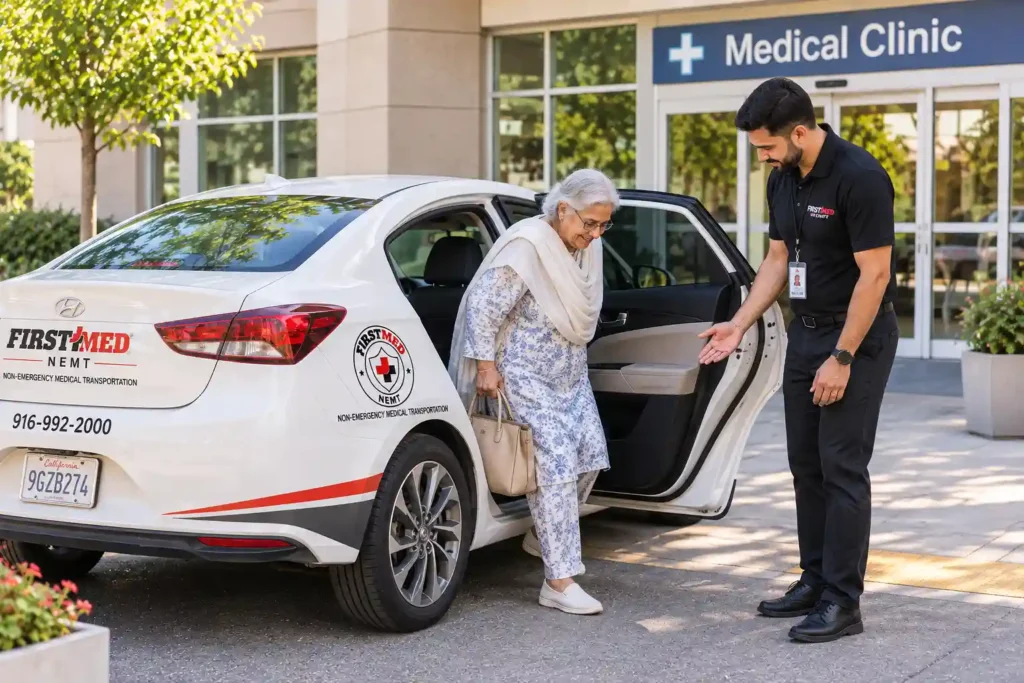
The work is active. You will push wheelchairs, steady someone getting in and out of a vehicle, and sometimes help move a gurney with a partner. Some Sacramento employers ask that you pass a Department of Transportation physical exam and show vaccination status, and others add a current TB test. Roles that involve stretcher transport come with specific physical and safety standards.
Age Requirements
Eighteen is the legal floor for most work, but insurance often sets the real minimum. One Sacramento listing requires drivers to be at least 23 years old because of insurance requirements. Check the age rule before investing in certifications.
Requirements at a Glance
| Requirement | Hospital Transporter | NEMT Driver |
| High school diploma or GED | Required | Common |
| BLS / CPR certification | Required (often within 30 to 90 days) | CPR and first aid expected |
| Valid driver’s license | Not needed | Required |
| DMV driving record | Not needed | Required |
| Background check | Yes | Yes |
| Drug and alcohol screening | Sometimes | Yes |
| Physical exam or health clearance | Often | Often |
| Medical experience | Helpful, rarely required | Helpful, rarely required |
Skills That Get You Hired
Certificates open doors, but skills decide who gets the job. Employers keep coming back to the same short list:
- Safe body mechanics for lifting, pushing and guiding someone through a transfer
- Wheelchair securement and gurney handling
- Calm, clear communication with riders who may be anxious, in pain or hard of hearing
- Respect for privacy, including HIPAA basics
- Punctuality and dependable attendance, since a late pickup can mean a missed appointment
- Comfort with GPS, dispatch apps and basic electronic devices, a skill that shows up often in Sacramento-area listings
- Clear documentation and honest incident reporting
- Warmth, steadiness and the ability to read a situation without being told
What do I need to be a patient transporter? A Step-by-Step Checklist for Sacramento
If you are starting from zero, this is a sensible order of operations.
- Decide which path fits. Prefer working indoors on a hospital team, or driving and building long-term relationships with regular riders? Your answer sets the rest of the list.
- Check eligibility. Confirm your age, license status and driving history. If you plan to drive, request your DMV record early so surprises do not slow you down.
- Earn your certification. Sign up for a CPR and First Aid class, or BLS for Healthcare Providers if you are aiming at hospitals.
- Prepare for screenings. Plan for a background check, drug screen, physical and possibly a TB test and vaccination records.
- Practice safe handling. Many employers train you, but showing that you already understand wheelchair brakes, ramp angles and gentle transfers gives you an edge.
- Polish your resume. Highlight customer service, caregiving, driving, retail or any job where you looked after other people. Mention any CNA or EMT background, since EMT experience is welcomed as a plus in some listings.
- Apply in more than one place. Hospital human resources pages, local NEMT companies and our own Careers page all hire at different times.
- Ask about training. Find out how long it lasts, whether it is paid, and whether you will ride with an experienced driver at first.
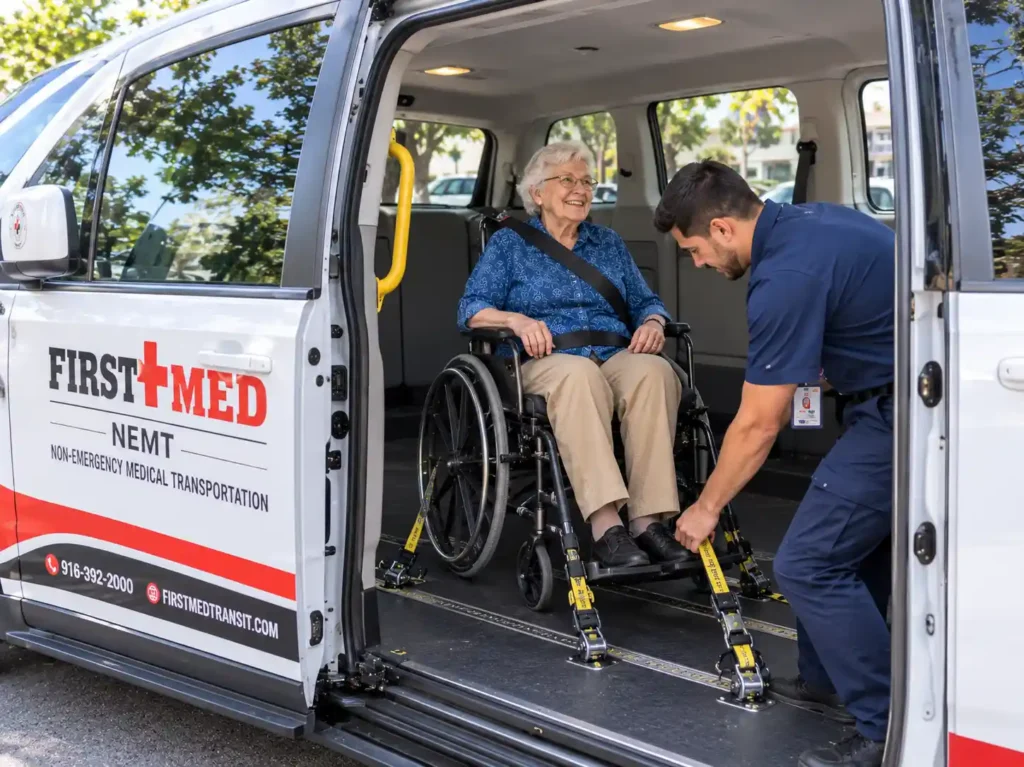
What the Work Looks Like Day to Day
A typical day starts early. First Med Transit’s office runs seven days a week from 3:00 AM to 8:00 PM, and many rides, especially recurring treatments, are timed around morning appointments. You review your schedule, inspect the vehicle, check the equipment and head out for your first pickup.
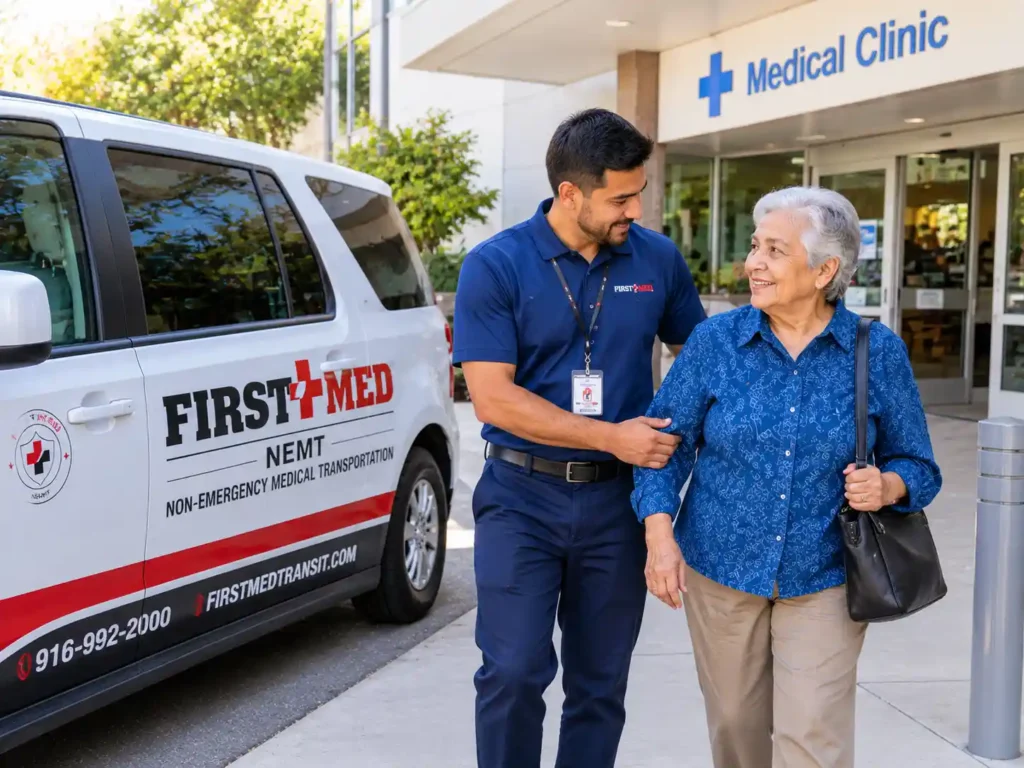
The mix of rides shapes the job. You might help a rider who is walking but needs a steady arm for our ambulatory transport.
Another trip might involve a rider who stays in their own chair, which means handling a ramp or lift and locking in restraints for our wheelchair transport.
Some riders must travel lying down, which calls for trained, careful handling in a vehicle built for our gurney transport.
Recurring treatment makes up a large share of the work. A driver on a dialysis transport route may see the same people several times a week and becomes part of their routine.
Discharge days bring a different energy, because people are tired, relieved and sometimes unsure. Our hospital discharge transport is where gentle communication matters most.
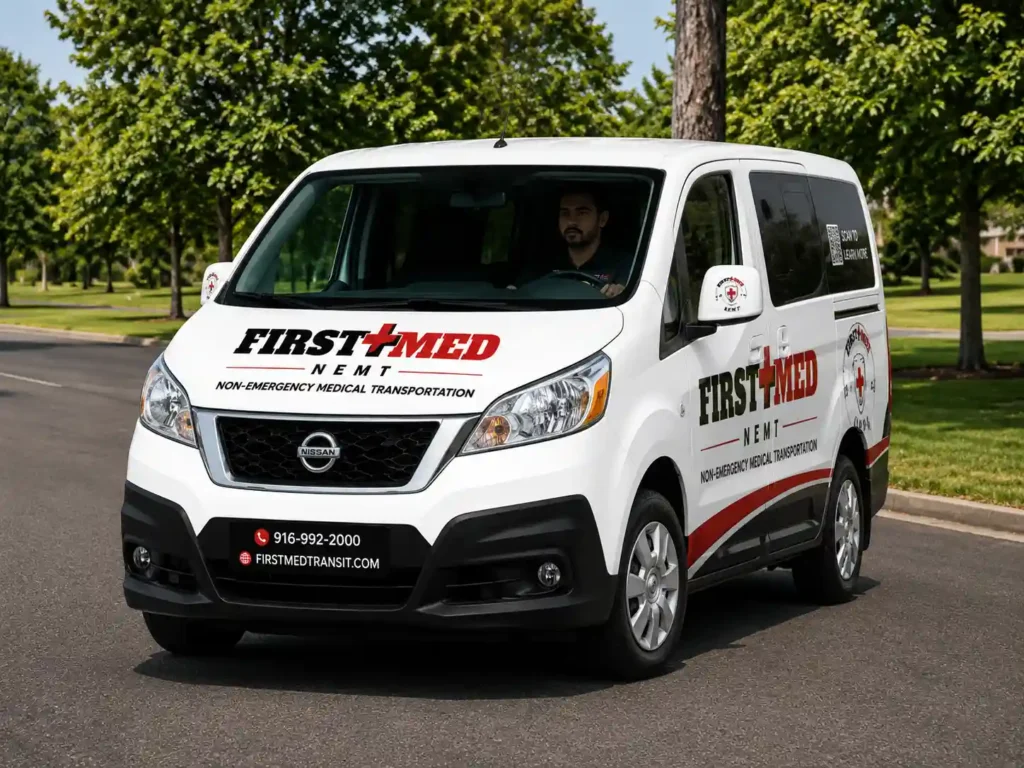
Between rides you complete notes, keep the vehicle clean, restock supplies and stay in touch with dispatch. To see the vehicles you would operate, browse our accessible fleet.
If you are curious about the everyday details of the job, our related blog post on what transporters wear on the job covers uniforms and dress codes for both hospital and medical transport roles.
Pay, Hours and Room to Grow
Pay depends on the employer, the vehicle type and your experience, and it shifts over time, so treat any number as a snapshot. In recent Sacramento-area listings, NEMT driver roles showed hourly ranges around $16.50 to $18, with one employer starting standard drivers at $18.50 an hour. A full-time role combining gurney and wheelchair transport and hospital discharge work advertised $18 to $23 an hour.
Hours vary just as much. Early mornings, weekends and split shifts are common in medical transport because treatments and discharges do not follow a nine-to-five clock.
Growth paths are real. Experienced drivers move into lead driver, trainer, dispatcher or scheduler roles. Others use the job as a stepping stone toward an EMT course, nursing assistant training or a healthcare administration career. The time you spend with riders and care teams teaches you a lot about how the system works.
Practical Tips for Getting Hired
- Get your CPR or BLS card before you apply, not after. It signals that you are serious.
- Keep your driving record clean while you job hunt. A single new violation can change a decision.
- Be honest about your physical limits. A job that matches your abilities lasts longer than one you force yourself into.
- Show flexibility on early and weekend shifts. It is often the quickest way to a first offer.
- Prepare a short story about a time you helped someone through a stressful moment. Interviewers love specifics.
- Ask whether the company supports recurring routes, since steady schedules make your income and routine more predictable.
- Practice using a smartphone navigation app so dispatch tools feel familiar on day one.
For a sense of why this work matters, read our related blog post on having no one to drive you home after surgery, which shows what a reliable ride means to someone at their most tired and uncertain.
Frequently Asked Questions
Do you need a degree to work as a hospital transporter?
No. Most hospitals ask for a high school diploma or GED. Training for the rest happens on the job.
Do I need medical experience?
Not usually. Experience as a caregiver, CNA or EMT helps, but employers mainly want reliability, communication skills and a willingness to learn.
Is a commercial driver’s license required for NEMT work?
Most NEMT driver roles ask for a standard valid license, such as a California Class C, rather than a commercial license. Requirements vary by employer and vehicle, so confirm before applying.
What certifications do I need?
CPR is the common baseline, and hospitals typically want BLS for Healthcare Providers. First aid certification is standard for NEMT drivers. Optional credentials, such as healthcare transport certification, can help your resume.
How long does training take?
It depends on the employer. Hospitals often train over several weeks or months, while NEMT companies usually combine classroom instruction with ride-alongs.
What is the difference between an NEMT driver and an ambulance EMT?
An EMT is trained to provide emergency medical care and holds state certification. An NEMT driver provides safe, assisted transportation for scheduled, non-emergency trips and does not deliver medical treatment.
Can I work as a transporter with no driving experience?
Hospital transporter jobs do not involve driving. NEMT driver jobs do, and most employers want a clean driving history, so some driving experience is expected.
How do I apply to First Med Transit?
Visit our Careers page or call +1 916-992-2000. Our office is at 3400 Cottage Way, Sacramento, CA 95825, and we are open Monday through Sunday from 3:00 AM to 8:00 PM.
Ready to Start? Join the First Med Transit Team
So, what do I need to be a patient transporter? A diploma or GED, a current CPR or BLS card, a clean background and driving record for NEMT roles, and a genuine interest in looking after people who are counting on you. The rest can be learned.
At First Med Transit, we hire compassionate, licensed drivers who take pride in professionalism and punctuality. If that sounds like you, visit our Careers page to apply, or contact our team with questions about the role.
For medical emergencies, always call 911. First Med Transit provides non-emergency medical transportation only.