Most families start looking for a ride after something has already changed. A hospital discharge date lands on the calendar, a parent begins dialysis three times a week, or surgery makes driving impossible for a few weeks. The next worry is nearly always money, and the question comes up fast: how much does medical transport cost?
The honest answer is that it depends on the type of vehicle, the distance, the time of day, and how much hands-on help the rider needs. This guide breaks each of those pieces apart with real market ranges, worked examples, and a clear look at who pays. You’ll be able to estimate your own trip before you pick up the phone.
How much does medical transport cost? The Quick Answer
Non-emergency medical transport is usually priced as a base fee plus a charge for each mile driven. One widely cited range puts base fees near $25 to $35 for ambulatory rides, $45 to $55 for wheelchair vans, and $100 to $200 for stretcher trips, with $3 to $10 per mile added on top. California providers tend to sit at the upper end. Rate sheets for the state show per-mile charges of roughly $2.50 to $5.00 for ambulatory rides, $4.00 to $7.50 for wheelchair rides, and $7.00 to $18.00 for stretcher rides.
Here is the short version:
- An ambulatory ride (the rider walks) is the lowest-cost option.
- A wheelchair ride costs more because of the ramp or lift, the securement system, and the extra handling.
- A gurney or stretcher ride costs the most because it needs specialized equipment and usually a two-person crew.
- A ride that insurance or Medi-Cal covers can cost the rider very little or nothing.
What Medical Transport Actually Means
People use “medical transport” for several very different services, and mixing them up is the fastest way to overpay. Non-emergency medical transportation, often shortened to NEMT, covers scheduled rides for people who are medically stable but can’t safely drive, ride public transit, or rely on a standard car. It is a different service from an ambulance, which is staffed and equipped to respond to emergencies.
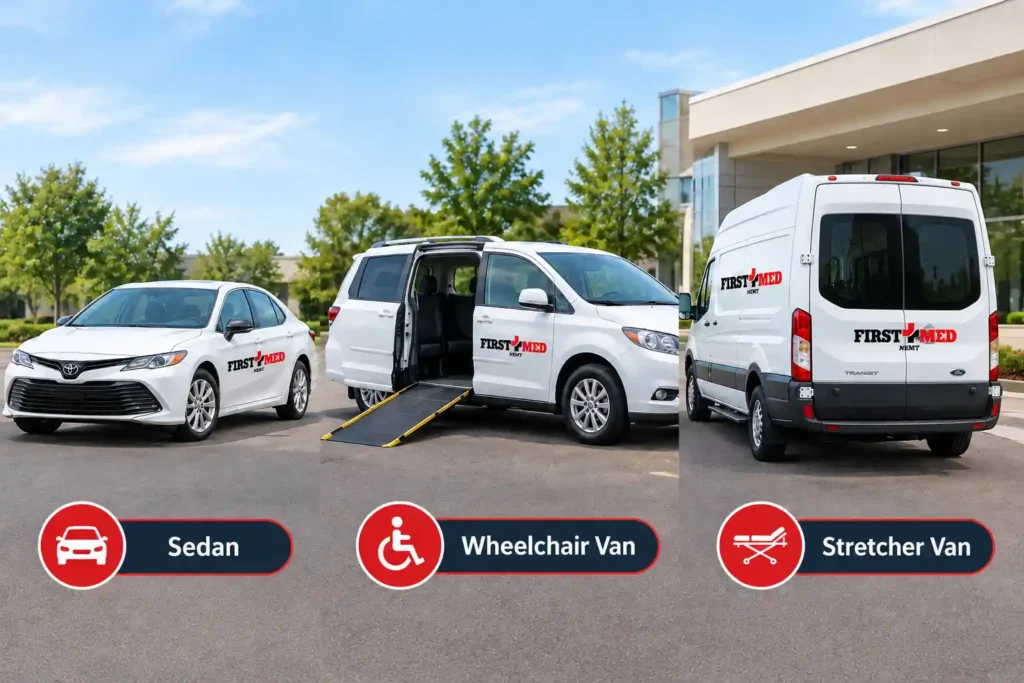
Ambulatory transportation
Ambulatory riders can walk, with or without a cane or walker, but still benefit from a driver who is trained, unhurried, and ready to help at the door. It’s a common choice after minor procedures, for vision or medication concerns, or for older adults who shouldn’t drive. Our related blog post explains ambulatory transportation in more detail, including who benefits most and what professional drivers are trained to do.
Wheelchair transportation
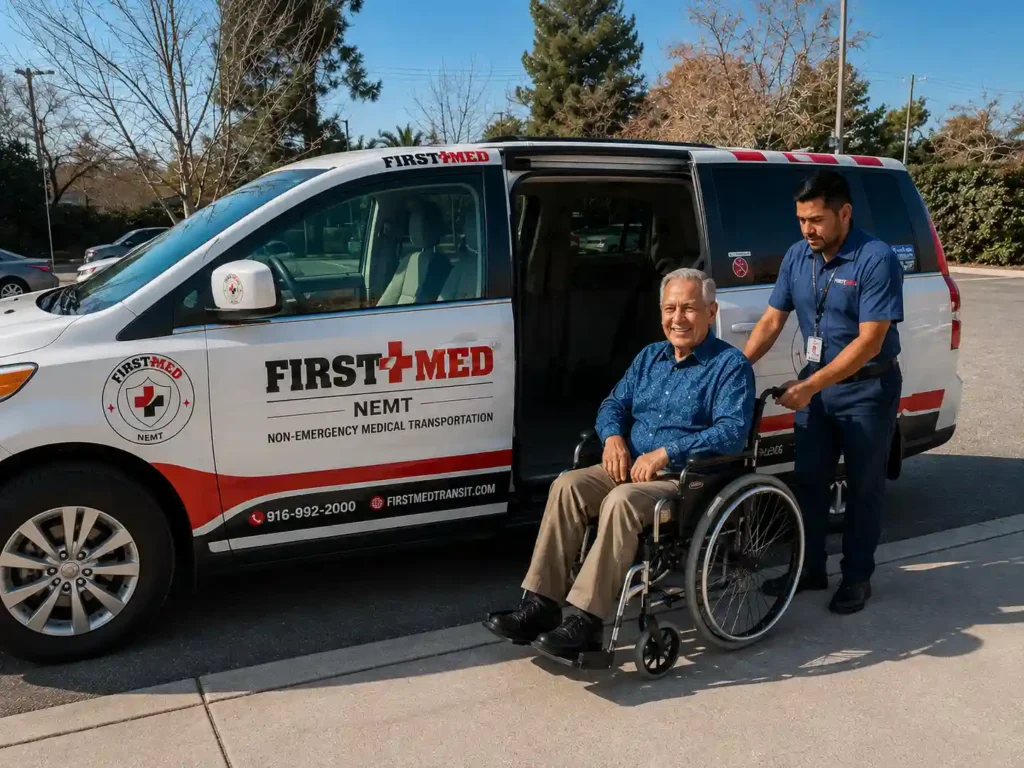
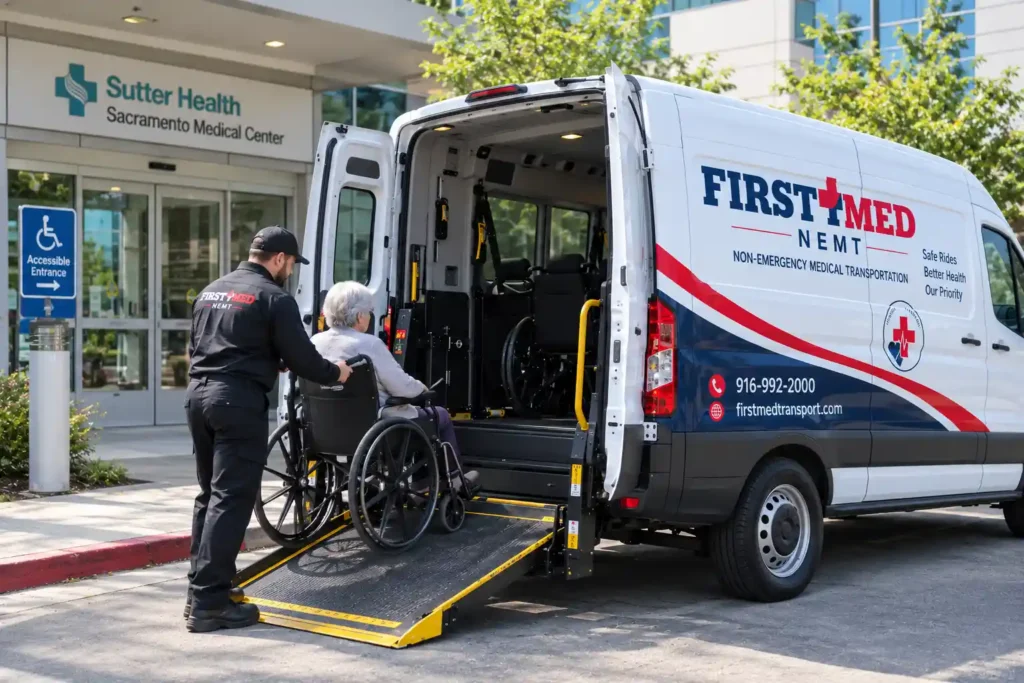
Wheelchair vans have ramps or hydraulic lifts and secure restraint systems, so riders stay in their own manual or power chair for the entire trip. That avoids a transfer, which is safer and more comfortable. If a loved one uses a chair full-time, our wheelchair transportation in Sacramento service is built around exactly this kind of ride.
Gurney (stretcher) transportation
Gurney transport is for people who are medically stable but must remain lying down. It’s common for hospital discharges, moves between care facilities, and trips home after a long stay. The equipment, mounting, and trained crew explain the higher price. You can read how the service works on our gurney transport in Sacramento page.
What Changes the Price of a Medical Transport Ride
Two rides that look similar on paper can produce quite different bills. These are the factors that move the number most.
- Distance. Miles are the most obvious lever. Some providers lower the per-mile rate on longer trips, but the total still climbs.
- Vehicle and crew. A sedan with one driver costs less to run than a ramp van, and a stretcher van with two staff members costs the most.
- Level of assistance. Door-to-door help, stair assistance, and hands-on transfers all take time and training.
- Time of day and day of week. Nights, weekends, and holidays usually cost extra.
- Wait time. A round trip where the driver stays for your appointment often adds a waiting charge.
- Extra equipment or riders. Oxygen, an additional attendant, or a second passenger can add fees.
- Frequency. A recurring weekly schedule, such as dialysis, can simplify planning and sometimes pricing.
Common surcharges to watch for
Ask about these before you book, because they are the usual source of surprise charges.
| Add-On | Typical Range |
| Wait time | $15 to $30 per 30 minutes |
| Extra attendant | $5 to $15 per trip |
| Weekend service | 25% to 50% extra |
| Holiday service | 50% to 100% extra |
| Stair assistance | $25 to $50 per flight |
| Oxygen equipment | $25 to $40 |
| Evening or after-hours trip | $10 to $25 |
Wait-time and extra-attendant charges commonly fall in the ranges above. California rate guides also list weekend, holiday, stair, oxygen, and after-hours surcharges in these bands, and many wait-time fees begin only after a short grace period of 10 to 15 minutes. Every provider sets its own policy, so treat this table as a checklist of questions, not a promise of what you will pay.
How much does medical transport cost? Local Trips Versus Long-Distance Trips
Local trips inside the Sacramento area are the most predictable, since mileage stays low and pickup times are flexible. Long-distance trips are a different calculation entirely. Distance dominates the bill, and providers often quote a flat total rather than a base fee and mileage.
For a sense of scale, one Midwest provider’s published pricing shows a 200-mile trip landing around $435 to $865 for an ambulatory ride, $665 to $1,315 for a wheelchair ride, and $1,300 to $3,725 for a stretcher ride. Those numbers come from Illinois, so California quotes will differ, but they show how quickly distance changes the total.
If you need to travel beyond the immediate Sacramento area, our long-distance medical transportation service covers out-of-area appointments, specialist visits, and treatment-based travel. First Med Transit can accommodate trips from Sacramento of up to 500 miles, so ask for a written quote based on your exact pickup point, destination, and timing.
Medical Transport vs Ambulance vs Rideshare: Cost and Value
A lot of people call an ambulance or book a rideshare only because they don’t know a middle option exists. The comparison below shows why that middle option matters.
| Option | Best For | Trained Assistance | Typical Cost |
| Ambulatory NEMT | Walking riders needing dependable, supportive rides | Yes | Lowest NEMT tier |
| Wheelchair NEMT | Riders who stay in their chair | Yes | Mid-range |
| Gurney NEMT | Stable riders who must lie flat | Yes | Highest NEMT tier |
| 911 Ambulance | True emergencies | Yes, with medical staff | Often $500 to $3,500+ before insurance |
| Standard Rideshare or Taxi | Riders with no mobility needs | No | Varies with distance and demand |
The ambulance row is the one that stings. Ambulance rides commonly run between $500 and $3,500 or more without insurance. Even with insurance, the average out-of-pocket bill is around $450 nationally. Using an ambulance for a routine dialysis run or a discharge that isn’t a medical emergency costs far more than it needs to and takes emergency crews off the road.
The reverse also matters. Gurney transport vehicles and staff are not equipped or trained for emergencies, so it is never a substitute for calling 911. Our related blog post on gurney transport vs ambulance walks through how to decide which one fits a specific situation.
A useful rule of thumb: if your loved one can sit upright safely, wheelchair transport is usually the more cost-effective choice over a stretcher, and ambulatory transport is more economical still.
Who Pays for Medical Transport? Medi-Cal, Medicare, and Private Insurance
Sticker price and out-of-pocket price are often very different numbers. So, how much does medical transport cost when coverage is in the picture? For many members, far less than the rate sheet suggests.
Medi-Cal
California’s Medi-Cal program includes transportation benefits for eligible members who need rides to covered medical services. In general, you need active coverage, no other reasonable way to reach the appointment, and a destination that is a Medi-Cal-covered service. Eligibility rules and paperwork vary by plan, so confirm the details with your plan or your transport provider before the ride.
Medicare
Original Medicare works differently and is stricter. In 2026, Part B pays 80% of covered ambulance transport after you meet the $283 annual deductible, and non-emergency rides require documentation of medical necessity. The important catch is that wheelchair van and other non-medical transport do not meet Medicare’s ambulance criteria. Don’t assume a wheelchair ride is covered under Original Medicare. Medicare Advantage plans may include extra transport benefits, so check your plan.
Private insurance and out-of-pocket payment
Many private plans include a transport benefit for medically necessary rides, and some providers accept Medi-Cal, insurance, and private pay. Our senior riders often ask about this, and our senior transportation in Sacramento page explains how coverage typically works for older adults.
If you pay yourself, there may be tax relief. The IRS allows a deduction for transportation to medical appointments once total medical expenses pass 7.5% of adjusted gross income. A tax professional can tell you whether that applies to your situation. Some hospitals and community organizations also offer free or low-cost rides.\
Read About: Does Insurance Cover Non Emergency Medical Transportation
Smart Ways to Lower Your Medical Transport Costs
You have more control over the final bill than you might think.
- Book the right level of service. Don’t pay for a stretcher if a wheelchair van is safe and sufficient.
- Confirm coverage first. Ask your plan whether the ride qualifies and what documentation is needed before the appointment.
- Schedule early. Advance booking gives the provider room to plan efficient routes, and it avoids rush pricing.
- Set a recurring schedule for repeat treatments like dialysis, therapy, or lab work. Consistent weekly rides are easier to plan and can be easier to budget.
- Arrange the return trip when you book, so you aren’t scrambling at the end of an appointment.
- Avoid weekends, holidays, and late hours when your appointment is flexible.
- Be ready at pickup time. Short delays add up when wait-time is billed in blocks.
- Ask for the full quote in writing, including every fee.
If you need a ride quickly, our same day NEMT service in Sacramento can arrange trips on short notice when a vehicle is available.
Questions to Ask Before You Book
A transparent provider will answer all of these without hesitation.
- What is the base fee, and what is the per-mile rate?
- Is the quote one-way or round trip?
- How is wait time charged, and is there a grace period?
- Are there extra charges for stairs, oxygen, an additional attendant, or after-hours pickup?
- Do you accept Medi-Cal, my insurance plan, or private pay?
- Are your drivers trained in first aid and CPR, and in securing wheelchairs and gurneys?
- What is your cancellation policy?
What to Expect From First Med Transit
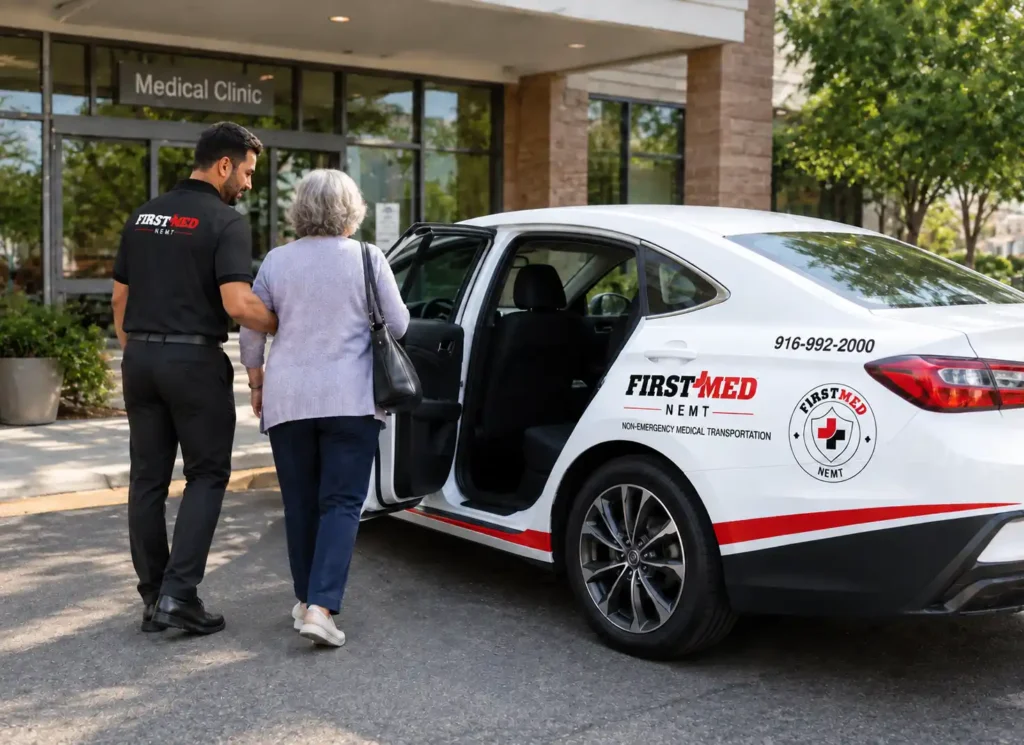
First Med Transit is a Sacramento-based non emergency medical transportation provider serving wheelchair, gurney, and ambulatory riders. Our approach to pricing is simple: clear and affordable rates with no hidden fees, so you know the number before the ride begins. We accept Medi-Cal, many insurance plans, and private pay, and we offer flexible advance scheduling and same-day service when a vehicle is available. Our drivers hold first aid and CPR certification and are trained to handle mobility equipment with care.
For the full story on how local pricing works, read our complete Sacramento pricing guide, which goes deeper on the Sacramento market.
Serving Sacramento and Nearby Communities
We cover Sacramento and the surrounding region, including Elk Grove, Roseville, Rancho Cordova, Citrus Heights, Folsom, Fair Oaks, Rocklin, and more. If you live in the south county, see our page for non-emergency medical transportation in Elk Grove. If you’re in Placer County, our page for non-emergency medical transportation in Roseville explains local service details. If your city isn’t listed, contact us anyway, because we may still be able to help.
Frequently Asked Questions About Medical Transport Costs
What is the average cost of a wheelchair ride to a medical appointment?
For a short local trip, expect roughly $75 to $165 one way, based on published base fees and per-mile rates. Round trips, wait time, and after-hours pickups increase the total, and rates in California tend to run above the national average.
Is gurney transport more expensive than wheelchair transport?
Yes. Gurney transport needs specialized equipment and usually a two-person crew, so both the base fee and the per-mile rate are higher. If your loved one can sit upright safely, a wheelchair ride is typically the more economical choice.
Does Medicare pay for non-emergency medical transport?
Original Medicare covers certain ambulance transport when medical necessity is documented, but it generally does not cover wheelchair van or other non-medical transport. Medicare Advantage plans may add transport benefits, so check with your specific plan.
Does Medi-Cal cover rides to medical appointments?
Medi-Cal includes transportation benefits for eligible members traveling to covered services. You generally need active coverage and no other means of getting to the appointment, and details vary by plan.
Is medical transport cheaper than an ambulance?
In almost every non-emergency case, yes. Ambulance rides often cost $500 to $3,500 or more before insurance, while scheduled NEMT is priced by vehicle type and mileage. Ambulances are for emergencies, and NEMT is for planned trips.
Do I pay extra while the driver waits during my appointment?
Often, yes. Many providers charge wait time in 15 to 30 minute blocks, sometimes after a short grace period. Ask how waiting is handled before you book, or arrange a separate return pickup.
Can I get a quote for a long-distance trip?
Yes. Long-distance rides are usually quoted as a total based on distance, vehicle type, and timing. First Med Transit can accommodate trips of up to 500 miles from Sacramento, so call with your pickup, destination, and appointment time.
How do I book a ride?
Call our team or use the online request form with your pickup address, destination, appointment time, and the type of assistance needed. You will receive a confirmation with the trip details once your ride is scheduled.