If you’ve ever stood in a hospital hallway trying to figure out how your mom, who can’t sit upright after surgery, is supposed to get home you already know the panic this question comes from. You don’t need a lecture on healthcare logistics. You need to know what this service actually is, what it costs, whether your insurance touches it, and whether it’s safe. That’s exactly what this guide covers, in plain language, without the sales pitch.
By the end, you’ll understand what is gurney transportation, costs and benefits involved, and how to choose a provider you can actually trust with someone you love.
What Is Gurney Transportation, Exactly?
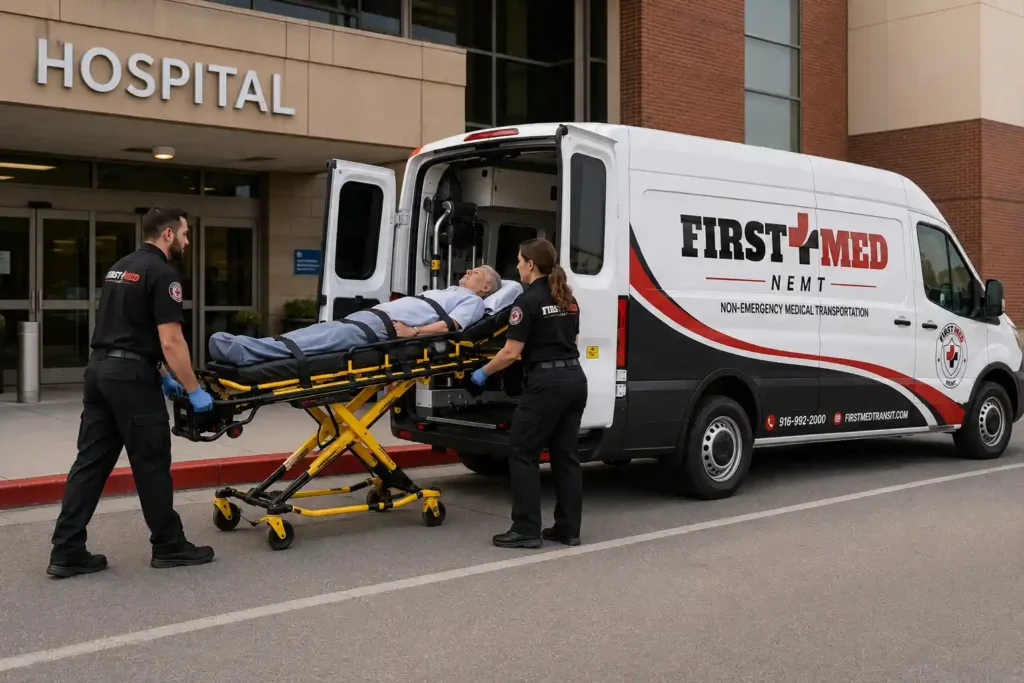
Gurney transportation — sometimes called stretcher transport is non-emergency medical transportation (NEMT) for patients who physically cannot sit upright for a car ride. Instead of transferring into a wheelchair or a regular seat, the patient stays flat or semi-reclined on a padded, wheeled stretcher that’s mechanically secured inside a specially built van.
It sits in a very specific gap in the healthcare transportation world. It’s more medically capable than a standard wheelchair van, but it’s not an ambulance, and it doesn’t carry emergency lights, sirens, or advanced life support equipment. It exists for people who are medically stable but physically unable to sit.
Patients typically need this service because of:
- Recovery from major surgery where sitting upright is restricted
- Spinal injuries or fractures
- Advanced age combined with frailty or bed-bound status
- Late-stage illness or hospice-related transfers
- Severe pain conditions that make sitting intolerable
- Facility-to-facility transfers (hospital to skilled nursing, for example)
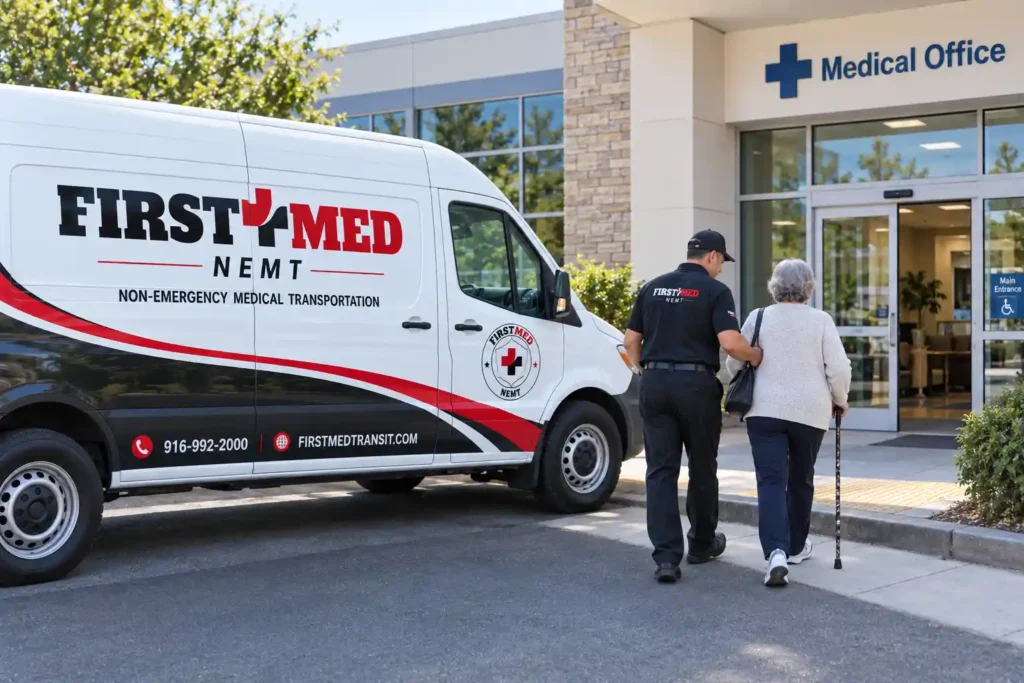
This is the exact service our gurney-equipped vehicles are built for, handling everything from hospital discharges to facility transfers with trained, gentle handling at every step.
The Pain Point Nobody Talks About: Choosing Between “Too Expensive” and “Too Risky”
Here’s the mental tug-of-war most families go through in this moment. On one side, you’re staring down an ambulance bill that could run into the thousands of dollars for a trip that isn’t actually a medical emergency. On the other side, you’re terrified of putting a fragile, post-surgical, or bed-bound person into a regular car where they’ll be sitting up, unsecured, and in pain the entire ride.
Gurney transportation exists precisely to solve that dilemma. It gives you medical-grade safety without emergency-level pricing, because the vehicle, staffing, and paperwork requirements are dramatically lighter than what an ambulance service has to carry.
How Gurney Transportation Actually Works, Step by Step
Most families are booking this for the first time under stress, so knowing the process in advance removes a lot of anxiety.
- You schedule the ride. You call or book online, giving pickup location, destination, and appointment time. Same-day and advance bookings are both usually available.
- Details get confirmed. The provider confirms the pickup window, patient weight and condition, whether oxygen or extra assistance is needed, and sorts out insurance questions upfront.
- A trained crew arrives. Reputable providers send at least two attendants, since safely moving a bed-bound patient is a two-person job, not a one-person job.
- Bed-to-bed transfer. The patient is moved from their bed, gurney, or hospital cot directly onto the transport stretcher using proper transfer techniques, not dragged or lifted improperly.
- Secured transport. The gurney locks into the vehicle’s mounting system, and the patient is restrained with padded, multi-point straps designed to absorb sudden stops.
- Arrival and hand-off. The crew wheels the patient directly to their destination bed or waiting area and coordinates hand-off with facility staff.
- Return trip, if needed. Round-trip coordination means the patient isn’t stranded after treatment.
If this is happening around a hospital release specifically, our hospital discharge transport team coordinates directly with hospital staff to time the pickup around discharge paperwork, so patients aren’t stuck waiting in a hallway on a gurney for hours.
What is Gurney Transportation? Costs and Benefits: Realistic Price Ranges
This is the part everyone actually wants to know, and understandably, providers are cagey about exact numbers because pricing depends on real variables. Based on typical NEMT industry pricing across the country, here’s what families should generally expect to budget for a private-pay gurney trip.
| Trip Type | Typical Cost Range | What Drives the Price |
| Local one-way trip (under 10 miles) | $150 – $350 | Base rate + short mileage |
| Local round trip | $250 – $600 | Base rate x2, minus a wait-time discount |
| Bariatric transport (patient over ~300 lbs) | $350 – $600+ | Extra crew and specialized equipment |
| Long-distance / inter-facility transfer | Priced individually, often 2–4+ per mile | Distance, staffing hours, fuel |
| Weekend or holiday trips | 1.25x – 2x base rate | Staffing availability |
| Supplemental oxygen or extra monitoring | +$25 – $75 | Additional equipment and training |
These figures reflect general market ranges pulled from providers nationwide, not a quoted price — the only way to know your exact cost is to call and describe the trip.
A few honest cost-comparison points that matter for your decision:
- An ambulance ride for a similar non-emergency situation frequently costs several times more, because ambulances carry advanced life-support staffing and equipment you don’t actually need for a stable patient.
- Medi-Cal and many insurance plans do cover NEMT, including gurney-level transport, when a doctor certifies it’s medically necessary this is very different from paying out of pocket, and it’s worth checking before assuming you’re stuck with the full bill.
- Recurring trips (like regular treatment transfers) are sometimes available at a flat weekly or bundled rate, which can meaningfully lower the per-trip cost.
If you’re trying to figure out who actually foots this bill in California, we’ve broken it down in detail in our related post, Who Pays for Non-Emergency Medical Transportation in California?
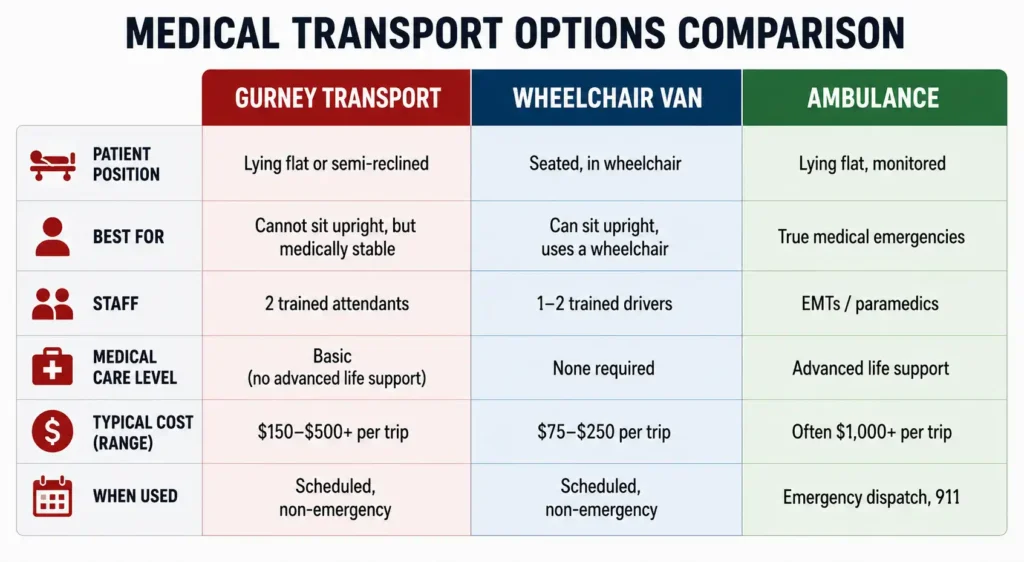
Gurney Transport vs. Wheelchair Van vs. Ambulance: Which One Do You Actually Need?
One of the biggest sources of confusion and wasted money is booking the wrong level of service. Here’s a straightforward breakdown to help you match the service to the patient’s actual condition.
| Feature | Gurney Transport | Wheelchair Van | Ambulance |
| Patient position | Lying flat or semi-reclined | Seated, in wheelchair | Lying flat, monitored |
| Best for | Cannot sit upright, but medically stable | Can sit upright, uses a wheelchair | True medical emergencies |
| Staffing | 2 trained attendants | 1–2 trained drivers | EMTs / paramedics |
| Medical monitoring onboard | Basic (no advanced life support) | None required | Advanced life support |
| Typical cost | 150–500+ per trip | 75–250 per trip | Often $1,000+ per trip |
| Response type | Scheduled, non-emergency | Scheduled, non-emergency | Emergency dispatch, 911 |
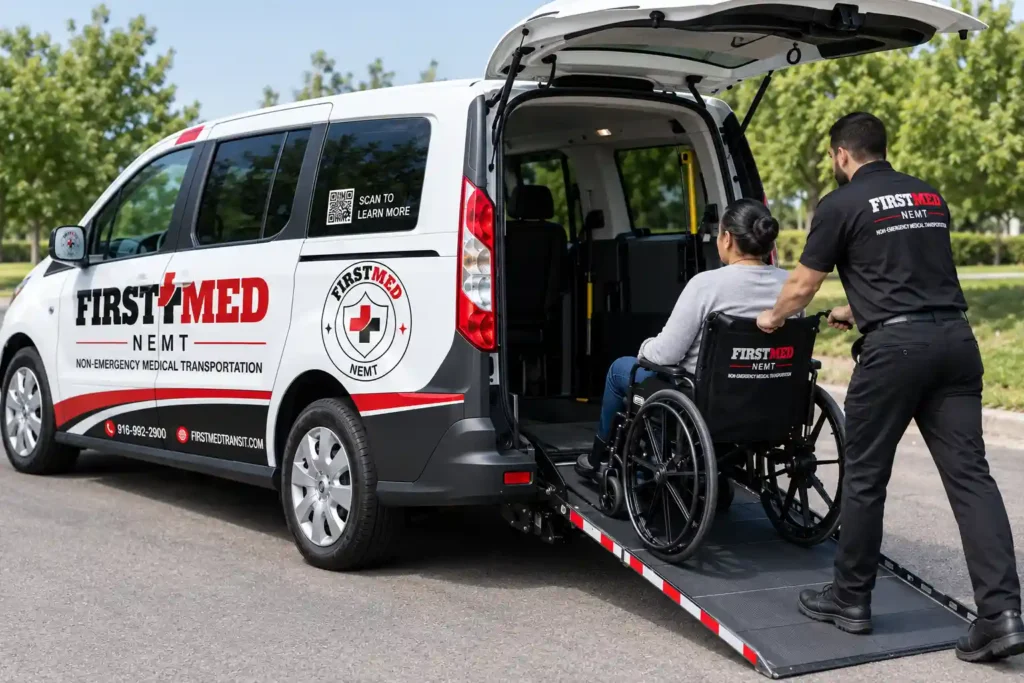
If mobility, not positioning, is the issue, our wheelchair-accessible vehicles may be the more appropriate and lower-cost option.
And if you’re not sure whether a wheelchair or a lighter-weight transport chair is even the right equipment for daily use separate from the transportation question our post Transport Chair vs Wheelchair: Which One Actually Fits Your Needs? walks through that decision in detail.
The Real Benefits of Gurney Transportation
Beyond simply “getting from A to B,” this service solves problems families genuinely stress over.
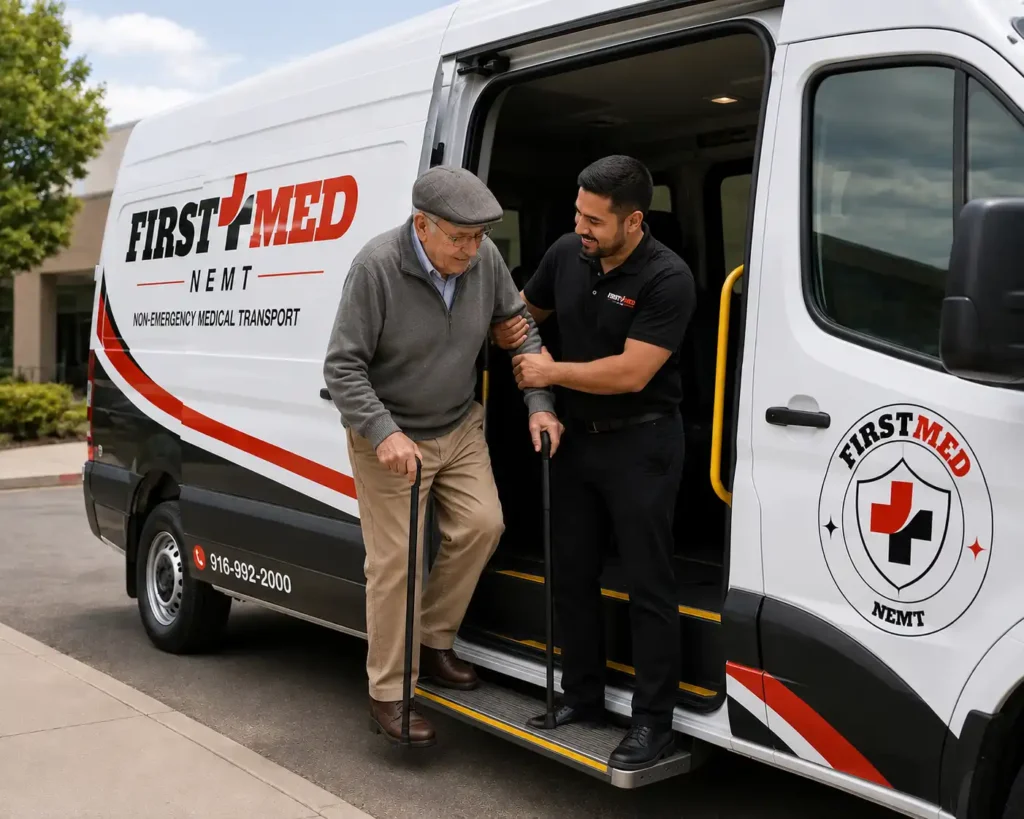
- Dignity, not disruption. Patients aren’t forced into a sitting position that causes pain or reopens a healing wound just to fit in a regular car.
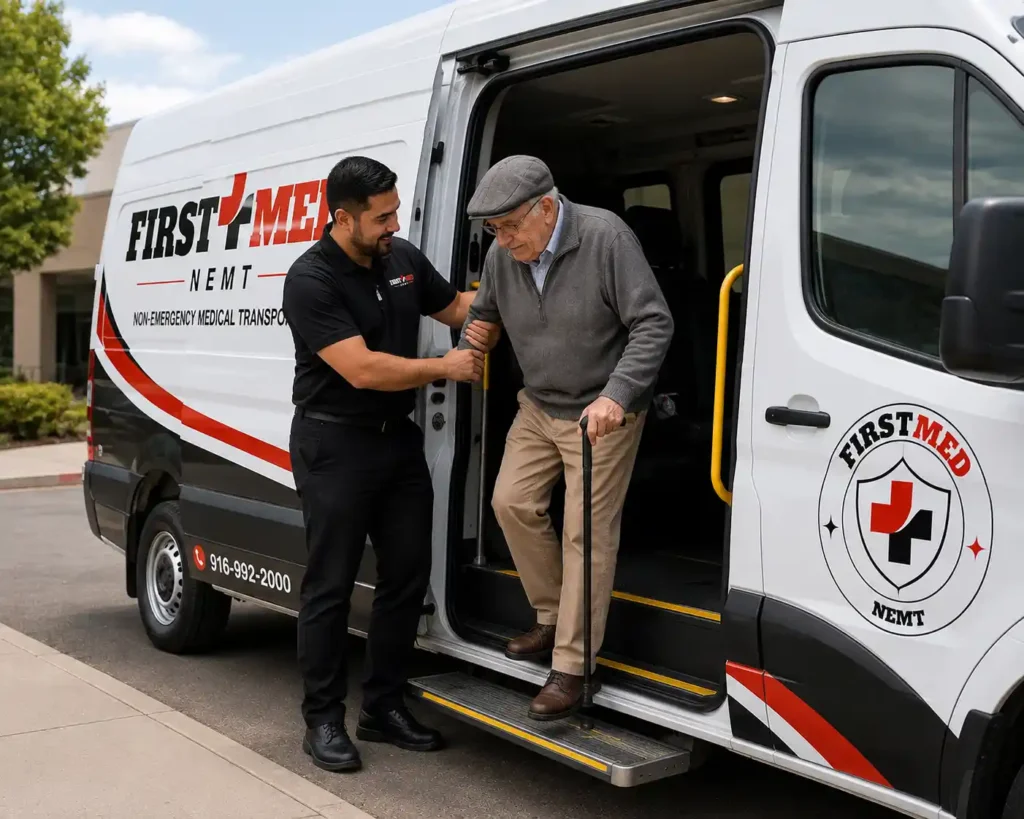
- Trained handling reduces injury risk. Improper transfers by well-meaning but untrained family members are a common cause of falls and re-injury. Certified crews are trained specifically in safe patient handling.
- Lower cost than emergency transport. For patients who are stable but immobile, this avoids the inflated cost structure of ambulance billing.
- Coordinated scheduling around care. Good providers time pickups around discharge paperwork, appointment slots, or treatment schedules, instead of leaving patients waiting.
- Peace of mind for caregivers. Family members aren’t left improvising a transfer alone in a driveway or a hospital parking lot.
- Continuity for recurring care. Patients on a treatment schedule, such as those needing regular dialysis transport, get a consistent, dependable provider instead of scrambling to arrange a new ride every time.
Does Insurance or Medi-Cal Cover Gurney Transportation in Sacramento?
This is where a lot of families get stuck, so let’s be direct about it. Non-emergency medical transportation, including gurney-level service, is a required Medicaid benefit under federal regulation for enrollees who have no other way to reach medical care, and states including California through Medi-Cal administer it with their own rules around prescriptions and prior authorization, according to the Centers for Medicare & Medicaid Services. Coverage generally requires a doctor’s order confirming the transport is medically necessary, and approval processes vary depending on whether you’re on a Medi-Cal managed care plan or fee-for-service coverage, per California’s Department of Health Care Services.
Private insurance is more inconsistent some plans reimburse part of the cost, others don’t cover it at all outside specific circumstances. The only reliable way to know your situation is to ask directly.
We help walk patients and families through exactly this kind of question on our insurance and Medi-Cal transportation assistance page, and we go deeper into plan-specific coverage nuances in our related post, Does Insurance Cover Non-Emergency Medical Transportation?
How to Choose a Gurney Transportation Provider (Without Getting Burned)
Not every provider handling stretcher transport is equally careful. Use this checklist before you book:
- Licensing and insurance. Ask directly a legitimate provider should answer instantly, without hesitation.
- Two-person trained crews. One person cannot safely transfer a bed-bound patient alone.
- CPR and first-aid certification. This should be standard, not an upsell.
- Clear, upfront pricing. If a provider won’t give you a real estimate before the trip, that’s a red flag.
- Equipment condition. Padded gurneys, working restraint systems, and a clean, well-maintained vehicle take a look at the provider’s fleet before booking if that information is available.
- Communication with medical staff. Good providers coordinate directly with hospital or facility staff for smooth hand-offs, not curbside drop-offs.
- Availability for round trips and recurring needs. Especially important for ongoing treatment, senior care, or facility-to-facility transfers.
If distance is a factor say, a long-distance medical transportation need between cities or facilities confirm ahead of time that the provider actually handles trips outside the immediate metro area, since not all local companies do.
Common Mistakes Families Make (And How to Avoid Them)
- Waiting until the day of discharge to arrange transport. Hospitals can move fast once discharge paperwork clears. Book as early as possible, especially for elderly or post-surgical patients who may need our senior transportation services regularly, not just once.
- Assuming Medicare or insurance automatically covers it. Verify before the trip, not after the invoice arrives.
- Booking a wheelchair van for a patient who genuinely can’t sit up. This creates real medical risk and often ends up costing more in the long run through complications.
- Not asking about crew training. A cheap price with an undertrained, single-person crew isn’t actually a good deal if it results in an injury.
Frequently Asked Questions
What is gurney transportation?
Gurney transportation is non-emergency medical transport for patients who cannot sit upright, using a padded, secured stretcher inside a specially equipped vehicle, staffed by trained attendants rather than emergency personnel.
How much does gurney transportation typically cost?
Local one-way trips generally range from about $150 to $500 depending on distance, patient weight, and any additional medical needs, with long-distance and bariatric transport priced higher.
Is gurney transportation cheaper than an ambulance?
Yes, in most non-emergency situations. Ambulances carry advanced life-support staffing and equipment that gurney transport doesn’t require, which is reflected in significantly higher ambulance billing.
Does Medi-Cal cover gurney transportation?
Medi-Cal can cover gurney-level NEMT when a doctor certifies it’s medically necessary, though the approval process depends on whether you’re enrolled in a managed care plan or fee-for-service Medi-Cal.
Who typically needs gurney transportation?
Patients recovering from major surgery, those with spinal injuries or fractures, bed-bound seniors, hospice patients, and anyone whose condition prevents sitting upright for a car ride.
Can a family member ride along during gurney transport?
In most cases, yes. It’s best to mention this when booking so the provider can plan seating and space accordingly.
Is gurney transportation safe for elderly patients?
Yes, when handled by a trained two-person crew using proper transfer techniques and a securely mounted, restrained gurney system, this is one of the safer ways to move a frail or bed-bound senior.
The Bottom Line
Gurney transportation fills a real gap: safe, dignified, horizontal transport for people who are too fragile to sit up but don’t need or can’t afford an ambulance. Understanding what is gurney transportation, costs and benefits before you’re standing in a hospital hallway making a rushed decision puts you in a much stronger position to choose the right service, ask the right questions about coverage, and get someone you love home safely and comfortably.
If you’re arranging a ride in the Sacramento area, our team can walk you through pricing, coverage, and scheduling before you commit to anything. Contact us to talk through your specific situation.