Nobody plans a hospital discharge, a dialysis schedule, or a post-surgery follow-up around a transportation budget but the ride still has to get paid for somehow. If you’ve been searching for straight answers on pricing, you’ve probably noticed the same thing everyone else does: most companies bury their rates behind a “call for a quote” button, and the few numbers that do show up online swing wildly from $30 to $300 for what sounds like the same trip.
That gap is confusing, and it’s stressful when you’re trying to plan a fixed-income budget or figure out whether a loved one’s insurance will actually cover the ride. This guide breaks down the real numbers, what actually drives the price up or down, and how to avoid paying more than you should.
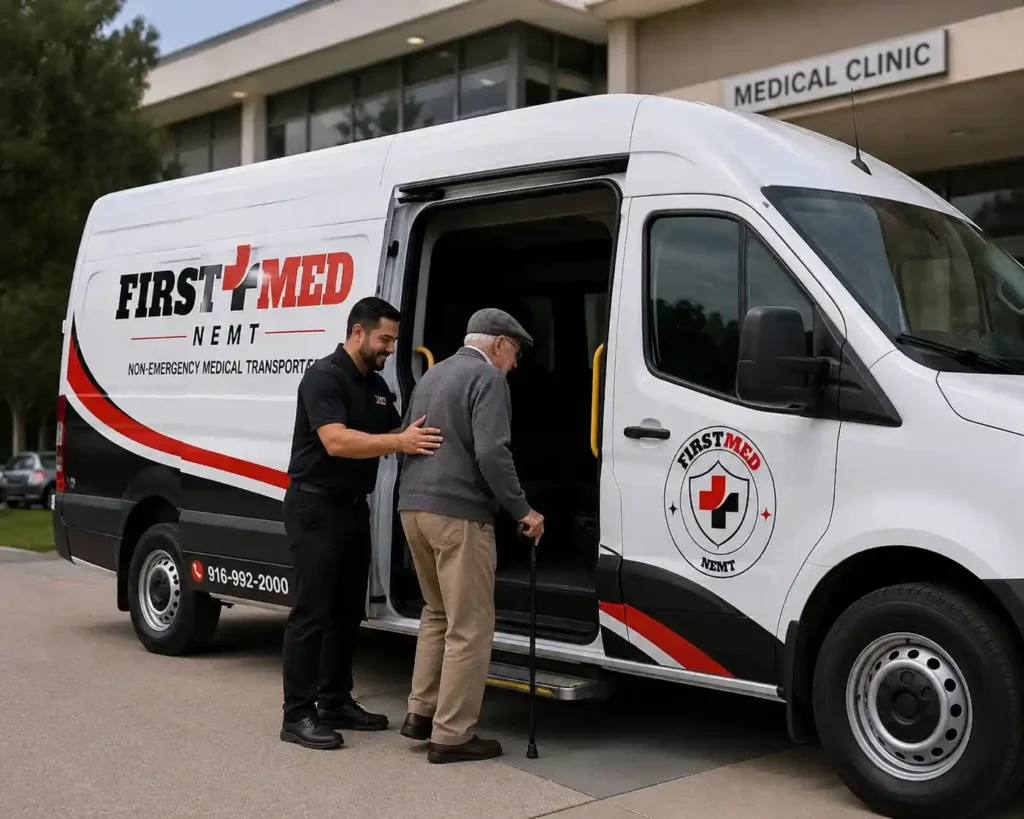
How Much Does Non Emergency Medical Transport Cost?
The cost of non-emergency medical transportation typically ranges from $50 to $250 for a one-way local trip, depending on the mobility level required, the distance traveled, and whether the ride is scheduled in advance or needed same-day. Long-distance or interstate transfers can run several hundred dollars higher.
Most NEMT providers price rides using a combination of:
- A base/pickup fee — a flat charge just to dispatch a vehicle and driver
- A per-mile rate — added on top of the base fee once the vehicle is moving
- Equipment or assistance fees — extra charges for gurneys, oxygen support, or two-person lift assistance
- Wait-time charges — if the driver has to wait at an appointment beyond a set grace period
So when someone asks about non emergency medical transport cost, the honest answer is “it depends on the ride” but the ranges below give you a realistic starting point.
| Trip Type | Typical Base Fee | Per-Mile Rate | Typical One-Way Total |
| Ambulatory (walking, minor assistance) | $25–$45 | $2–$4 | $50–$120 |
| Wheelchair transport | $35–$60 | $2.50–$4.50 | $70–$180 |
| Gurney/stretcher transport | $75–$150 | $3–$6 | $150–$300+ |
| Long-distance/interstate transfer | Flat quote | Varies by mileage | $300–$1,500+ |
Figures reflect general industry ranges for private-pay, non-emergency rides and will vary by provider, region, and insurance arrangement.
What Is the Average Cost of Non Emergency Medical Transportation, By Mobility Level
The single biggest factor in pricing isn’t distance it’s the level of physical assistance a member needs. A short ride for someone who needs a stretcher will almost always cost more than a longer ride for someone who can walk to the curb.
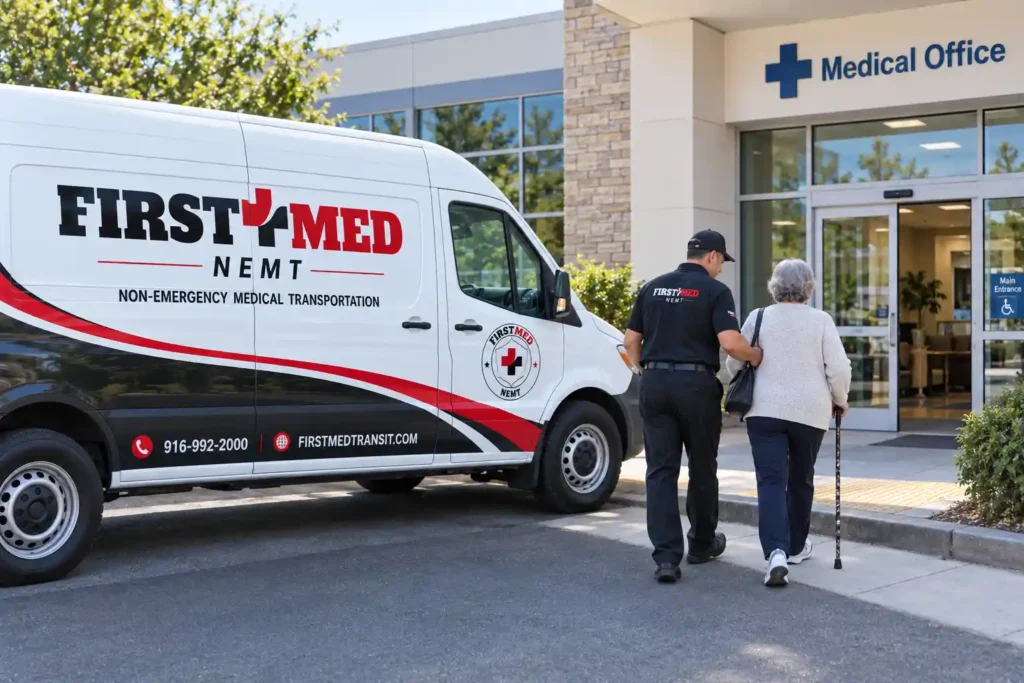
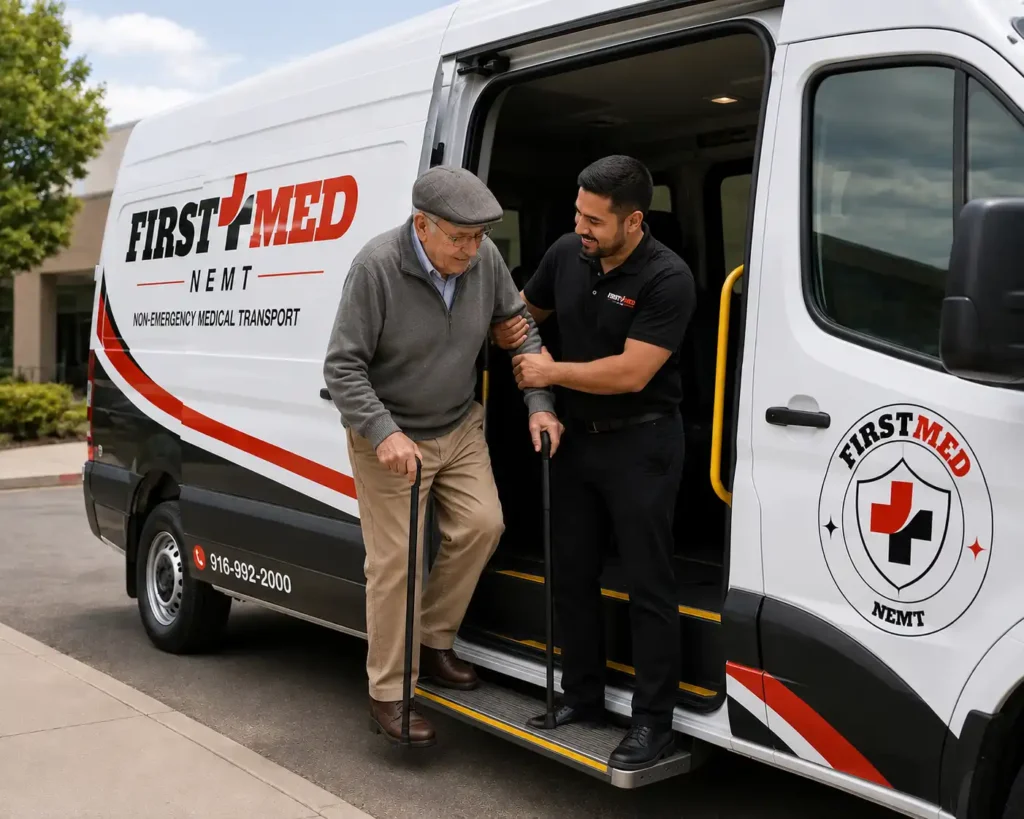
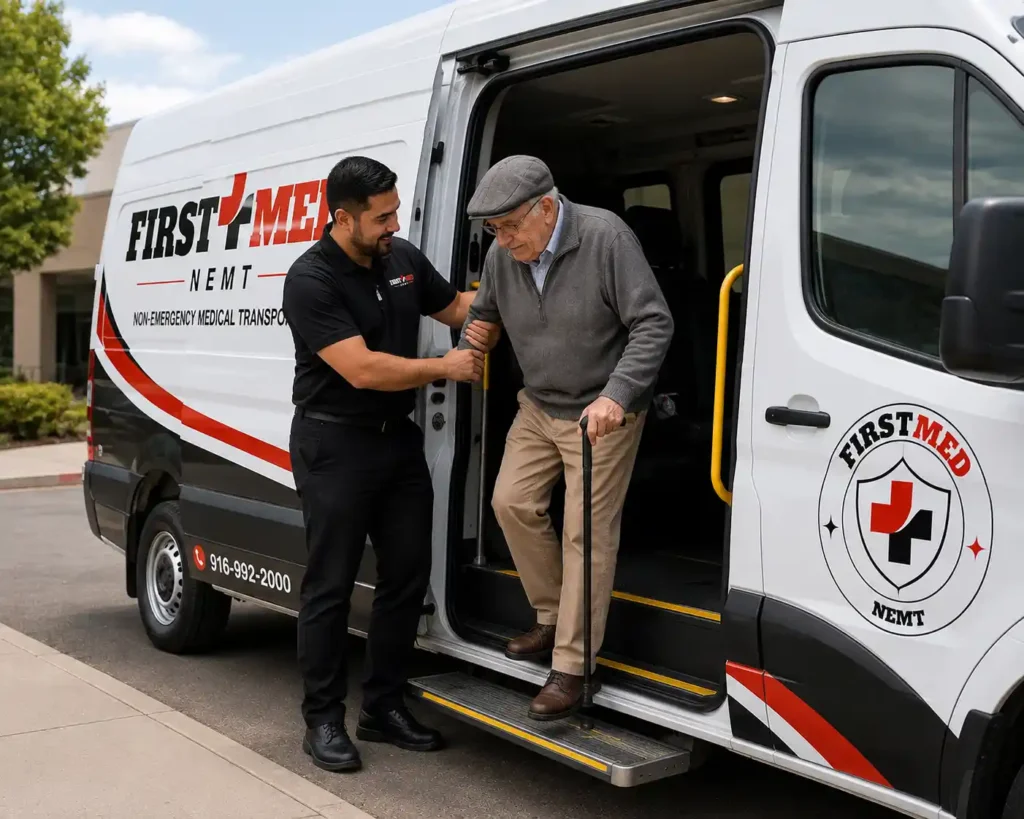
Ambulatory transport is the most affordable tier. It’s designed for members who can walk, with or without a cane or walker, and simply need door-to-door supervision and a safe seat. If you’re comparing options for someone recovering from a minor procedure, this is usually the lightest-cost category. Our Ambulatory Transport service covers exactly this kind of ride across the Sacramento area.
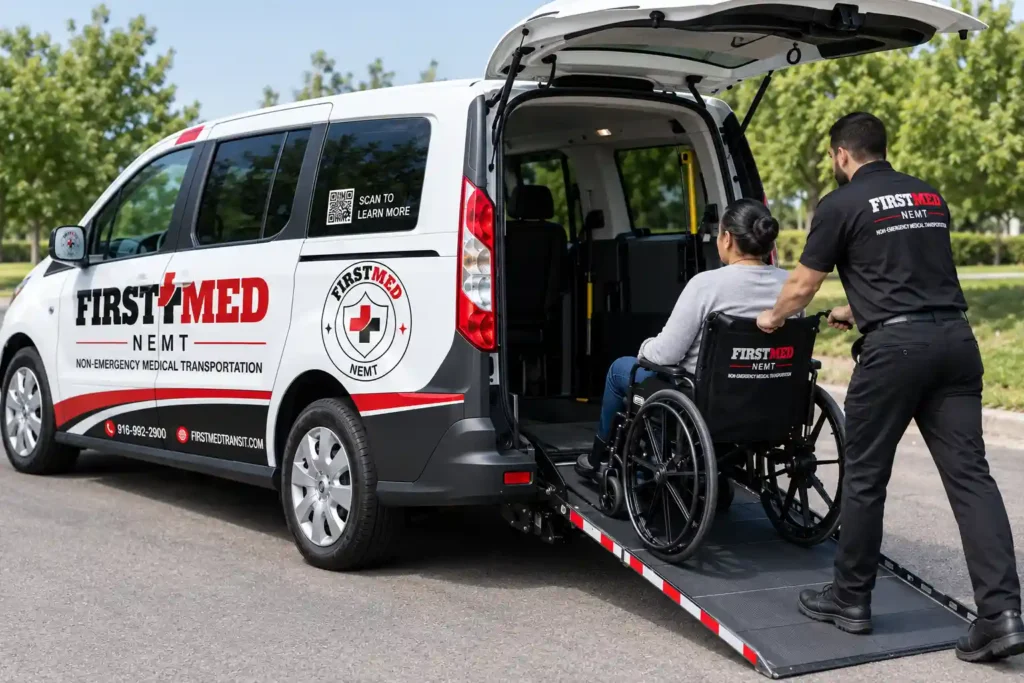
Wheelchair transport sits in the middle. It requires a vehicle with a ramp or hydraulic lift, wheelchair restraint systems, and a driver trained to secure the chair safely before departure. Because of the equipment and extra time involved, wheelchair rides usually cost more than ambulatory ones. If you want a deeper breakdown of pricing specifically for wheelchair users, our related post wheelchair transport cost walks through it trip by trip How Much Does a Wheelchair Transport Cost? A Complete Pricing Guide.
Gurney transport is the most involved and the most expensive tier, since it requires a stretcher-equipped vehicle and specially trained handling for someone who must remain lying flat. This is common for hospital-to-home transfers, facility-to-facility moves, or situations where sitting upright simply isn’t possible. Our Gurney Transport service is built specifically around this need.
What Actually Drives the Price Up or Down
If two people pay very different amounts for what sounds like a similar ride, it’s usually one of these factors:
- Distance traveled. Per-mile charges add up quickly on cross-town or long-distance trips.
- Same-day vs. scheduled booking. Last-minute requests often carry a premium because they disrupt existing routes. Providers offering a dedicated Same Day NEMT Service option can sometimes hold same-day rates closer to scheduled pricing.
- Time of day. Early morning, late evening, or weekend rides may include off-hours surcharges.
- Wait time at the appointment. Round trips where the driver waits through a long procedure can add hourly waiting fees.
- Two-person assist requirements. Some members need two staff members for safe transfer, which raises the price of the trip.
- Recurring vs. one-time rides. Members who need regular treatment, like ongoing Dialysis Transport, can often lock in lower recurring rates than a one-off booking.
- Region and local traffic patterns. Providers based locally, with real familiarity with hospital loading zones and appointment traffic, tend to route more efficiently which keeps both time and cost down.
Cost of NEMT vs. Ambulance vs. Rideshare
A lot of people default to calling an ambulance or booking a rideshare simply because they don’t know NEMT exists as a middle option. Here’s how the three compare:
| Option | Typical Cost Range | Trained Medical Assistance | Mobility Equipment | Best For |
| Non-Emergency Medical Transport | $50–$300+ | Yes | Wheelchair/gurney available | Scheduled appointments, discharges, recurring treatment |
| Emergency Ambulance | $1,000–$3,000+ | Yes (paramedic level) | Full emergency equipment | True medical emergencies only |
| Standard Rideshare | $15–$60 | No | None | Members who need no physical assistance at all |
Ambulances are built and priced for emergencies. Using one for a routine dialysis run or a hospital discharge is both far more expensive and unnecessary if the situation isn’t life-threatening. On the other end, a standard rideshare driver isn’t trained or equipped to help someone in a wheelchair, on oxygen, or recovering from surgery safely get in and out of a vehicle. Non-emergency medical transport exists specifically to fill that gap: trained assistance and the right equipment, at a fraction of ambulance pricing.
Does Insurance or Medi-Cal Cover the Cost of Non Emergency Medical Transport?
This is often the most important part of the whole conversation, because it changes the real out-of-pocket number entirely. Many members qualify for full or partial coverage through Medi-Cal or private insurance, but eligibility rules and documentation requirements vary by plan.
Under federal Medicaid regulations, states are required to provide access to a non-emergency medical transportation benefit for eligible enrollees you can review the official program details directly through the Centers for Medicare & Medicaid Services NEMT program which outlines guidelines, eligible services, and how the benefit is structured at the federal level.
Locally, our team helps sort out these questions directly. Our Insurance & Medi-Cal page explains how coverage typically works and what documentation is usually needed to get a ride approved. If you want the fuller picture on who’s actually responsible for the bill in different situations, our related post Who Pays for Non-Emergency Medical Transportation in California? breaks down Medi-Cal, private insurance, and self-pay scenarios side by side. And if you’re specifically trying to figure out whether your existing insurance plan includes transportation as a benefit, Does Insurance Cover Non-Emergency Medical Transportation? answers that question in detail.
Hidden Fees to Watch For (And How to Avoid Overpaying)
Sticker shock usually comes from fees nobody mentioned upfront, not from the base rate itself. Before booking, ask directly about:
- Cancellation or no-show fees — some providers charge if a ride is canceled with less than a few hours’ notice
- Wait-time billing — ask exactly when the clock starts and what the per-minute or per-hour rate is
- Fuel or off-hours surcharges — these should be disclosed before, not after, the trip
- Round-trip vs. one-way pricing — confirm whether the quote covers both directions or just the drop-off
- Equipment fees — gurney or oxygen support sometimes carries a separate line item
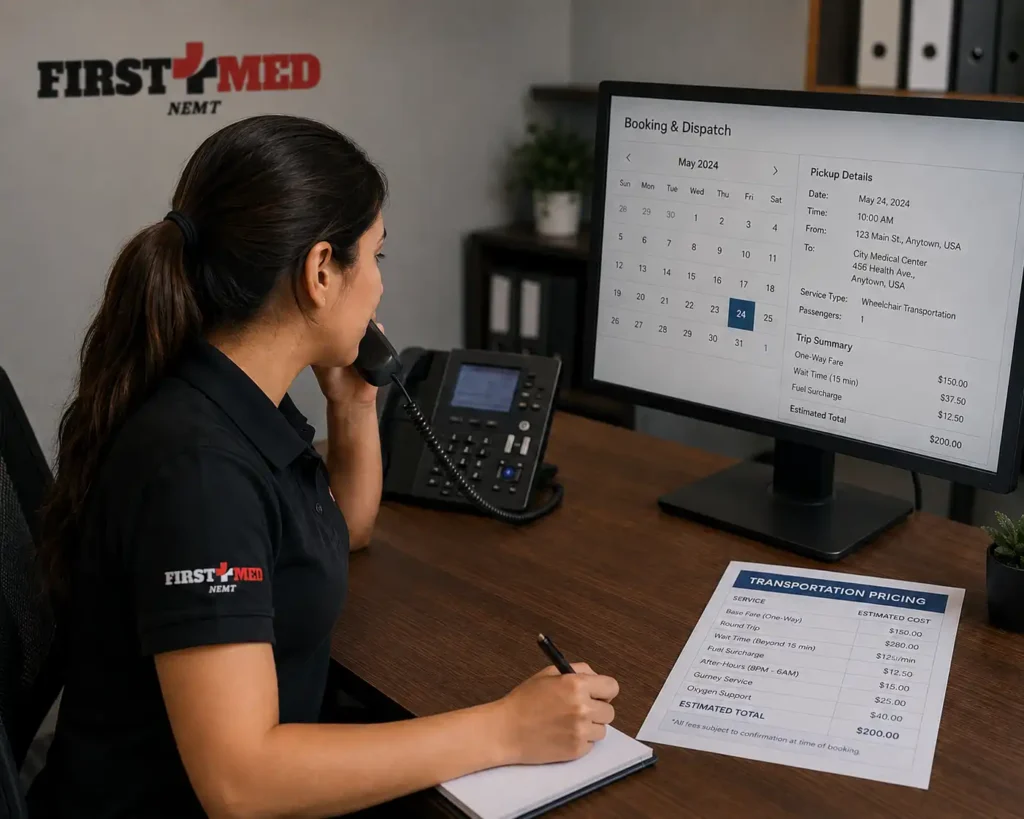
Practical tip: Ask for a full, itemized quote before you book pickup fee, mileage rate, and any potential extra charges in writing or over a recorded call. A transparent provider will give you this without hesitation.
How to Get an Accurate Quote for Your Trip
The fastest way to know your real number is to skip the guesswork and ask directly. When you Contact Us, share these five details so the quote you get back is accurate the first time:
- Pickup address and destination
- Appointment date and time
- Mobility level needed (ambulatory, wheelchair, or gurney)
- Whether it’s a one-time or recurring trip
- Insurance or Medi-Cal information, if applicable
For members managing ongoing treatment, this is also the right time to ask about setting up a recurring schedule for example, our Senior Transport and dialysis-focused services are frequently booked on a repeating weekly basis, which can simplify both planning and pricing.
Frequently Asked Questions
What is the average cost of non emergency medical transportation for a local trip?
Most local, one-way trips fall between $50 and $180, depending on whether ambulatory, wheelchair, or gurney assistance is needed. Long-distance transfers cost significantly more and are usually quoted individually.
How much does non emergency medical transport cost compared to an ambulance?
Non-emergency transport is typically a fraction of ambulance pricing often $50 to $300 versus $1,000 to $3,000+ for an emergency ambulance ride, since NEMT doesn’t include paramedic-level emergency response.
Do prices change for same-day bookings?
Often, yes. Same-day requests can carry a modest surcharge since they require adjusting existing driver routes, though scheduling in advance typically keeps pricing at its standard rate.
Are round-trip rides cheaper than booking two separate one-way trips?
Usually. Booking a round trip in a single reservation often costs less than arranging two separate one-way pickups, since it avoids a second base/dispatch fee.
What’s the difference between wheelchair and gurney pricing?
Gurney transport generally costs more because it requires specialized stretcher equipment and additional trained handling, while wheelchair transport only requires ramp/lift access and restraint securing.
Want an exact number for your own situation instead of a general range? A quick call gets you a real, itemized quote based on your pickup location, appointment time, and mobility needs — no guesswork required.