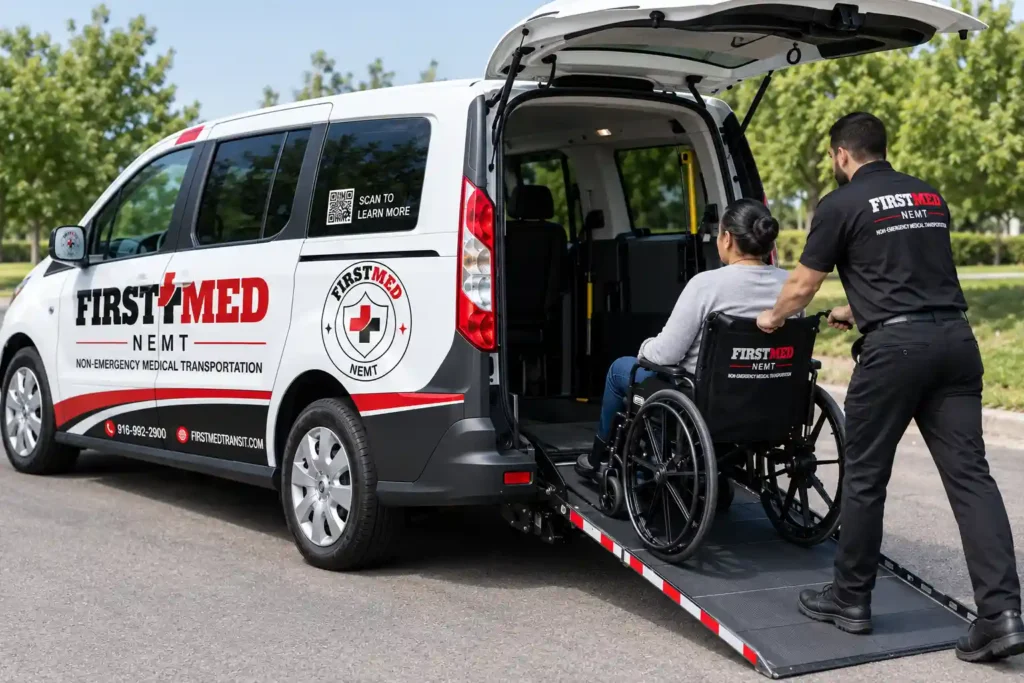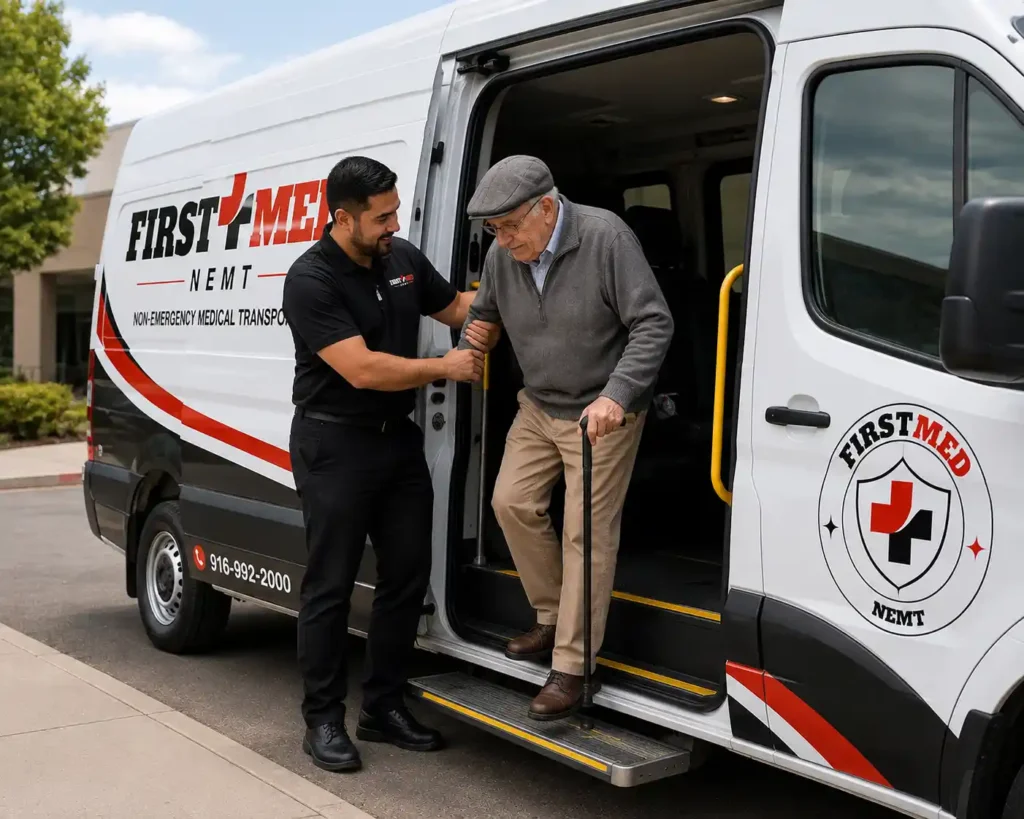
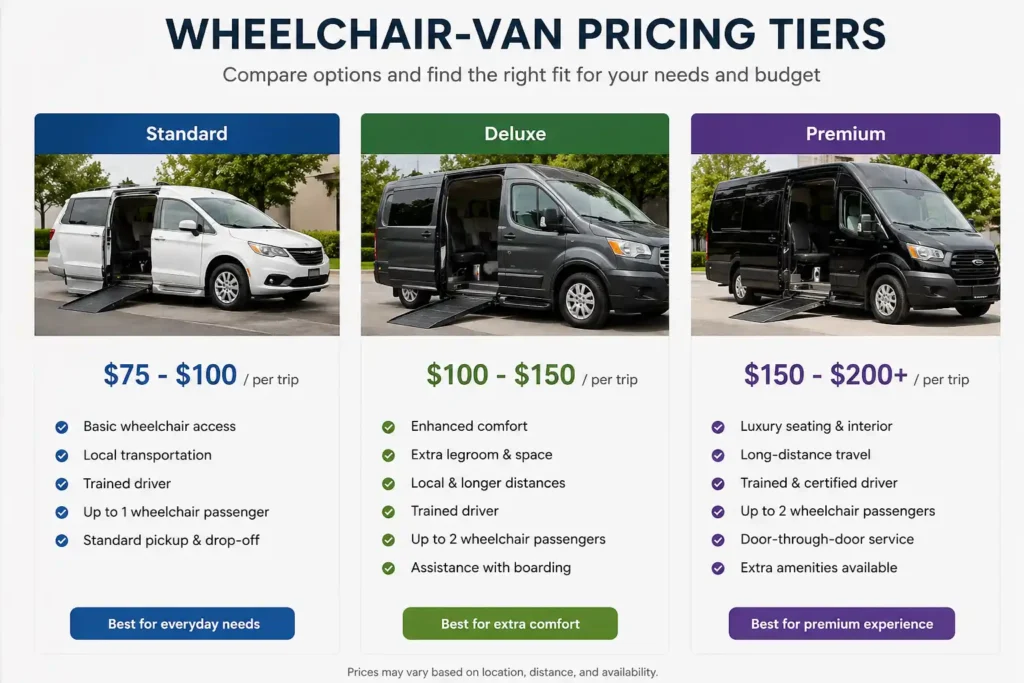
If you’ve searched for how much does a wheelchair transport cost, Wheelchair transportation typically costs about $50 to $150 or more per one-way trip, depending on the travel distance, type of wheelchair-accessible vehicle, level of assistance needed, and whether insurance or Medi-Cal covers the transportation. In Sacramento, wheelchair transport providers may charge based on mileage, trip length, wait time, and additional mobility assistance, so the final price can vary from one trip to another. Unlike standard rideshare services, wheelchair transportation requires specialized accessible vehicles, trained drivers, ramps or lifts, and secure wheelchair restraint systems. If you need transportation for dialysis, a hospital discharge, medical appointments, or other non-emergency medical needs, checking your insurance or Medi-Cal eligibility can help reduce your out-of-pocket cost.
Average Wheelchair Transport Cost: What to Expect
Nationally, non-emergency wheelchair transport typically runs somewhere between $40 and $150 for a one-way local trip, though prices can climb higher depending on your region, the provider, and the specific circumstances of the ride. Long-distance or interfacility transfers, understandably, cost considerably more, sometimes several hundred dollars, because they involve more driver time, fuel, and vehicle wear.
Here’s a general cost breakdown to help set expectations:
| Trip Type | Typical Cost Range | Notes |
| Short local trip (under 10 miles) | $40 – $75 | Base rate plus minimal mileage |
| Standard local trip (10–25 miles) | $60 – $120 | Most common for routine appointments |
| Recurring trips (dialysis, chemo) | Discounted per-trip rate | Often billed weekly or monthly |
| Long-distance or interfacility | $150 – $400+ | Depends heavily on mileage and wait time |
| With insurance/Medi-Cal coverage | $0 – copay only | Subject to eligibility and prior authorization |
These figures are general industry averages and will vary by provider and location, but they give you a realistic starting point when budgeting for a ride.
What Factors Actually Determine the Price
Distance and Trip Duration
This is the most straightforward factor. Most providers charge a base fee plus a per-mile rate, so a five-mile trip to a local clinic will cost far less than a 40-mile trip to a specialty hospital. Wait time, if the driver has to sit through a lengthy appointment before the return trip, can also factor into the total.
Vehicle Type Required
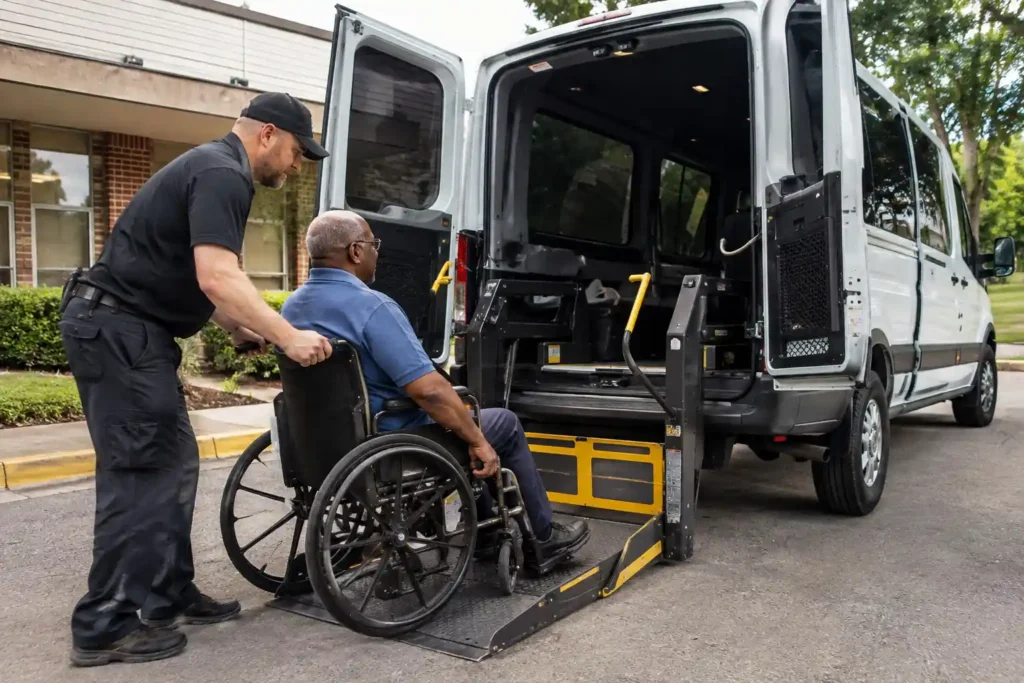
Not every wheelchair user needs the same equipment. A passenger who can transfer independently from a wheelchair into a regular seat may need less specialized equipment than someone who must remain in the wheelchair for the entire ride, which requires a ramp or lift and a full restraint system. If you’re unsure which category applies to your situation, our Wheelchair Transportation service page breaks down exactly what’s included with each ride type.
Level of Assistance Needed
Some passengers need help only with boarding and exiting the vehicle. Others need door-to-door or even door-through-door support, meaning the driver assists from inside the home all the way into the medical facility. More hands-on assistance generally means a slightly higher rate, since it takes more driver time and training.
Frequency of Trips
One-time trips are usually priced individually, but if you need recurring transportation, say, three times a week for dialysis, most providers offer a discounted recurring rate. Setting up a standing schedule instead of booking each ride separately can meaningfully lower your average cost per trip. Our Long Distance Medical Transportation page covers pricing considerations for patients traveling further distances on a regular basis.
Insurance and Medi-Cal Coverage
This is often the single biggest factor in what you actually pay. Some Medi-Cal managed care plans and private insurance policies cover NEMT when it’s medically necessary and properly authorized in advance. If you qualify, your out-of-pocket cost could drop to a small copay or nothing at all. We’ve covered this topic in detail in our blog post, Does Insurance Cover Non-Emergency Medical Transportation?, which walks through exactly how coverage works and what documentation you’ll need.
Wheelchair Van vs. Ambulance vs. Rideshare: A Cost Comparison
It helps to understand where wheelchair transport fits relative to other options, since pricing varies enormously between them.
| Transport Option | Typical Cost | Best For |
| NEMT Wheelchair Van | $40 – $150+ per trip | Scheduled, non-emergency medical appointments |
| Ambulance | $500 – $1,500+ | True medical emergencies requiring clinical care |
| Standard Rideshare (Uber/Lyft) | $15 – $40 | Passengers who don’t require wheelchair-specific equipment |
| Wheelchair-Accessible Rideshare | $25 – $60 | Independent riders needing basic accessibility, not medical assistance |
Ambulances are dramatically more expensive because they’re staffed with emergency medical personnel and equipped for clinical intervention, none of which is necessary for a routine trip to a dialysis center or follow-up appointment. Standard rideshare services, meanwhile, usually aren’t equipped or insured to handle wheelchair securement, which is exactly the gap NEMT wheelchair transport fills.
Does Medi-Cal or Insurance Cover the Cost?
Many passengers are surprised to learn they may qualify for fully or partially covered rides. Medi-Cal, for example, often covers non-emergency medical transportation when a doctor confirms it’s medically necessary, meaning the patient has no other safe way to get to their appointment. Coverage rules and required paperwork vary by county and by plan, which is exactly why we put together a dedicated breakdown in Who Pays for Non-Emergency Medical Transportation in California?, covering how Medi-Cal, private insurance, and county programs each handle payment.
If you’re not sure whether your policy applies, our team can walk you through eligibility on our County Medi-Cal Insurance page before you book.
Tips to Reduce Your Wheelchair Transport Costs
- Ask about recurring trip discounts. If you have regular appointments, a standing schedule is almost always cheaper per trip than booking one-off rides.
- Confirm insurance eligibility before you ride. A quick phone call to your provider can clarify whether your trip qualifies for coverage, saving you from paying out of pocket unnecessarily.
- Book in advance when possible. Same-day or last-minute requests sometimes carry a premium, while scheduling ahead gives providers time to route efficiently and offer better rates.
- Choose the right vehicle type. If you’re able to transfer safely without a full wheelchair-lift van, an ambulatory vehicle may be more affordable. Our Ambulatory Transportation service explains what that option involves.
- Bundle your return trip. Round-trip bookings are usually more cost-effective than arranging two separate one-way rides.
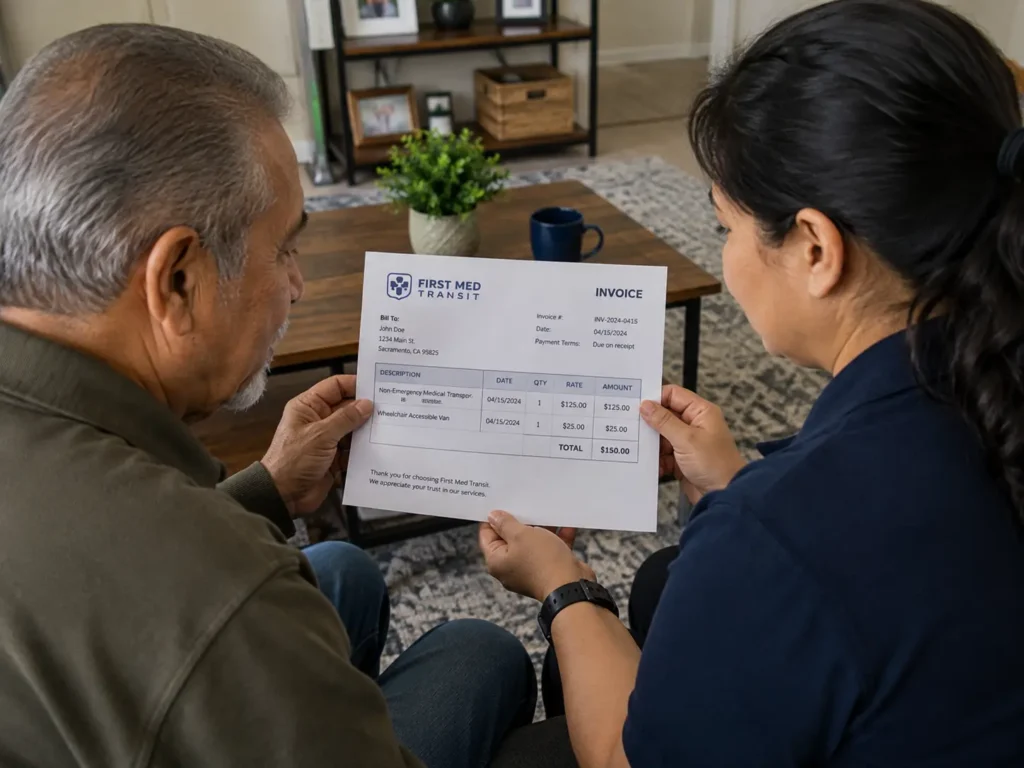
Choosing the Right Wheelchair Transport for Your Situation
Not every ride needs the same level of equipment. If a passenger travels lying down rather than seated, a Gurney Transportation vehicle may be the appropriate, and differently priced, option. And if your loved one is transitioning out of a hospital stay, coordinating the ride in advance through a service built specifically for that transition, rather than booking a generic trip, tends to be both smoother and more predictable in cost.
For same-day needs, our Same Day page outlines how urgent bookings are priced compared to scheduled ones.
Frequently Asked Questions
How much does a wheelchair transport cost for a one-way local trip?
A typical one-way local wheelchair transport trip generally costs between $40 and $120, depending on distance, the vehicle used, and the level of assistance required.
Is wheelchair transport more expensive than a regular taxi?
Yes, typically. Wheelchair-accessible vans require specialized equipment, additional driver training, and liability coverage, all of which factor into a higher base cost compared to a standard taxi or rideshare.
Does Medicare cover wheelchair transport costs?
Original Medicare covers non-emergency ambulance transport only in limited circumstances where a doctor certifies it’s medically necessary; it generally does not cover routine wheelchair van services. Some Medicare Advantage plans, however, include NEMT as a supplemental benefit, so it’s worth checking your specific plan.
Can I get free wheelchair transportation through Medi-Cal?
Many Medi-Cal beneficiaries qualify for fully covered non-emergency medical transportation when a healthcare provider confirms medical necessity and there’s no other safe transportation option available.
Do prices change for recurring appointments like dialysis?
Yes. Most providers offer discounted recurring rates for passengers who need regular transportation, which is typically far more economical than booking each trip individually.
What’s included in a standard wheelchair transport fee?
Standard fees usually cover the vehicle, driver assistance with boarding and securement, and transport to and from the destination. Additional charges may apply for extended wait times or extra passengers.
Ready to Book Wheelchair-Accessible Transportation?
Understanding how much does a wheelchair transport cost upfront helps you plan ahead and avoid billing surprises, whether you’re paying out of pocket or coordinating coverage through insurance or Medi-Cal. If you’d like an accurate quote for your specific trip, our team can walk you through pricing, availability, and coverage options before you book.