If you or a loved one needs regular rides to dialysis, chemotherapy, physical therapy, or a follow-up appointment after a hospital stay, one question comes up almost immediately: Who Pays for Non-Emergency Medical Transportation in California? Non-emergency medical transportation (NEMT) isn’t free by default, but depending on your insurance situation, your income, and the medical necessity of your trip, a good portion sometimes all of the cost can be covered by someone other than you.
This guide breaks down exactly who foots the bill for NEMT in California, how the approval process works, what happens when you don’t qualify for coverage, and how to find reliable medical transportation near me when you need a ride today rather than next week.
What Non-Emergency Medical Transportation Actually Covers
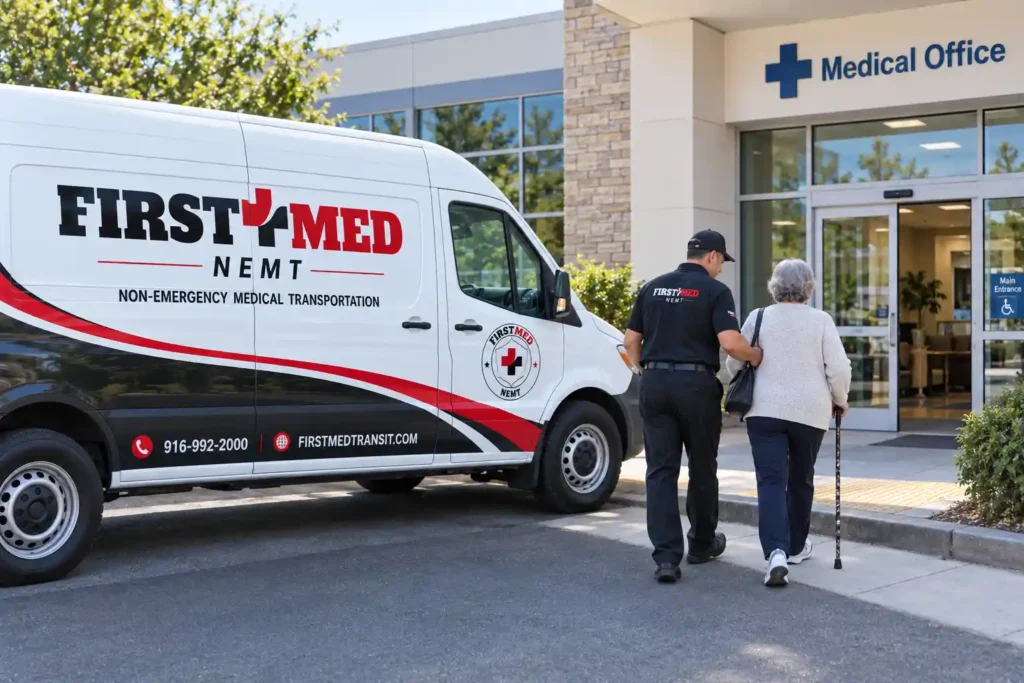
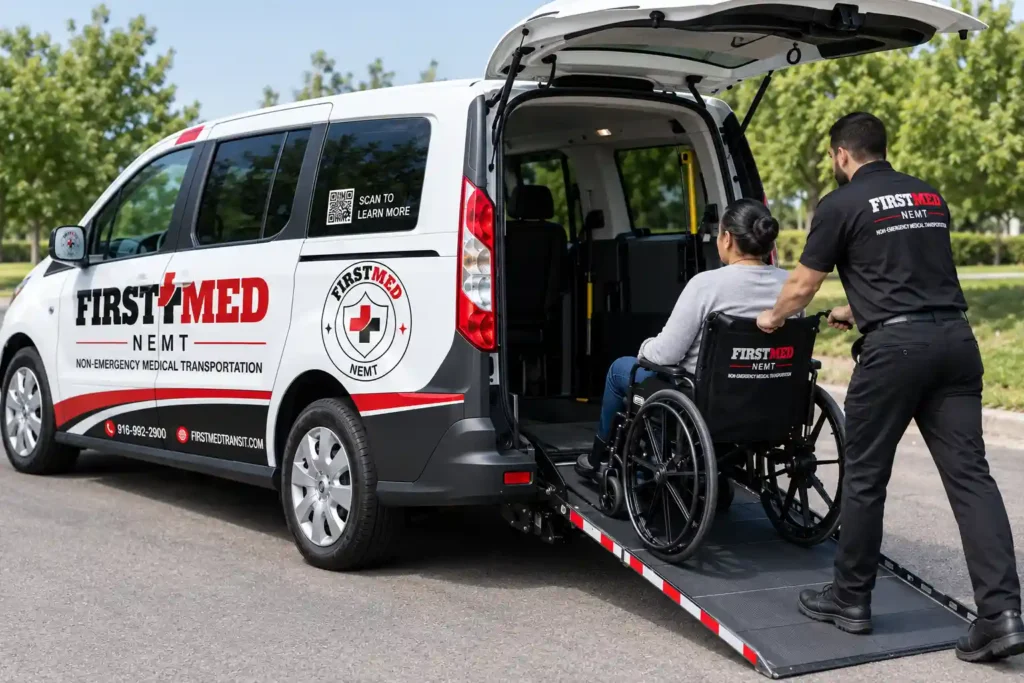
NEMT refers to transportation for people who need help getting to a medical appointment but don’t require emergency care. This includes rides for dialysis, oncology treatment, post-surgical follow-ups, mental health appointments, physical therapy, and routine specialist visits. It’s different from an ambulance ride responding to a 911 call NEMT is scheduled in advance and typically uses wheelchair vans, gurney vehicles, or ambulatory transport vehicles rather than emergency ambulances.
In California, coverage generally falls into four categories:
- Medi-Cal (California’s Medicaid program)
- Medicare and Medicare Advantage plans
- Private health insurance
- Self-pay or out-of-pocket arrangements
Each of these has different rules about who qualifies, what paperwork is required, and how much (if anything) the patient owes.
Medi-Cal: The Primary Payer for Most Eligible Californians
For the majority of Californians who use NEMT regularly, Medi-Cal is the payer. Medi-Cal covers both non-emergency medical transportation and a related but distinct benefit called non-medical transportation (NMT).
NEMT is for members whose medical or physical condition prevents them from safely using a bus, taxi, or personal vehicle. This tier includes wheelchair vans, gurney/litter vans, and — in some cases — non-emergency ambulance transport when a patient’s condition requires monitoring or equipment that a standard van can’t provide.
NMT is for members who don’t need medical assistance during the ride but still lack any other way to reach a covered appointment. NMT is typically arranged through a passenger vehicle, taxi, or public transit reimbursement, and it doesn’t require the same level of medical documentation as NEMT.
To qualify for Medi-Cal-funded NEMT, a Physician Certification Statement (PCS) form must generally be completed and signed by the treating provider. This form documents why the patient cannot use ordinary transportation and specifies the appropriate vehicle type ambulatory, wheelchair, or gurney. Most Medi-Cal managed care plans require this authorization before a ride can be booked, and the plan’s contracted transportation broker coordinates the actual scheduling.
Medi-Cal is required to cover the least costly mode of transportation that’s medically appropriate. If a patient can safely travel by wheelchair van, the plan is not obligated to authorize a costlier ambulance ride.
For Medi-Cal members with full-scope, no-cost coverage, an authorized and properly documented NEMT trip typically comes with no copay. However, patients with a share of cost, or those who are dual-eligible for both Medicare and Medi-Cal, may still see some cost-sharing depending on how the two programs coordinate benefits—so verifying coverage before the ride is always the safer move.

How Medi-Cal Managed Care Plans Handle NEMT
Most Medi-Cal beneficiaries in California are enrolled in a managed care plan rather than fee-for-service Medi-Cal. Each managed care plan whether it’s L.A. Care, Health Net, Partnership HealthPlan, or another regional plan, contracts with a transportation broker (commonly a third-party logistics company) to arrange rides. That means the exact phone number to call, the lead time required, and the documentation needed can vary slightly by plan and by county, including for patients in Elk Grove, Citrus Heights, Folsom, Roseville, Rocklin, Orangevale, El Dorado Hills, Placerville, Natomas, Rancho Cordova, Fair Oaks, and Antelope.
Generally, routine appointments require the ride to be scheduled at least a few business days in advance, while urgent (but still non-emergency) appointments can sometimes be arranged with less notice.
Medicare: More Limited, But Not Zero
Original Medicare (Part B) covers non-emergency ambulance transportation only in narrow circumstances — generally when a doctor certifies that transport by any other means could endanger the patient’s health, such as when a bed-confined patient needs to reach a facility for a covered service. Routine NEMT rides in a wheelchair van for something like a scheduled physical therapy session typically are not covered under Original Medicare.
Medicare Advantage (Part C) plans are a different story. Many Medicare Advantage plans in California now include NEMT as a supplemental benefit, often with a limited number of one-way trips per year to plan-approved providers. Coverage details, trip limits, and required advance notice vary significantly by plan, so Medicare Advantage enrollees should check their Evidence of Coverage document or call member services directly.
Private Insurance and Employer-Sponsored Plans
Private insurance coverage for NEMT is inconsistent. Some PPO and HMO plans include limited transportation benefits, particularly for members undergoing treatments like dialysis or transportation to radiation therapy where missing an appointment could seriously affect health outcomes. Others offer no NEMT benefit at all, leaving patients to pay privately or seek help through hospital social work departments, nonprofit transportation programs, or community resources.
If you have private insurance, the best first step is calling the number on the back of your insurance card and asking specifically about “non-emergency medical transportation benefits” rather than general transportation coverage, since some representatives will only mention ambulance benefits unless asked directly.
Related Article You Must Read : Does Insurance Cover Non-Emergency Medical Transportation?
Comparison Table: NEMT Payer Coverage in California
| Payer | Typical Coverage | Documentation Needed | Common Vehicle Types |
| Medi-Cal (Managed Care) | Full coverage for eligible, authorized trips | PCS form, plan authorization | Wheelchair van, gurney van, ambulatory sedan |
| Medi-Cal Fee-for-Service | Covered with prior authorization (TAR) | Treatment Authorization Request | Wheelchair van, gurney van |
| Original Medicare | Limited to non-emergency ambulance in specific medical situations | Physician certification of medical necessity | Ambulance only |
| Medicare Advantage | Varies by plan; often a set number of annual trips | Plan-specific request process | Wheelchair van, ambulatory sedan |
| Private Insurance | Inconsistent; varies widely by policy | Insurer-specific pre-authorization | Depends on plan |
| Self-Pay | Full cost paid by patient or family | None required | Any, based on need and budget |
What NEMT Costs When You’re Paying Privately
When insurance doesn’t cover the ride or when someone simply prefers the flexibility of booking directly — private-pay NEMT is priced by vehicle type and mileage. In California, base rates and per-mile charges vary by provider and region, but patients researching costs should expect ambulatory transport to run lower than wheelchair transport, with gurney or stretcher transport priced highest due to the additional equipment and staffing required. Getting a direct quote from a local provider before booking is the most reliable way to know your actual out-of-pocket cost, since rates differ by trip distance, time of day, and whether the trip is one-way or round-trip.
For families coordinating a hospital to home transportation trip after a discharge, or arranging long-distance medical transportation to a specialty center outside the immediate Sacramento area, getting a clear, itemized quote up front avoids billing surprises later.

Who Typically Qualifies for Free or Reduced-Cost NEMT
Coverage eligibility generally depends on a combination of factors:
- Active Medi-Cal enrollment with a covered medical appointment on the calendar
- No reasonable alternative transportation available to the patient (no working vehicle, no family member able to drive, no accessible public transit route)
- A documented medical reason the patient can’t use standard transportation, such as needing a wheelchair, having a cognitive impairment, or requiring supervision during transit
- The appointment itself must be for a Medi-Cal (or Medicare, if applicable) covered servicetransportation to a non-covered service typically isn’t reimbursed
Patients who don’t meet these criteria for instance, someone with private insurance that excludes NEMT or someone who has a car but simply prefers not to drive usually need to arrange and pay for transportation privately.
Special Situations Worth Knowing About
Dialysis patients often qualify for recurring, standing-order NEMT rides since dialysis is typically required multiple times per week and missing a session carries serious health risks. Providers offering dedicated dialysis transport services often work directly with clinics to coordinate recurring pickup schedules.
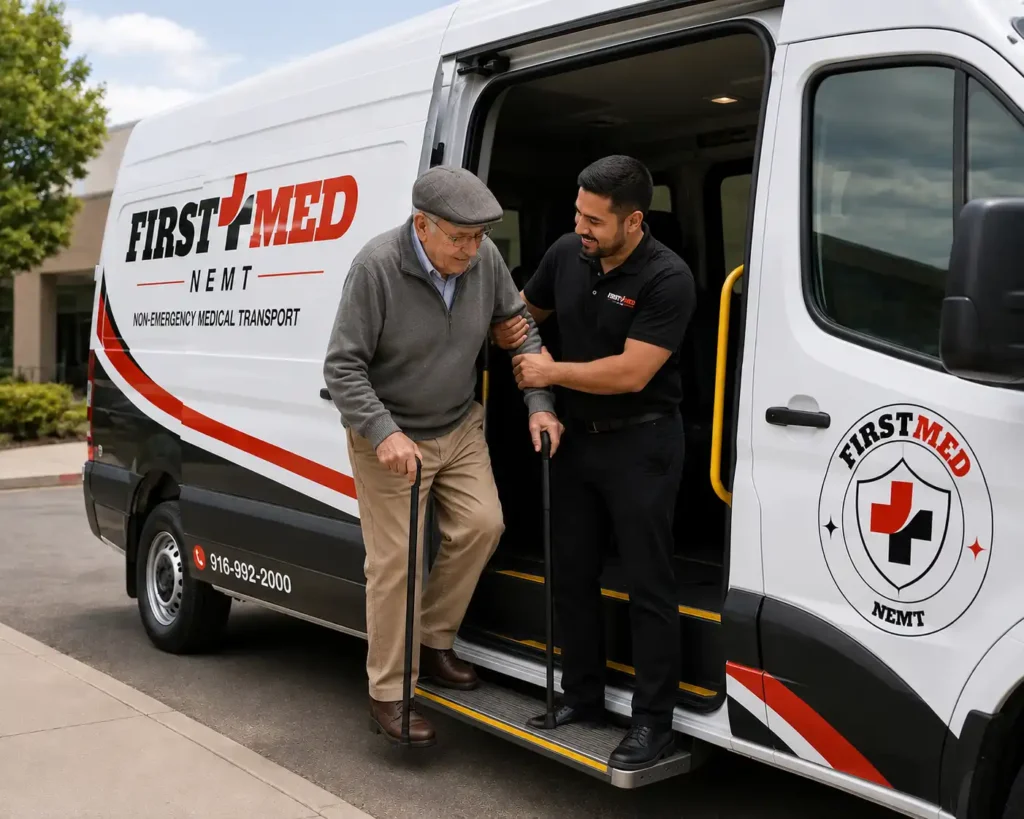
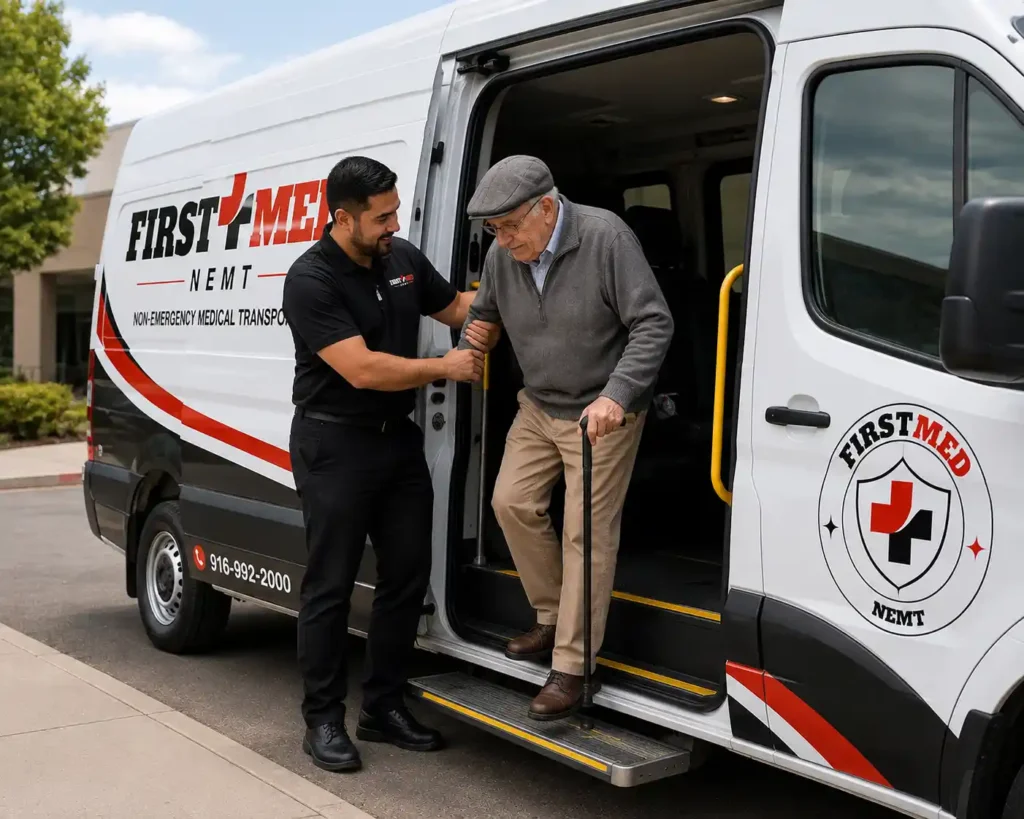
Seniors frequently need consistent, comfortable transportation not just to medical appointments but to related errands like picking up prescriptions. Many families search for senior transportation options that combine reliability with the patience and training needed to assist older adults safely.
Patients with disabilities may need specialized vehicles equipped with ramps, lifts, or additional securement systems. Coverage rules for transportation for disabled adults generally mirror standard NEMT eligibility but with additional attention to vehicle accessibility requirements.
Same-day needs do come up a patient discharged unexpectedly, a last-minute appointment change, or a ride that falls through. While most insurance-funded NEMT requires advance scheduling, private providers offering same-day NEMT service can fill that gap when timing is tight.
Air travel for medical purposes, such as a patient flying in for treatment or being discharged to a location outside the immediate area, sometimes requires coordinated ground transport on both ends. Airport medical transportation services handle this kind of door-to-gate coordination for patients who can’t manage a standard rideshare or taxi.
Practical Tips for Getting Your Ride Covered
- Call your Medi-Cal or Medicare Advantage plan before the appointment, not after, since retroactive reimbursement for NEMT is rare and often denied.
- Ask your doctor’s office directly whether they can submit the Physician Certification Statement on your behalf many clinics handle this routinely for regular patients.
- Keep a copy of any authorization number or confirmation you receive when scheduling through your plan.
- If you’re told a ride isn’t covered, ask specifically why sometimes it’s a documentation gap that can be fixed with a quick call to your provider’s office.
- For hospital discharge transportation, coordinate with the hospital’s discharge planner in advance; many hospitals have direct relationships with local NEMT providers and can help arrange same-day transport.
- If your appointment is out of your usual service area, confirm in advance whether your plan covers the trip, since some plans limit routine NEMT to in-network or nearby facilities only.
When You Don’t Qualify: What Are Your Options?
If neither Medi-Cal, Medicare, nor private insurance covers your NEMT need, a few paths remain:
- Private-pay booking directly with a local NEMT provider, which offers the most flexibility and fastest scheduling
- Nonprofit and community transportation programs, some of which serve specific populations like cancer patients or veterans
- County-level senior transportation services, which sometimes offer subsidized rides for older adults regardless of insurance status
- Hospital social services departments, which may know of local grants or vouchers for patients facing financial hardship
Frequently Asked Questions
Does Medi-Cal pay for non-emergency medical transportation in California?
Yes. Medi-Cal covers NEMT for eligible members when a physician certifies that the patient’s condition requires it and the trip is to a covered medical service, though prior authorization through the member’s managed care plan is typically required first.
Does Medicare cover non-emergency medical transportation?
Original Medicare only covers non-emergency ambulance transport in specific medical circumstances. Medicare Advantage plans often include broader NEMT benefits, but coverage varies by plan.
What is the difference between NEMT and NMT?
NEMT is for patients who need medical assistance or a specially equipped vehicle (wheelchair van, gurney van) during transport. NMT is for patients who have no medical need for assistance but lack any other way to get to a covered appointment.
How far in advance do I need to schedule Medi-Cal transportation?
Most plans require routine appointments to be scheduled several business days ahead, though urgent non-emergency needs can sometimes be accommodated with shorter notice. Requirements vary by plan and county.
Can I get same-day medical transportation if my insurance doesn’t cover it in time?
Yes, many private NEMT providers offer same-day scheduling for an out-of-pocket fee when insurance-based scheduling windows don’t align with an urgent need.
Does insurance cover transportation to dialysis or chemotherapy?
Both Medi-Cal and many Medicare Advantage plans generally cover recurring transportation to dialysis and treatments like radiation therapy or chemotherapy when medically necessary and properly authorized, since missed treatments carry serious health risks.
What if I live outside Sacramento but need a ride to a Sacramento-area appointment?
Long-distance trips are sometimes covered if the destination facility is the closest appropriate provider for the needed service, but coverage should always be confirmed with your plan beforehand since rules on out-of-area travel vary.