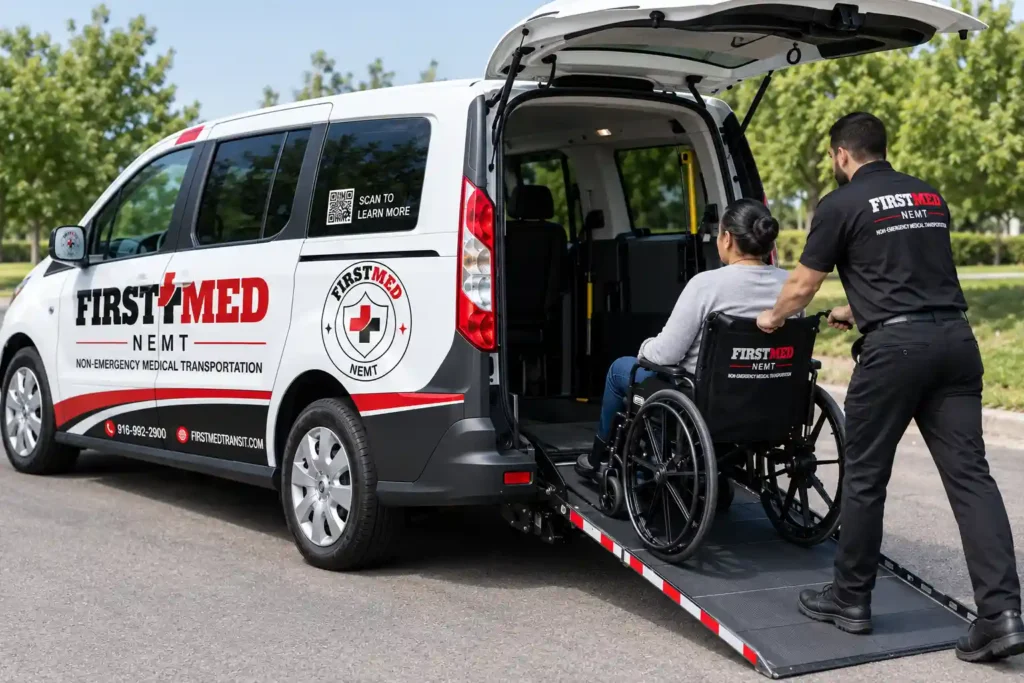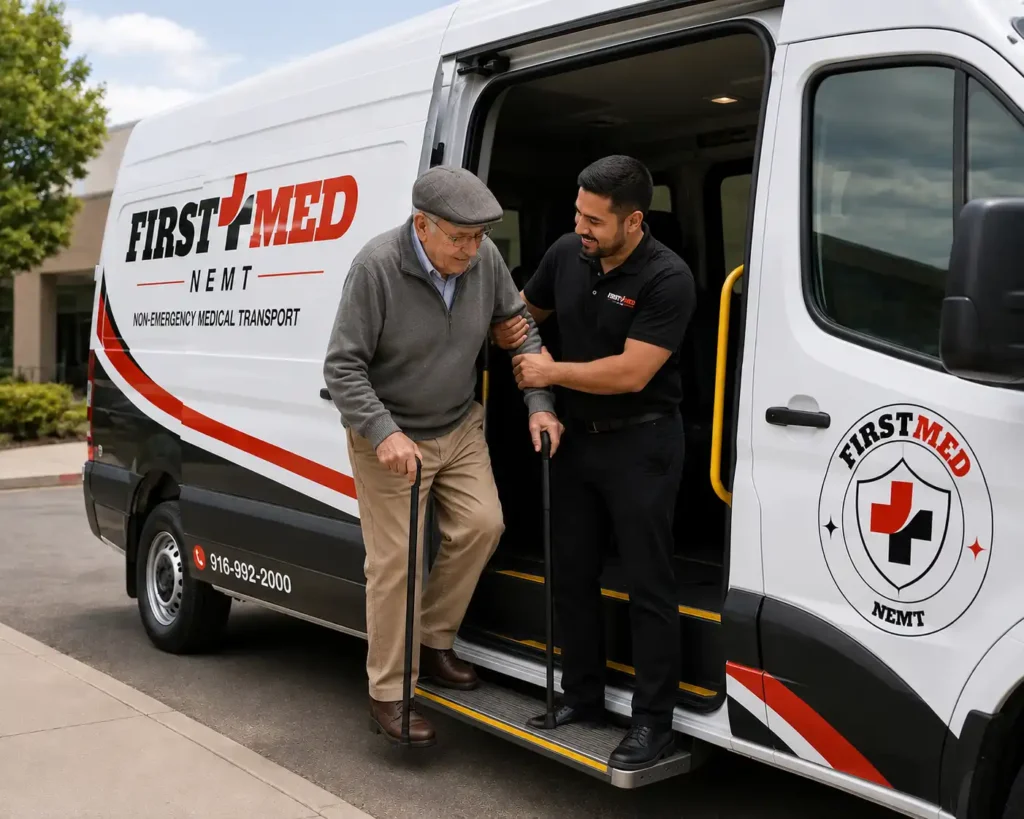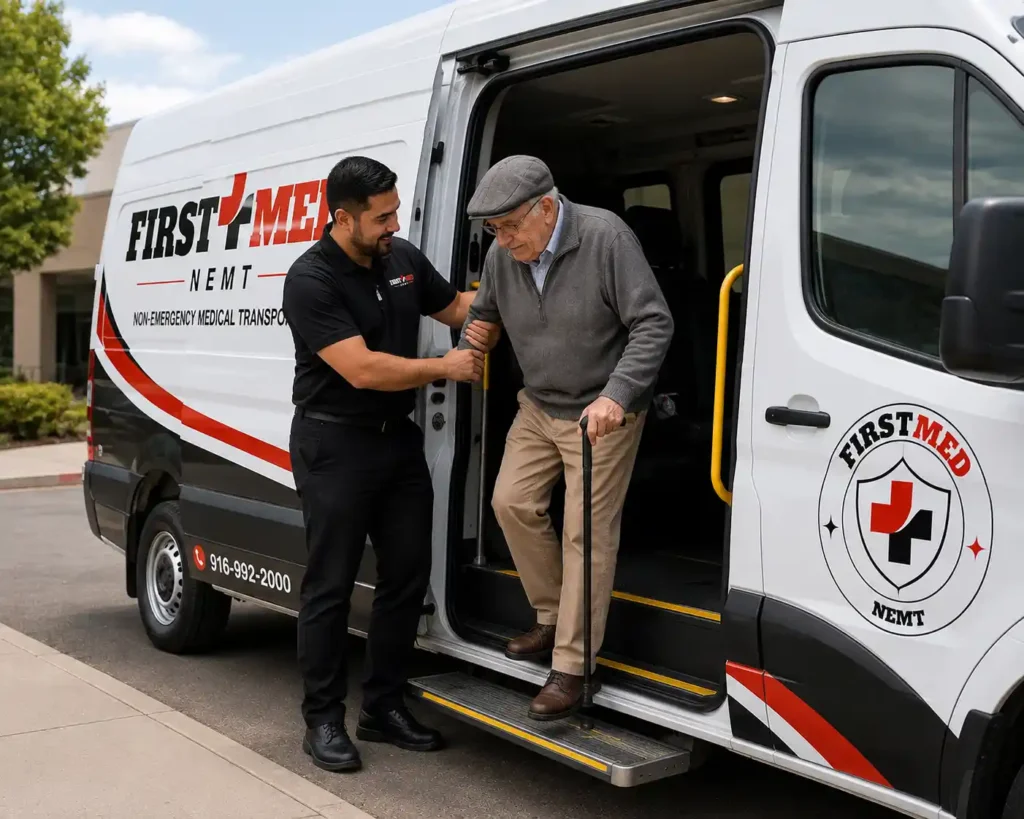
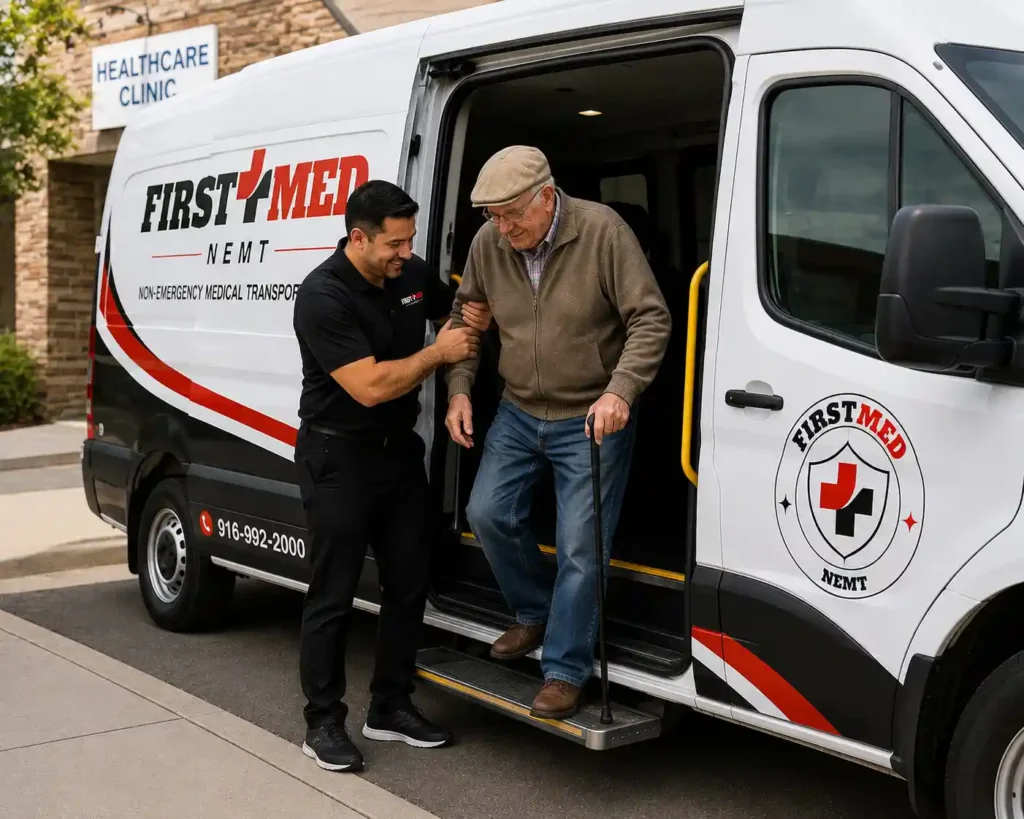
Ambulatory transportation is a category of non-emergency medical transportation (NEMT) designed for passengers who can walk and sit upright on their own, or with minimal assistance, but still need a safe, supervised, and reliable ride to and from medical appointments. It’s not an ambulance, and it doesn’t involve a wheelchair lift or a stretcher. It’s a trained driver, a comfortable vehicle, and a little extra help getting from the front door to the seat and back again.
People often assume “medical transportation” automatically means wheelchairs or emergency response. In reality, the majority of NEMT riders fall into the ambulatory category they simply need dependable, supported transport because driving themselves, taking public transit, or relying on an unpredictable rideshare driver isn’t a safe or realistic option.
This guide breaks down exactly what ambulatory transportation is, who actually qualifies for it, what a ride looks like from pickup to drop-off, what it costs, and how to choose a provider you can trust with someone’s safety. No jargon, no fluff just the answers you came here for.
How Ambulatory Transport Differs From Wheelchair and Gurney Services
NEMT isn’t a single service; it’s a spectrum based on mobility level. Ambulatory transport sits at one end, for passengers who walk independently or with a cane or walker. In the middle sits wheelchair transportation, built around ramps, lifts, and wheelchair restraint systems for passengers who use a manual or power chair full-time.
At the other end is gurney transport, reserved for passengers who must remain lying flat throughout the trip, such as those transferring between hospitals or coming home after a major procedure.
Matching the right service to the right mobility level matters more than most families realize. Booking a standard sedan for someone who’s unsteady on stairs, or booking a wheelchair van for someone who just needs a supportive arm, either creates a safety risk or wastes money. If you’re unsure which category fits, our related post on transport chair vs wheelchair differences is a good starting point for understanding mobility equipment in general.
Who Needs Ambulatory Transportation?
Ambulatory transportation isn’t limited to one age group or one situation. It’s built for anyone whose mobility is reduced but not eliminated. Here’s who typically relies on it.
Seniors and Older Adults
Aging doesn’t happen overnight, but mobility often declines faster than families expect. An older adult who was driving themselves to appointments last year might now struggle with highway merges, poor night vision, or the physical strain of getting in and out of a regular car. Senior transportation services fill that gap without stripping away independence the member still walks to the vehicle and sits in a normal seat, but they’re no longer navigating traffic or parking lots alone.
Members Recovering From a Procedure
Someone recovering from a joint replacement, an eye procedure, or a minor surgery often can’t drive due to medication, restricted movement, or doctor’s orders, even though they can walk short distances with support. Ambulatory transport bridges the recovery period until full independence returns.
Members Managing Ongoing Treatment Schedules
Some members need frequent, exhausting, recurring visits to a treatment center sometimes three or more times a week. Dialysis transportation built around a recurring schedule removes one major source of stress from an already demanding routine, since missing a session isn’t an option the way missing a haircut appointment might be.
Individuals With Temporary or Situational Mobility Limitations
Not every rider is elderly or dealing with an ongoing condition. Someone with a broken foot, a recent injury with partial recovery, balance issues, or a limitation that makes stairs risky can all benefit from a supported ride, even if the need only lasts a few weeks.
Members Being Discharged From the Hospital
Hospital discharge is one of the most overlooked mobility gaps. A member might be medically cleared to walk out, yet still too weak or unsteady to safely get themselves home. Hospital discharge transportation ensures that gap between “cleared to leave” and “actually safe to travel” is properly covered.
Signs You or a Loved One May Need Ambulatory Transportation
Families often wait too long to arrange supported transportation, usually because nobody wants to admit that a parent or spouse “needs help” yet. But there are clear warning signs worth acting on before a fall or a missed appointment forces the decision:
- Appointments are being skipped or rescheduled because driving feels unsafe or exhausting
- A family caregiver is missing work repeatedly to provide rides
- The member needs a hand or an arm to get in and out of a regular car
- Balance, dizziness, or fatigue makes waiting alone at a bus stop risky
- Recovery from a recent procedure or hospital stay limits independent movement
- Rideshare drivers aren’t trained to assist with mobility, and it shows
If two or more of these sound familiar, it’s usually time to look into a dedicated service rather than patching the problem together with favors from friends and family.
Ambulatory Transportation vs Other NEMT Services: Quick Comparison
| Service Type | Best For | Mobility Level | Vehicle Equipment |
| Ambulatory Transport | Members who can walk, with or without minor assistance | Independent walking or cane/walker use | Standard accessible seating, grab handles |
| Wheelchair Transport | Full-time manual or power wheelchair users | Cannot walk or transfer independently | Ramps, lifts, wheelchair restraints |
| Gurney Transport | Members who must remain lying flat | Bedridden or non-weight-bearing | Stretcher mounts, secured gurney systems |
What Happens During an Ambulatory Transport Ride?
Uncertainty is one of the biggest sources of anxiety for both passengers and family caregivers booking this kind of service for the first time. Here’s what an actual ride typically looks like, step by step:
- Booking confirmation — You provide pickup location, destination, appointment time, and any relevant mobility notes.
- Driver arrival — A trained driver arrives at the door, not just the curb, ready to assist.
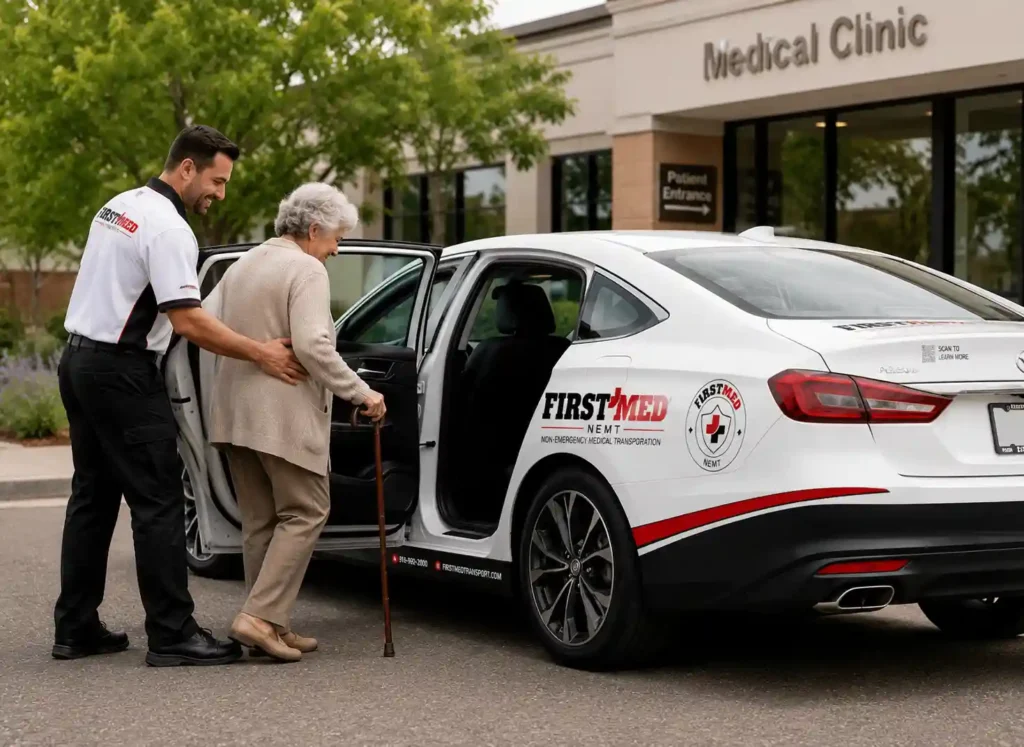
- Assisted boarding — The driver offers a supportive arm or hand as the passenger walks to and boards the vehicle.
- Secure seating — The passenger is seated and, where applicable, seatbelted properly before departure.
- Direct, monitored travel — The driver takes an efficient route and checks in on comfort throughout the trip.
- Assisted arrival — The passenger is walked into the facility or handed off to staff, not simply dropped at the curb.
- Return trip coordination — Many providers arrange the return ride at booking, so the passenger isn’t left waiting after treatment.
This is also a good place to note that same-day NEMT service is available for members who need a ride arranged on short notice, such as an unexpected follow-up appointment.
Ambulatory Transportation Cost: What to Expect
Cost is almost always the second question families ask, right after “is this safe?” Ambulatory transport is generally the least expensive category of NEMT, since it requires less specialized equipment than wheelchair or gurney vehicles. Actual pricing varies by provider, distance, and whether the trip is a one-way or round trip.
| Factor | Typical Impact on Cost |
| Trip distance | Longer distances increase base fare |
| One-way vs round trip | Round trips are usually discounted vs booking two separate one-way trips |
| Recurring vs single booking | Recurring schedules (e.g., weekly therapy) often get better rates |
| Same-day vs advance booking | Advance booking is typically more cost-effective than urgent same-day requests |
| Insurance/Medi-Cal eligibility | Covered trips may have little to no out-of-pocket cost |
If you’re comparing costs across mobility categories, our post on wheelchair transport cost breaks down pricing for that service specifically, which is useful context if you’re not yet sure which category applies.
Coverage is another major factor. Many riders qualify for assistance through Medi-Cal transportation coverage, which can significantly reduce or eliminate the cost of recurring medical rides.
For a broader look at who typically covers these costs, our related article on who pays for non-emergency medical transportation walks through Medi-Cal, private insurance, and self-pay options in detail.
And if insurance is part of your situation specifically, this piece on insurance coverage for medical transportation answers the coverage question directly.
How to Choose the Right Ambulatory Transportation Provider
Not all NEMT providers operate the same way, and the difference shows up exactly when it matters most. Look for these markers before booking:
- Trained, screened drivers who understand mobility assistance, not just driving
- Licensed and insured operation, not an informal or unlicensed service
- Medi-Cal and insurance support, so you’re not left guessing about coverage
- Door-to-door assistance, not curb-to-curb drop-offs
- Reliable scheduling for recurring appointments like dialysis or therapy
- Transparent pricing with no surprise fees added after booking
If you’d like a closer look at what a fully licensed, Medi-Cal-accepting provider looks like in practice, our ambulatory transportation services page outlines exactly how bookings, vehicles, and driver training work.
Common Mistakes Families Make When Arranging Ambulatory Transport
- Waiting for a crisis — Booking only after a fall or missed critical appointment, instead of proactively.
- Assuming rideshare apps are a safe substitute — Standard rideshare drivers aren’t trained in mobility assistance and can’t be relied on for door-to-door support.
- Not confirming return trips — Leaving a member without a scheduled ride home after a long appointment.
- Overlooking recurring scheduling — Rebooking every single dialysis or therapy visit manually instead of setting up a standing schedule.
- Skipping the insurance conversation — Paying out of pocket without checking Medi-Cal or insurance eligibility first.
Frequently Asked Questions
What is ambulatory transportation in simple terms?
Ambulatory transportation is non-emergency transport for members who can walk and sit upright, with or without minor assistance, but still need a trained driver and supportive vehicle to travel safely to medical appointments.
Who qualifies for ambulatory transportation services?
Seniors, members recovering from a procedure, individuals managing ongoing treatment schedules, people with temporary mobility limitations, and anyone discharged from a hospital who can walk but isn’t yet safe to travel alone typically qualifies.
Is ambulatory transportation the same as an ambulance?
No. Ambulances are for emergency situations requiring clinical intervention during transport. Ambulatory transportation is scheduled, non-emergency transport with no onboard medical treatment involved. For any true emergency, always call 911.
Does insurance or Medi-Cal cover ambulatory transportation?
In many cases, yes. Eligible members may have some or all of the cost covered through Medi-Cal or private insurance, depending on medical necessity and plan details.
How is ambulatory transport different from wheelchair transport?
Ambulatory transport is for members who can walk to and board the vehicle independently or with light assistance. Wheelchair transport is specifically equipped with ramps, lifts, and restraints for members who remain in a wheelchair throughout the trip.
Can a family member ride along during ambulatory transport?
Most providers allow a caregiver or family member to accompany the passenger, which can be reassuring for both the member and the family. It’s best to mention this when booking.
Getting the Right Ride, Every Time
Mobility doesn’t have to be all-or-nothing, and neither should medical transportation. Whether it’s a parent who needs a steady arm getting to an appointment, or someone recovering from a procedure who just needs a safe ride home, ambulatory transportation exists specifically for that in-between space where independence still matters but a little support makes all the difference.
If you’re ready to schedule a ride or simply want to talk through which service fits your situation, you can schedule your ride directly with our team, and we’ll walk you through vehicle options, timing, and coverage before you book.