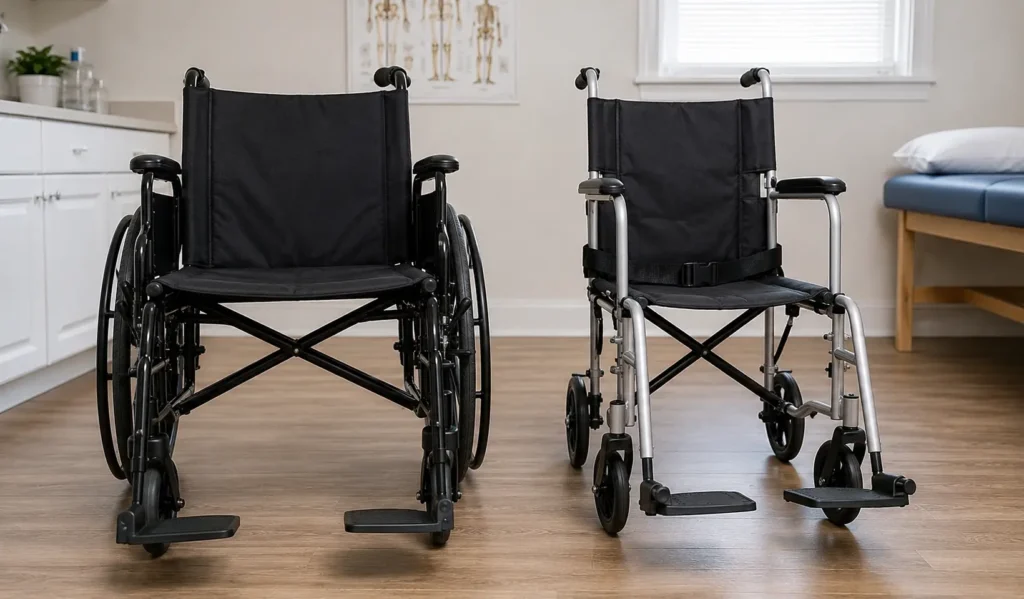
A transport chair is a lightweight chair with small wheels that a caregiver has to push, while a wheelchair has larger wheels with hand rims that let the user move on their own. That’s the core of the transport chair vs wheelchair comparison one is built for quick, caregiver-assisted trips, and the other is built for daily, independent mobility. The right pick depends on how often the chair will be used, whether the person wants to move around on their own, and how long they’ll typically be sitting in it.
If you’ve ever stood in a mobility equipment aisle staring at two chairs that look almost identical, you’re not alone. Families searching for the right equipment for an aging parent, a post-surgery patient, or someone with a temporary injury run into this confusion constantly. Both chairs have wheels, both have seats, and both get marketed as “mobility aids” but they solve two very different problems. This guide breaks down every meaningful difference so you can make a confident, informed decision, whether you’re buying equipment for home use or arranging transportation for a medical appointment.
What Is a Transport Chair vs Wheelchair? Understanding the Basics
So what is a transport chair vs wheelchair once you strip away the marketing language? A transport chair is essentially a stripped-down, travel-friendly seat on wheels. It’s designed for someone who needs occasional mobility support getting from a car to a doctor’s office, moving through an airport, or navigating a hospital hallway but doesn’t need a chair for full-time, independent use.
A wheelchair, on the other hand, is engineered for people who rely on it as their primary means of getting around, whether that’s for a few months during recovery or for life. It’s built with self-propulsion in mind, meaning the user isn’t dependent on someone else to move from room to room.
“Choosing between a wheelchair and a transport chair isn’t about which one is ‘better’ it’s about matching the equipment to how much independence the user needs and how often the chair will be used.”
This distinction matters more than most people realize, especially for families coordinating care, caregivers managing daily routines, or patients being discharged from a hospital who suddenly need to figure out how they’ll get around at home.
Transport Chair vs Wheelchair: Key Differences at a Glance
Below is a side-by-side breakdown of the most important differences buyers and caregivers should understand before choosing.
| Feature | Transport Chair | Standard Wheelchair |
| Wheel Size | Small, 8″–12″ wheels on all four corners | Large 20″–24″ rear wheels with small front casters |
| Self-Propulsion | Not possible — requires a caregiver to push | Possible via hand rims on rear wheels |
| Weight | Typically 15–25 lbs, very lightweight | Typically 30–50+ lbs depending on frame |
| Portability | Folds compactly, fits easily in a car trunk | Bulkier, requires more storage and trunk space |
| Best Use Case | Short outings, appointments, travel, temporary use | Daily, long-term mobility and independence |
| Seating Comfort | Basic sling-style fabric seat, not built for all-day sitting | Padded seating, armrests, and back support for extended use |
| Braking System | Hand brakes on push handles, operated by the caregiver | Push-lock wheel brakes, operated by the user |
| Maneuverability | Excellent in tight indoor spaces and narrow hallways | Better suited to varied terrain, indoors and outdoors |
| Typical Cost Range | $60–$200 | $150–$500+ (manual); more for power models |
Wheels, Weight, and Design: Where the Real Differences Live
Wheel Size and Who’s in Control
The single biggest giveaway when comparing a transport chair vs wheelchair is the wheels. Standard wheelchairs have large rear wheels, usually 20 to 24 inches, fitted with a hand rim the user can grip and push. That rim sits close enough to the body that the person sitting in the chair can control their own direction, speed, and stopping this is called self-propulsion.
Transport chairs skip that feature entirely. All four wheels are small, typically between 8 and 12 inches, and positioned in a way that makes them physically impossible for the seated person to reach or turn. That’s not an oversight it’s the point. Transport chairs are intentionally designed as a two-person system: one person sits, another pushes.
Weight and Portability
Because transport chairs don’t need the reinforced frame or larger wheel hubs that self-propulsion requires, they’re significantly lighter. Most fold flat in seconds and weigh in the range of 15 to 25 pounds, making them easy to lift into a car trunk or store in a closet. This is exactly why they’re popular for travel, short medical visits, or as a backup chair kept in the car for emergencies.
Standard wheelchairs are heavier by design. The larger wheels, sturdier frame, and additional padding all add weight, generally landing between 30 and 50+ pounds for manual models. That weight buys durability and comfort for someone using the chair daily, but it makes the chair harder to transport and store.
Comfort for Extended Use
If someone will be sitting in a chair for hours at a time at work, running errands, or throughout the day at home comfort becomes a real medical concern, not just a preference. Standard wheelchairs typically include padded seating, supportive backrests, and armrests designed for prolonged use. Transport chairs generally use a lightweight sling or fabric seat, which is fine for a 20-minute ride to an appointment but isn’t recommended for someone who needs to sit for most of the day.

When a Transport Chair Makes More Sense
A transport chair tends to be the right call in these situations:
- Short, occasional trips : a doctor’s visit, a shopping trip, or an airport transfer where the person won’t be sitting for long stretches
- Temporary mobility limitations : recovering from surgery, a broken bone, or a short-term illness where full-time wheelchair use isn’t needed
- Travel and vacations : the light weight and compact fold make it easy to bring along without hassle
- Backup equipment : many families keep one in the trunk for situations where a loved one gets tired walking long distances
- Tight indoor spaces : narrow hallways, small bathrooms, or older homes where a bulkier wheelchair won’t easily fit
When a Standard Wheelchair Is the Better Choice
A wheelchair is usually the more appropriate option when:
- Independence matters : the user wants or needs to move around on their own without relying on a caregiver every time
- Daily, long-term use is expected : someone living with a permanent mobility condition needs a chair built for extended sitting and everyday wear
- Outdoor and varied terrain use is common : larger wheels handle uneven sidewalks, ramps, and outdoor surfaces far better than small transport chair casters
- Comfort over many hours is a priority : padded seating and back support reduce pressure sores and fatigue during long periods of use
Cost Breakdown: Transport Chair vs Wheelchair
Budget is often a deciding factor, especially for families weighing whether to buy, rent, or rely on transportation services instead. Here’s a general cost comparison based on typical retail pricing for basic to mid-range equipment.
| Equipment Type | Average Price Range | Notes |
| Basic Transport Chair | $60–$150 | Lightweight aluminum frame, fabric seat |
| Heavy-Duty Transport Chair | $150–$250 | Higher weight capacity, sturdier frame |
| Standard Manual Wheelchair | $150–$350 | Steel or aluminum frame, padded seat |
| Lightweight Manual Wheelchair | $300–$600 | Aircraft-grade aluminum, self-propulsion optimized |
| Power Wheelchair | $1,500–$6,000+ | Motorized, best for users with limited upper body strength |
Insurance and Medicare/Medicaid coverage can significantly offset these costs for wheelchairs when medical necessity is documented, though transport chairs are less commonly covered since they’re often classified as convenience items rather than primary mobility equipment. It’s worth checking with your provider before purchasing.
Related Articles You Should Know :
Safety Considerations Families Often Overlook
Choosing between these two chairs isn’t only about comfort or cost safety plays a major role, especially for older adults or patients recovering from a procedure.
- Brake accessibility: Wheelchair brakes lock at the wheel and are typically operated by the user, while transport chair brakes are located on the push handles for the caregiver, which matters if the person being transported has limited hand strength.
- Terrain risk: Small transport chair wheels can catch on cracks, gravel, or uneven pavement more easily than larger wheelchair wheels, increasing tip risk outdoors.
- Weight capacity: Always check the manufacturer’s listed weight limit most standard chairs support 250–300 lbs, with bariatric options available for higher capacities.
- Transfers: Both chair types require careful, supported transfers in and out of the seat, particularly for patients with limited mobility or balance issues after surgery or hospitalization.
For patients heading home after a hospital stay, this is often the exact moment families realize they need more than just the right chair they need someone trained to help with the transfer from hospital bed to vehicle and into the home.
Transport Chairs, Wheelchairs, and Medical Transportation
Here’s something a lot of buying guides skip entirely: owning the right chair is only half the equation. Getting a wheelchair or transport chair user safely to and from appointments is its own challenge, especially for families without an accessible vehicle.
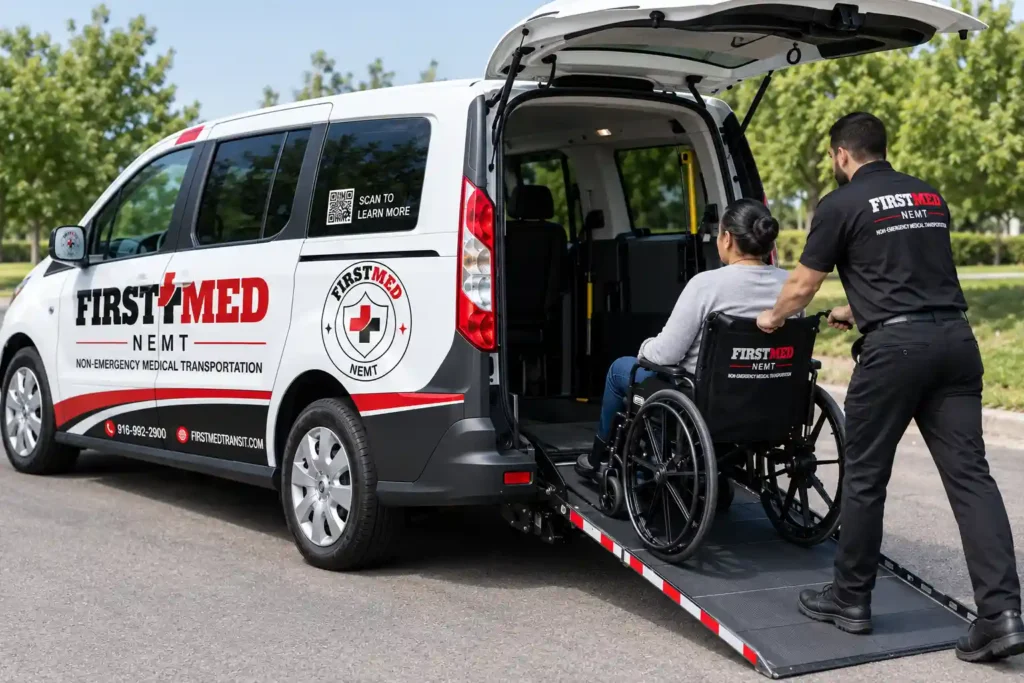
A professional wheelchair-accessible transportation service provides vehicles equipped with ramps or hydraulic lifts and proper wheelchair restraint systems, so the passenger never has to transfer out of their own chair.
For patients who use a transport chair or walk with limited assistance, an ambulatory transport service offers supported boarding without the need for a lift.
Families managing recurring treatments dialysis, chemotherapy, or physical therapy often find that a senior transportation service removes the daily logistical burden of driving, parking, and assisting with transfers.
And for patients on a fixed weekly schedule, a dedicated dialysis transport service means the ride shows up on time, every time, without the caregiver having to rearrange their own day around it.
“The right chair gets someone moving. The right transportation gets them there safely, on time, and without exhausting the caregiver in the process.

How to Decide: A Quick Self-Assessment
Ask these questions before making a purchase or rental decision:
- How often will the chair be used? Daily use points toward a wheelchair; occasional use points toward a transport chair.
- Does the user need to move independently, or will a caregiver always be present? Independence needs favor a wheelchair; caregiver-assisted trips work fine with a transport chair.
- Will the chair be used mostly indoors, outdoors, or both? Varied terrain favors a wheelchair’s larger wheels.
- Is portability a priority : traveling, storing in a small space, or fitting in a car trunk? A transport chair wins here.
- How long will the person typically sit in the chair per use? Extended sitting favors a wheelchair’s padded, supportive seating.
Many families end up owning both a wheelchair for daily independence at home and a lightweight transport chair kept in the car for outings, travel, or backup use.
Frequently Asked Questions
What is a transport chair vs wheelchair in simple terms?
A transport chair is a lightweight chair with four small wheels that must be pushed by a caregiver, ideal for short trips. A wheelchair has larger rear wheels with hand rims that let the user propel themselves, making it better suited for daily, independent mobility.
Can a transport chair be used long-term?
It’s not recommended. Transport chairs use basic fabric seating without the padding or back support needed for extended sitting, and prolonged use can increase the risk of discomfort or pressure sores.
Is a transport chair cheaper than a wheelchair?
Generally, yes. Basic transport chairs typically cost between $60 and $150, while manual wheelchairs range from $150 to $600 or more depending on features and materials.
Do transport chairs fold up smaller than wheelchairs?
Yes. Transport chairs are built to be lightweight and compact, folding down small enough to fit easily into a car trunk, closet, or overhead storage — a key reason they’re popular for travel.
Can someone self-propel a transport chair?
No. Transport chairs don’t have hand rims or wheels positioned within reach of the seated user, so they always require a second person to push.
Does insurance cover a wheelchair or transport chair?
Insurance and Medicare/Medicaid coverage is more common for standard wheelchairs when medical necessity is documented by a physician. Transport chairs are often considered a convenience item and may not be covered, so it’s best to confirm directly with your insurance provider.
What’s the best option for someone recovering from surgery?
It depends on the recovery timeline. Short-term recovery (a few weeks) often works fine with a transport chair for appointments and outings, while longer recovery periods with limited mobility may call for a standard wheelchair.
Whether your family ends up choosing a transport chair, a wheelchair, or both, getting your loved one safely to medical appointments matters just as much as picking the right equipment. If daily transportation to dialysis, therapy, or routine checkups has become a challenge, exploring a dedicated non-emergency medical transportation provider can take that burden off your plate entirely.